Group backs Ogun APC caucus decision, urges Gbenga Daniel to uphold democratic norms

The Centre for the Advocacy for Human Rights and Social Justice has thrown its weight behind the decision of the Ogun East Senatorial District caucus of the All Progressives Congress (APC) to restrict attendance at its recent meeting to duly accredited members, describing the move as a necessary step to preserve order, discipline and institutional integrity.

In a press release made available to journalists and signed by its Leader, Olufemi Akindele, the group said the controversy surrounding the alleged exclusion of Senator Gbenga Daniel was being unnecessarily amplified, stressing that party structures must be respected by all members, regardless of status.

The organisation maintained that caucus meetings are governed by clear guidelines and are not open gatherings, noting that attendance is typically based on prior invitation and recognition within the party hierarchy. It argued that the decision to limit participation was neither arbitrary nor targeted, but consistent with established norms aimed at ensuring productive deliberations.

According to the statement, attempts to portray the development as an affront to Senator Daniel were misplaced, adding that internal party mechanisms should not be misrepresented in a way that could mislead the public or create avoidable tension.

“The decision of the caucus to admit only invited stakeholders is in line with democratic best practices within political parties. Discipline, order and respect for procedure are the pillars upon which any credible political institution must stand,” the group stated.

The Centre further called on Daniel to demonstrate statesmanship by respecting party decisions and utilising internal channels to address any grievances, rather than resorting to public criticism. It noted that as a ranking member of the party, the former governor is expected to model democratic conduct and contribute to strengthening, rather than undermining, party cohesion.

While urging restraint among supporters, the group cautioned against dragging the Ogun State Governor, Dapo Abiodun, into what it described as a purely party-driven matter. It reiterated that the meeting in question was not convened by the state government, but by party stakeholders acting within their constitutional framework.

“It is important, that political leaders separate governance from party administration. Bringing the person of the governor into this issue only serves to politicise a straightforward organisational procedure,” the statement added.

The group emphasized that healthy democracies thrive on respect for rules and collective decisions, not on personal interpretations of entitlement. It warned that persistent public attacks on party processes could weaken internal democracy and set a poor example for younger members.

Concluding, the Centre urged all stakeholders within the APC to remain committed to unity and due process, while encouraging Senator Daniel to align with the principles of party discipline and democratic engagement in resolving disputes.

One party, two chairmen: Inside Ogun ADC’s power tussle

With the collapse of the Peoples Democratic Party, PDP, the African Democratic Congress (ADC), positioned itself as the “Second Force” and strategic alternative for high-profile politicians.

Opposition politicians have since flooded the party as the most viable alternative outside the ruling All Progressives Congress, APC.

However, as the 2027 general elections draw closer, the party is no longer just fighting for the ballot, it is fighting itself.

What was intended to be a “mega-coalition” to challenge the Bola Tinubu-led administration has instead become a battleground of tenure disputes and “hijacked” structures.

DAILY POST reports that this crisis has spread its wings down to Ogun, the Gateway state, and many other states of the Federation, thus dividing the party into two factions, with each claiming constitutional legitimacy.

Both factions, which are said to be aligned with the same leadership of David Mark, conducted their congress at the same time, same day, but at different locations in the state.

Two factional chairmen, one publicity secretary emerges

On Saturday, April 11, the party at its secretariat in Abeokuta, held its state executive congress, which returned Femi Soluade as chairman, flanked by Babatunde Adedeji as deputy, Agbebiyi Olusoji as secretary, Yinka Ogunlade as treasurer, Abideen Obanla as PWD leader with Olumide Onabajo as the publicity secretary alongside 18 others.

The congress was conducted and chaired by Moshood Salvador and the swearing-in ceremony was administered by the state legal adviser, Barrister Femi Aina.

However, our correspondent observed that while the congress was ongoing, a parallel congress was also held at the Olusegun Obasanjo Presidential Library (OOPL), Abeokuta and supervised by national officials led by Chairman of the Congress Committee, Hon. Olatunji Soyinka, the Deputy National Financial Secretary, Hon. Oladimeji Fabiyi, a National Ex Officio, Motunrayo Odumosu, alongside other members of the congresses committee; Bashir Lawal, the secretary and Musa Odujobi, Yemisi Adegoke and Kunle Ashiru.

The congress produced 56 state officers with Emmanuel Famojuro as the state’s party chairman, Adebanjo Olalekan as deputy chairman, Soaga Akintoye as secretary, Sanni Gbenga as treasurer, Olufade Iyanu as the state PWD leader, Bernard Kuyoro as financial secretary and again Onabajo Olumide as the publicity secretary among others.

The congress chairman, Soyinka, who is a former House of Representatives member presented a harmonised list of the new executives, which according to him, reflected the agreement and decisions of all party leaders and sections of the ADC.

“By the power conferred on me, I have accepted, based on the list submitted to our committee, that the new state chairman will be Mr. Emmanuel Famojuro,” Soyinka said, declaring that the congress was conducted “in accordance with the party’s guidelines and constitution.”

“When we came into the state, we gave notice of the congress to all. Anybody that’s not here is on his own, and our decision here is final,” he asserted.

Famojuro-led faction accuses Soluade of backstabbing party

However, the Famojuro-led faction of the party accused Soluade of backstabbing and preventing potential aspirants from joining the party ahead of the 2027 general elections.

Recall that on the 14th of February, Soluade announced the suspension of Jimi Lawal over alleged anti-party activities and unveiled a caretaker committee to temporarily fill vacant state executive and local government chairmanship positions across the state.

The next day, the party in a rejoinder signed by its publicity secretary, Olumide Onabajo, nullified the purported suspension of Jimi Lawal and passed a vote of no confidence in its chairman, Soluade, suspending him from office for alleged leading armed thugs to disrupt an event organized by Lawal in Abeokuta.

“The Constitution of our great party does not empower the State Chairman, acting unilaterally, to suspend any member of the party— let alone a leader of the stature of H.E. Jimi Lawal.

“Suspension of any member must follow laid-down constitutional procedures, including due process, fair hearing, and ratification by the appropriate organs of the party.

“Furthermore, the State Chairman does not possess unilateral powers to dissolve duly elected executives, appoint caretaker committees, or fill executive positions at the State or Local Government levels without the approval of the constitutionally recognized organs of the party.

“Any such appointments, announcements, suspensions, or restructuring purportedly made are therefore unconstitutional, illegal, and cannot stand.

“The committee particularly condemns in strong terms the incident of Saturday, February 14, 2026, at the Intercontinental Hotel, Ibara, where a peaceful gathering was ongoing for the public declaration of the governorship aspiration of Jimi Lawal.

“The State Chairman arrived at the venue, accompanied by armed thugs, disrupted the event and caused serious chaos,” the statement added.

However, the party in another statement on Monday, 16th February, resolved to reinstate Femi Soluade, urging stakeholders and supporters to put past misunderstandings behind them and work collectively towards building a formidable stronger party.

Speaking at the Saturday’s congress, the deputy national financial secretary, Oladimeji Fabiyi, argued that the state leadership under Femi Soluade dragged the party backwards, alleging that he turned the ADC into a marketplace for negotiations rather than a vehicle for governance.

“The outgoing leadership has not done so well for ADC in the state. They have turned the party into a transactional party, where they go about negotiating. In fact, their leadership has sent so many quality aspirants away from running because they didn’t see any hope; they are not inspired.

“The people of Ogun State have been calling on us, saying this situation cannot continue,” he stated.

He added that the party has now set a new direction, expressing optimism that the ADC is ready for renewed growth and success under the new leadership.

Meanwhile, the chairman of the congress committee, insisted that the party would only recognise authentic members and the newly elected executives.

Soyinka described the transition as a step towards victory for the party and expressed confidence in Famojuro’s leadership, arguing that no individual is bigger than the party, predicting a brighter future for the ADC.

“He is someone who will lead Ogun State to where we want it to be. It is green all over the world that ADC is the next government in Ogun State and Nigeria as a whole,” he added.

‘Kangaroo election, I remain authentic recognized leader’ – Soluade hits back

Soluade declared himself to be the state’s only legitimate and acknowledged party leader. He referred to the congress that elected Famojuro as a “kangaroo election.”

He emphasized that there is no division within the Ogun ADC and any insinuation of a faction is false and aimed at destabilising the party ahead of the next elections.

According to him, the party in Ogun State is still cohesive under his leadership, with a distinct line of command and compliance with the national body’s directions.

Soluade also announced the suspension of a planned mock or shadow inauguration earlier scheduled to hold at the party secretariat, describing the move as a strategic decision.

He clarified that the decision to put the event on hold should not be mistaken for weakness or retreat, but rather a demonstration of discipline and respect for institutional processes.

“It was a kangaroo election. I emerged as the Bonafide State Chairman of ADC. We were duly screened on the 9th of April but jesters were never screened on the 9th April by the national body. All Executives of my cabinet were duly affirmed by consensus and duly sworn in,” he insisted.

He insisted that the party is unwavering and will not allow outside pressure or legal challenges stop it from achieving its goals, cautioning those purportedly attempting to sow conflict inside the party to stop, stressing that such attempts would eventually fail.

Publicity Secretary makes U-turn, aligns with Famojuro

In a twist, Olumide Onabajo, who was initially named in the executive lists of both factions, has formally pledged his loyalty to the Famojuro-led executive.

The move came barely 24 hours after Onabajo issued a statement to our correspondent, validating the congress that returned Soluade as Chairman.

In what observers are calling a significant blow to the Soluade camp, Onabajo described his decision as a product of “careful reflection, consultations, and consideration of prevailing circumstances.”

While expressing gratitude to both sides for recognizing his contributions, he lamented that despite being a long-term loyalist and a key figure in projecting the party’s image since 2020, the Soluade-led team failed to offer him the necessary support, citing a desire for stability and a leadership structure that aligns with his vision for the party’s growth.

His words, “It is no longer news that two parallel congresses were held in Ogun State on Saturday, 11th April, 2026, each producing different outcomes and leadership structures within our great party, the African Democratic Congress (ADC).

“It is also a known fact that both congresses, one chaired by Otunba Dr. Femi Soluade and the other by Mr. Emmanuel Famojuro produced my name as the elected State Publicity Secretary. I sincerely appreciate both sides for recognizing my efforts and the value of my contributions to the party over the years.

“However, at this critical juncture, it has become necessary for me to clearly state my position.

“I have worked tirelessly for the party, particularly during my time in Ajuwon/Akute, Ifo Local Government. Despite my sacrifices, it is evident that key stakeholders, including Hon. Ojerinde Olusola and Comrade Salau, have not demonstrated support or consideration for my efforts.

“This observation also extends to the Otunba Femi Soluade led team. While I will refrain from going into extensive details, I remain confident that my commitment, sacrifices, and personal investments in the party are known to God and to those who have followed my journey.

“After careful reflection, consultations, and consideration of prevailing circumstances, I have made the decision to align with the team led by Mr. Emmanuel Famojuro,” Onabajo stated.

Police assure Ogun varsity of enhanced campus security

The Ogun State Commissioner of Police, CP Bode Ojajuni, has reaffirmed the command’s commitment to providing adequate security and fostering a safe, peaceful environment conducive for academic excellence across the state.
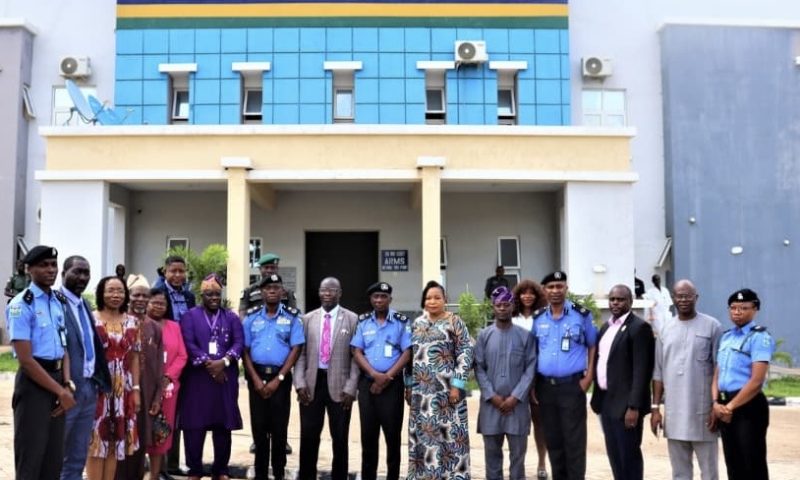
Ojajuni gave the reassurance on Wednesday when he received the Vice Chancellor, Federal University of Medicine and Medical Sciences, Abeokuta, Prof. Fatiu Arogundade, and his management team at the Command Headquarters, Eleweran, Abeokuta.

He appreciated the Vice Chancellor and his team for the visit, harping on the importance of strengthening collaboration between the Nigeria Police Force and academic institutions.

According to him, the visit was necessary to ensure the safety and security of students, staff, and critical infrastructure within the university community.

Meanwhile, the commissioner outlined proactive measures to address security concerns and enhance intelligence sharing between the institution and the Police.

DAILY POST reports that the move comes amid recurring cult clashes in higher institutions across the state.

Witness admits signing ex-AGF Idris statement in N109.5bn trial

A defence witness in the ongoing trial of former Accountant-General of the Federation, Ahmed Idris, has admitted before the Federal Capital Territory High Court, Maitama, Abuja, that he signed the defendant’s statement dated May 17, 2022.
The witness, Haruna Alabi, made the admission on Tuesday during cross-examination by prosecution counsel, Oluwaleke Atolagbe, in a trial-within-trial initiated at the instance of the first defendant.

Idris is being prosecuted by the Economic and Financial Crimes Commission (EFCC) alongside Geoffrey Olusegun Akindele, Mohammed Kudu Usman and Gezawa Commodity Market and Exchange Limited on a 14-count charge bordering on alleged stealing and fraudulent diversion of public funds amounting to N109.5 billion.

The court had ordered the trial-within-trial on November 22, 2022, following an application by defence counsel, Chris Uche (SAN), who alleged that his client’s statements were obtained through deception and inducement.

While testifying, Alabi told the court that he visited the EFCC office on May 17, 2022, alongside other directors from the Office of the Accountant-General of the Federation to see Idris, who was in the Commission’s custody at the time.
Myself and other directors visited him at the EFCC,” he said.

Alabi further disclosed that he was the only lawyer among the visitors and that he signed at the back of the statement made by Idris on the said date.

However, he admitted that he was neither invited by the EFCC nor had any prior interaction with investigators before the visit.

Under further cross-examination, the witness stated that apart from appending his signature, he neither wrote nor signed any other part of the statement.

He also said he could not confirm whether Idris personally made the statement he endorsed.

When confronted with a portion of the statement which read, “The statement was taken freely and I signed,” Alabi insisted he did not lie, maintaining that he was not present when the statement was made.

Earlier, during his evidence-in-chief led by defence counsel, Kanayo Okafor, the witness identified his name and signature on Exhibit B3, the statement dated May 17, 2022.

Justice Yusuf Halilu subsequently adjourned the matter to June 24, 2026, for continuation of the trial-within-trial and directed the first defendant to ensure the presence of all remaining defence witnesses on the next adjourned date.

NAFDAC seizes N350m worth of fake alcohol in Lagos raids

The National Agency for Food and Drug Administration and Control, NAFDAC, has announced the seizure of 1,800 cartons of alcoholic beverages valued at approximately N350 million in Lagos State, following coordinated enforcement operations targeting illegal production sites.
In a statement posted on its official X handle on Wednesday, the agency said its operatives uncovered and shut down two clandestine facilities engaged in the counterfeiting and adulteration of alcoholic drinks.

NAFDAC explained that acting on credible intelligence, its enforcement team carried out raids at Zamfara Plaza within the Trade Fair Complex and another location on Lagos Island, where large quantities of fake and substandard alcoholic products were recovered.

According to the agency, the operation at the Trade Fair Complex revealed makeshift production areas fitted with plastic mixing containers, improvised filtering equipment, empty branded bottles, corks, and packaging materials used for the production of counterfeit beverages.

A separate operation on Lagos Island reportedly led to the arrest of a suspect believed to be involved in the illegal manufacture and distribution of the adulterated drinks through a retail outlet. All recovered items were confiscated and removed for further regulatory investigation.

NAFDAC cautioned that the consumption of adulterated alcoholic products poses severe health risks, including poisoning, organ failure, and possible death.

It advised members of the public to patronise only authorised outlets and report suspicious activities to the nearest agency office.

Engineering academy inducts Dangote as honorary fellow

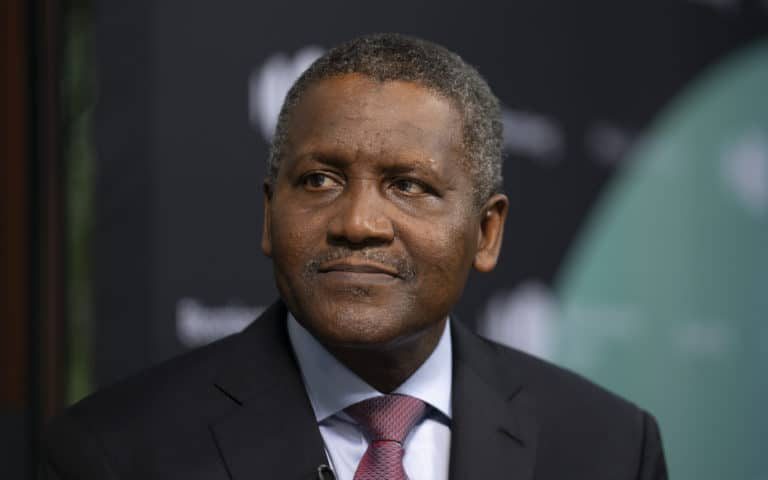
DangoteAfrica’s foremost industrialist, Aliko Dangote, will on April 25, 2026, be inducted as an Honorary Fellow of the Nigerian Academy of Engineering, in recognition of his contributions to engineering-driven industrial development.
A statement from the NAE on Wednesday stated that the induction, scheduled as a high-profile event, is being organised by the President and Council of the academy, who described the honour as a celebration of Dangote’s impact on large-scale industrial and infrastructure projects in Nigeria and across Africa.

The Nigerian Academy of Engineering, established in 1997, is the apex professional body for engineering in the country and serves as a strategic think-tank on science, technology, and innovation.

Its membership comprises distinguished Nigerian and international experts drawn from diverse engineering disciplines and industry sectors.

The academy plays a critical advisory role to the Federal Government and private sector, providing policy guidance on engineering and technological matters aimed at driving national development and enhancing global competitiveness. It also offers a platform for professionals to pool expertise and develop solutions to complex national challenges.

Dangote, President of the Dangote Group, is widely recognised for championing projects that rely heavily on advanced engineering, including cement manufacturing plants and the development of one of Africa’s largest petroleum refineries.

His induction as an Honorary Fellow places him among a select group of eminent individuals acknowledged for their significant contributions to the advancement of engineering and technology, despite not being professional engineers.

NGX foreign inflows hit N288bn in March

NGX_Exchange_IdentityForeign portfolio participation on the Nigerian Exchange Limited recorded a significant recovery in March 2026, with total foreign transactions increasing by 107.74 per cent to reach N288.82bn.

According to the latest Domestic and Foreign Portfolio Investment report released by NGX Regulation Limited on Wednesday, total market transactions grew 13.10 per cent to N1.744tn in March, up from the N1.542tn recorded in February.

The latest report noted, “The significant jump in foreign inflows, which rose from N72.32bn in February to N181.77bn in March, suggests that international investors are increasingly finding value in Nigerian equities following recent market re-ratings and improved foreign exchange liquidity.”

Despite the surge in foreign activity, domestic investors continued to dominate the bourse, accounting for 83.44 per cent of total transactions. Total domestic value stood at N1.455tn for the month, with institutional investors outperforming retail participants by 26 per cent

Providing insight into the local market composition, the report added, “The domestic market remains the bedrock of our exchange. With institutional transactions rising to N914.23bn, it is clear that local pension funds and asset managers are maintaining a strong bullish stance on high-quality Nigerian equities, even as foreign interest returns.”

The surge in foreign inflows comes amid a period of aggressive fiscal and monetary reforms aimed at stabilising the naira and attracting foreign direct investment. Historically, foreign participation in the Nigerian capital market has been hampered by currency volatility and challenges in capital repatriation. However, the 107.74 per cent month-on-month increase indicates a potential shift in sentiment as investors respond to improved transparency in the Nigerian Autonomous Foreign Exchange Market.

Year-to-date figures show that total market transactions for the first quarter of 2026 have hit N4.148tn, representing a massive 85.87 per cent increase compared to the N2.232tn recorded during the same period in 2025. This growth reflects the broader market rally that has seen the NGX All-Share Index reach record highs over the last year.

Reflecting on the historical trend and market depth, the report added, “Over a 19-year period, domestic transactions have increased significantly by 160.83 per cent. While foreign participation has fluctuated, the long-term trajectory remains positive, reinforcing the Exchange’s position as a premier destination for both local and international capital.”

As the second quarter begins, market observers expect institutional investors to maintain their leading role, while foreign participation is projected to remain sensitive to macroeconomic indicators, particularly inflation data and subsequent Central Bank of Nigeria interest rate decisions.

FAAC shares N2.04tn March revenue amid stronger inflows

Federation Accounts Allocation Committee (FAAC)The Federation Account Allocation Committee shared a total of N2.04tn as revenue for March 2026, reflecting a N150bn increase from the N1.89tn distributed in February, amid stronger statutory inflows.

The disclosure was contained in a statement issued on Wednesday by the Office of the Accountant-General of the Federation and signed by its Director of Press and Public Relations, Bawa Mokwa.

According to the statement, “a total sum of N2.036tn, being March 2026 Federation Account Revenue, has been shared to the Federal Government, States and the Local Government Councils,” at the April 2026 FAAC meeting held in Abuja.

The N2.04tn distributable revenue comprised N1.32tn from statutory revenue, N515.39bn from Value Added Tax, and N200bn as augmentation

A breakdown showed that the Federal Government received N789.16bn, representing about 38.8 per cent of the total pool, while states got N657.60bn, about 32.3 per cent, and local government councils received N468.83bn, about 23.0 per cent. Oil-producing states received N120.76bn as derivation, accounting for roughly 5.9 per cent of the total.

The communiqué noted that “total gross revenue of N2.364tn was available in the month of March 2026,” from which N81.08bn was deducted as cost of collection, while N246.87bn was recorded as transfers, refunds, and savings.

The deductions and transfers together accounted for over 13 per cent of gross inflows, highlighting the scale of statutory obligations before distribution.

From the statutory revenue component of N1.32tn, the Federal Government received N632.26bn, states got N320.69bn, and local governments received N247.24bn, while N120.76bn was shared as derivation.

Similarly, from the N515.39bn VAT pool, the Federal Government received N51.54bn, states got N283.47bn, and local governments received N180.39bn, reinforcing the growing importance of consumption taxes in subnational revenues.

From the N200bn augmentation, the Federal Government received N105.36bn, states got N53.44bn, and local governments received N41.20bn, suggesting continued fiscal adjustments to stabilise monthly allocations.

On revenue performance, the communiqué stated that “gross statutory revenue of N1.699tn was received for the month of March 2026,” rising by N137.91bn from the N1.56tn recorded in February. This increase largely drove the higher FAAC distribution, offsetting weaker VAT inflows.

However, VAT collections showed marginal weakness. The statement noted that “gross revenue of N664.425bn was available from the Value Added Tax in March 2026,” lower than the N668.450bn recorded in February by N4.025bn.

The statement added that Companies Income Tax, Capital Gains Tax, Stamp Duties, and Excise Duty increased significantly, pointing to improved non-oil tax performance.

In contrast, Petroleum Profit Tax, Hydrocarbon Tax, oil and gas royalty, import duty, and CET declined considerably, reflecting ongoing volatility in oil receipts and trade-related revenues, while VAT decreased marginally.

Moniepoint commits to deepening financial inclusion

moniepointMoniepoint Microfinance Bank has reaffirmed its leadership in Nigeria’s agency banking space, positioning its service model as a catalyst for sector growth while committing to deepening value creation across the financial ecosystem.
Beyond service provision, the bank stated that it is cementing its identity as the technological backbone of the real economy, designed to address the specific complexities of the local commercial landscape.

Speaking on the bank’s evolving strategy, the Senior Vice President, Distribution Network Sales, Moniepoint MFB, Ezekiel Sanni, noted that agency banking must be anchored on consistent enterprise support, trust, and real economic value for agents and merchants.

He said, “Our goal is to transcend traditional transaction processing by becoming a fundamental partner in the daily growth of small businesses.

By providing the tools for inventory management and working capital alongside seamless payments, we are ensuring that financial inclusion leads to actual economic empowerment for the average Nigerian entrepreneur.”

Sanni further explained that the next phase of industry growth would be defined by the quality of service and depth of engagement rather than just reach.

“At Moniepoint MFB, we have built a model that prioritises not just access, but meaningful, routine local support for the merchants and communities we serve,” he said.

At the core of this approach is the deployment of dedicated field-based managers who provide hands-on support tailored to daily operations. Unlike conventional systems where engagement often ends after onboarding, the bank maintains continuous interaction with agents to resolve operational challenges and strengthen long-term partnerships.

By combining digital infrastructure with a physical presence, the bank has created a hybrid service model that enables faster issue resolution and mentorship in critical areas such as fraud detection and Anti-Money Laundering regulatory compliance.

“When you are close to the agent, you are in a position to go beyond providing a service to building capability,” Sanni added.

The bank’s performance metrics reinforce its position as a major merchant acquirer, reportedly powering eight out of every 10 in-person payments made across the country. The bank attributed this to reliability, fast transaction processing, and rapid settlement cycles.

The firm reiterated that agency banking remains critical infrastructure for economic participation, pledging to continue strengthening its indigenous engine to keep the real economy moving.

Tinubu’s Airline Relief Reveals a Deeper Economic Contradiction

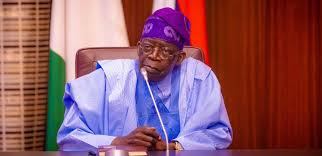
President Bola Tinubu’s decision to consider relief for domestic airlines over soaring Jet A1 fuel costs has exposed a deeper contradiction in Nigeria’s economic management. While the government is moving to cushion the impact of the crisis on airlines, millions of Nigerians who do not fly continue to bear the same fuel-driven hardship without meaningful relief. The trader moving goods by road, the farmer transporting produce to market, the worker struggling with daily fares, and the family battling food inflation are all victims of the same crisis. Their pain may be less visible than that of airline operators, but it is far more widespread and severe.
I say this with a real appreciation for aviation and what it means to national growth. Having helped float an airline before, and with more than 20 hours of flight time under my belt, I understand that this is not a business sustained by sentiment or goodwill alone. It is a difficult, capital-intensive sector where fuel costs, exchange rate pressures, regulatory burdens, and financing constraints can quickly push operators into distress. That is why I do not dismiss the urgency behind government intervention in the industry.
But that is also what makes this moment so troubling. Nigeria is an oil-producing country, yet its citizens are being asked to absorb relentless fuel-linked suffering in the name of reform and fiscal discipline. Subsidy removal has been defended as a hard but necessary economic choice, even as it continues to deepen hardship across the economy. When a policy inflicts mass pain on ordinary people but suddenly becomes flexible when a strategic or elite-facing sector comes under pressure, its logic begins to collapse under the weight of its own contradictions.
The truth is that this may be politically expedient, but it is not economically wise. A government cannot keep using public suffering as proof of seriousness while ignoring the corruption, inefficiency, and poor sequencing that have done far more damage than subsidy alone. It cannot continue making millions of Nigerians suffer merely to save face or preserve the appearance of ideological consistency. That is not reform in any meaningful sense, but a form of selective compassion that protects the visible while neglecting the vulnerable.
I support efforts to keep domestic airlines alive because aviation matters to commerce, connectivity, and national development. But real reform cannot be selective, and relief cannot remain the privilege of sectors that command access and attention. If airlines deserve emergency support because costs have become unbearable, then the same government must admit that life has become unbearable for millions of Nigerians who may never enter an airport, but who keep the economy running every day.
Abidemi Adebamiwa is a student pilot and Managing Editor of Newspot Nigeria.