Rival factions clash over ADC congress in Zamfara

A fresh leadership dispute has emerged within the Zamfara State chapter of the African Democratic Congress (ADC), as two rival groups lay claim to the party’s structure following a contested congress.

One camp, led by Malam Mohammed Mainasara, maintains that it was officially authorised by the party’s national leadership to organise and supervise the congress in the state. Mainasara said he headed the committee assigned for the exercise, with Ambassador Zubairu Yalwa serving as secretary, alongside other members.

He noted that the committee carried out its assignment and facilitated the emergence of a new State Executive Committee (EXCO) through consensus backed by party stakeholders.

According to Mainasara, the exercise produced Malam Shehu Gulubba as State Chairman and Dr Ahmad Hashim as Secretary. Jafafar Aliyu was named Youth Leader, while Maryam Abdullahi emerged as Women Leader, among other positions.

But the development has been rejected by another faction led by Kabiru Garba Gusau, who insists he remains the duly recognised state chairman.

Gusau described the process that produced the new leadership as invalid, alleging that it was driven by individuals seeking to create division within the party for political purposes. He argued that any legitimate congress must involve broad consultation and agreement among all stakeholders.

He added that his faction has reported the matter to security agencies, including the Police and the Department of State Services (DSS), and warned that it would not accept the outcome of the disputed exercise.

Gusau also announced disciplinary action against those who took part in the congress, stating that, as chairman, he retains the authority to suspend or dismiss party members.

Osun PDP ALGON condemns APC council chairmen over protest

The Osun State chapter of the People’s Democratic Party-aligned Association of Local Governments of Nigeria, ALGON, has criticised a recent protest staged by council chairmen elected under the All Progressives Congress.

In a statement issued on Thursday, the PDP-backed ALGON leadership rejected allegations by the APC chairmen that the state judiciary had flouted court orders in matters concerning local government administration.

The APC council chairmen had on Wednesday organised a protest at the entrance of the Osun State High Court in Osogbo over the ongoing trial involving officials of a commercial bank linked to local government allocations.

During the demonstration, the protesters displayed placards bearing inscriptions such as “Say no to disobedience of court orders” and “Disrespect for court judgements is an invitation to anarchy.”

Speaking for the demonstrators, Ejigbo Local Council Development Authority chairman, Kolapo Olayanju, accused the state judiciary and Governor Ademola Adeleke of disregarding legal directives.

However, the PDP ALGON leadership described the protest as inappropriate and questioned the motive behind the action.

The statement, jointly signed by its chairman, Sarafa Awotunde, and secretary, Lukman Afolabi, labelled the protest “embarrassing and disgraceful.”

It alleged that the APC chairmen had remained in control of council administrations beyond their tenure.

According to the statement, “They have been occupying council offices for about 14 months after their tenure allegedly expired in October 2025 and have continued to collect funds meant for local governments.”

The PDP group also questioned the decision of the APC chairmen to protest at the court premises instead of allowing due legal processes.

“Do they want to stampede the judiciary? If they are certain of their claims, they should allow the court of law to determine the matter,” the statement read.

DAILY POST reports that the disagreement highlights the ongoing dispute between officials elected in the October 2022 local government elections and those elected in February 2025 over control of council areas in Osun State.

Plateau community women stage naked protest over removal of traditional ruler by Gov Mutfwang

Women from the Mushere community of Bokkos Local Government Area, Plateau State, on Thursday, April 16, 2026, took an unprecedented step by staging a nude protest over the removal of the traditional ruler of Mushere Chiefdom, the Mishkakam Mushere, Julius K. Diblang, by the state government.

The removal of the monarch, announced by the Ministry for Chieftaincy Affairs, was linked to ongoing insecurity in the chiefdom and allegations of his involvement in some conflicts, as well as his failure to address violent attacks, leading to accusations that he was a sellout among residents.

However, many indigenes of the chiefdom have risen in defence of the dethroned traditional ruler, claiming that his removal was a witch-hunt, as he had worked hard to restore peace and return displaced people to their homes.

Supporters of the monarch also claim that the government’s action was a misplaced priority during an active security crisis.

Since his removal in early April, different groups have staged pockets of protests demanding his immediate reinstatement, but the mother of all the protests was the naked demonstration by community women who stormed the council secretariat carrying placards with different inscriptions such as “Bring Back Julius Our Chief,” calling on the government to immediately reinstate their monarch, insisting that his removal has destabilised the community.

In video footage of the protest that circulated widely on social media, a group of elderly women was seen completely naked and marching through the community, chanting solidarity songs and expressing their grievances.

One of the leaders of the protesters, who spoke to journalists on why they had to go naked during the protest, said they stripped naked to tell Governor Mutfwang that he had erred in removing the monarch, insisting that he had done a lot to restore peace in the chiefdom.

“We had to remove our clothes to protest and demand that our paramount ruler, Mishkakam Mushere, Julius K. Diblang, who was unjustly removed from office, be reinstated immediately.

“This is a message from us to Governor Caleb Mutfwang that he should return Mishkakam Julius Diblang immediately or a big calamity will befall him. The world has seen our nakedness, and those who understand these things will know that you don’t take a woman’s nakedness for granted.

“Governor Mutfwang should better listen to us and bring back Mishkakam Mushere before it’s too late,” she said.

Akwa Ibom’s Power sector in crisis as audit dispute deepens

There is a renewed call for the annulment of the audit report by Savannah Energy on Ibom Power Company, IPC, (Akwa Ibom State owned power company) and for the engagement of independent and qualified audit firms that would conduct a fresh audit of the company.

Governor Umo Eno shortly after assumption of office in 2023 had a Memorandum of Understanding (MoU) with the Savannah Energy- owners of Accugas, (the gas suppliers to Ibom Power Company) to conduct a technical audit of Ibom Power with the aim of identifying the operational challenges and reposition the plant for optimum performance.

The audit, which was done under the supervision of Akwa Ibom Investment Corporation (AKICORP) was eventually submitted to Gov Eno in April 2024 amid allegations of conflict of interest and non visitation of the facility during the exercise.

Open Forum, a Non governmental organisation in the State, was first to raise concerns about the ethical validity of the Akwa Ibom State Government appointing Savannah Energy, the gas suppliers to Ibom Power Company as auditors of Ibom Power.

Then, some staff of Ibom Power lamented that Savannah Energy never visited the company before submitting its report.

Open forum was recalled to have said, “This represents a clear conflict of interest and violates international auditing standards, including the IFAC Code of Ethics and ISA 200/220. Awarding an audit to a company with vested commercial interests undermines credibility, transparency, and public confidence.”

The Convener of the Forum, Mathew Kofi Okono popularly known as MKO called for full independent audit of not just the Ibom Power Company but all other government owned investments under the supervision of AKICORP which according to him are in almost derelict states.

“The Forum calls for engagement of a fully independent and qualified audit firm for a credible, comprehensive, operational and technical audit of Ibom Power, Akwa Ibom Investment Corporation (AKICORP) and indeed all government-owned investments in the state with a view to repositioning them for optimum performance and improved Internally Generated Revenue (IGR).

“It is common knowledge that virtually all government-owned investments in the state under the supervision of AKICORP are either dead or on life support,” he said.

Meanwhile, almost two years after the audit report was submitted, the power situation in the State has not gotten better. Much has not been heard about the company aside the reforms and the sack of its Managing Director, Dr. Mayen Etukudoh.

Etukudoh was booted out of Ibom Power Company after his chilling revelations at the Akwa Ibom State House of Assembly where he informed the House of non-funding from the state government despite reported annual appropriations since he assumed office in 2016 till his exit in 2025.

He also reported in one of the public hearings a missing $80m said to have been given to Ibom Power Company by the Federal Government of Nigeria but never found its way to the company’s account.

Etukudoh’s exit from the company and the replacement with another has not brought significant impact in power supply in the State as Akwa Ibom is still dependent on a perennially epileptic National Grid.

Worried by the state of power in Akwa Ibom, Gov Eno recently constituted a Power Reform Implementation Committee (to be managed by a consultant) to find lasting solutions to issues of power outages and blackouts.

However, some analysts and experts have described the committee as lacking professional expertise in electricity generation, transmission, and utility management.

Engr Emmanuel Eno, a London based Akwa Ibomite, in his post on Facebook kicked against the composition of the Akwa Ibom State Power Reform Committee on grounds of “professional negligence.”

According to him, “The committee lacks a track record and needed technical capacity. If the goal is efficiency, sustainability, or real reform, this committee is destined to fail before it even starts. Power reform is technical, complex, and affects millions of our Akwa Ibom people.”

Also speaking, the former Vice Chancellor University of Uyo, Prof. Akpan Ekpo in a radio programme anchored by MKO advocated strongly for the engagement of indigenous experts to revive and reposition the power company instead of “engaging in talk shows,” as power according to him is a technical matter.

Meanwhile, in a statement issued by Okono on Monday, he noted that Akwa Ibom State government should as a matter of urgency consider the establishment of Ibom Gas Company to facilitate a coordinated investment in the gas sector to ensure undisrupted supply of gas to Ibom Power and other investments and service other clients as a way of boosting the IGR of the state.

He also called for a diligent review of the 2009 MoU with Savannah Energy (Accugas) on the Gas Sales and Purchase Agreement and other investments, like the 69km Gas Pipeline to the Gas Plant.

Going back to memory lane, MKO said with the supply of gas being projected as a potential major challenge to the operation of Ibom Power Company, the Akwa Ibom State in 2009 under the administration of former Gov Godswill Akpabio signed a $66m Gas Sales and Purchase Agreement (GSPA) with Seven Energy owners of Accugas, now known as Savannah Energy for Accugas to build and operate a gas infrastructure in the state that will supply gas to Ibom Power.

“The sum of $33m was paid upfront as a form of commitment with the balance structured for monthly deductions from the State Government account.

“Additionally, Akwa Ibom State Government built a 69km gas pipeline to assist the company in the establishment of their $350m gas processing plant in the State.

“But the 10-year agreement signed with the company saw the state paying $2 instead of 40 Cents as gas was selling for then. The price differentials later tilted in favour of the state, which meant revenue to the coffers of the government.”

He said such an agreement should be revisited to ascertain the position of the state government.

He expressed hope that with the decentralised national power policy, presence of Ibom Power plant, abundant gas and manpower in the state (experts), Akwa Ibom State would be a model in resolving the intractable power crisis in Nigeria.

Lagos strategically placed to be light of Africa – Obasa

The Speaker of the Lagos State House of Assembly, Mudashiru Obasa, has disclosed that the state is statistically positioned as the leading light of Africa.

He said the state stands as the leading light of the continent economically and geographically.

Obasa made these remarks when he received the new leadership of the Lagos Chamber of Commerce and Industry (LCCI).

The organisation, led by its President, Engineer Leye Kupoluyi, visited the Speaker in his office on Thursday.

Obasa, in a statement made available to DAILY POST, noted that the state has remained pro-business and pro-people.

He added that the state is the centre of Nigeria’s economy.

He also mentioned that despite the fact that Abuja is the Federal Capital Territory, Lagos continues to drive the nation’s economic strength.

Obasa, while speaking further, insisted that Lagos remains the best destination for investment in the country.

He said, “Lagos is the centre of Nigeria’s economy. We have always been pro-business and pro-people, and our laws reflect this commitment.

‘Lagos is strategically positioned to be the leading light of Africa, geographically, economically, and otherwise.’”

Maiduguri: Army relocates Monguno IDPs over incessant attacks

The Nigerian Army said it has relocated a large number of Internally Displaced Persons (IDPs) into Monguno town, where they are kept in makeshift structures.

Lieutenant Ayodeji Abiodun, Acting Assistant Director, Army Public Relations, Headquarters Sector 3 OPHK/MNJTF, Monguno, in a statement, said new camps were constructed within the town to house the IDPs.

“With the construction of the new camps, many of these IDPs moved from the makeshift structures to the camps, except IDPs from areas within the Marte axis that still remain in the makeshift structures within the town. They rejected relocation to the new camps,” it said.

The statement said intelligence revealed that residents of Gana Ali and Stadium IDP camps have been providing accommodation for terrorist infiltrators when they carry out attacks on military deployments in the area.

It further added that the terrorists made the Gana Ali and Stadium IDP camps inaccessible to other residents in the town and even to CJTF personnel in Monguno.

The CJTF have duty locations in all parts of the town, except at GG, Gana Ali, and Stadium IDP camps, as their personnel earlier deployed on guard duties at these places were killed by terrorists who infiltrated the area.

No plan to borrow from IMF’s $50bn fund – FG

The Federal Government on Thursday declared that it has no plan to approach the International Monetary Fund to borrow from the estimated $50bn, which the IMF had earlier announced on Wednesday that it plans to use and support struggling economies in Africa.

The Minister of Finance and Coordinating Minister for the Economy, Wale Edun, disclosed this at a press briefing during the ongoing Spring Meetings of the World Bank/IMF in Washington DC, United States.

The PUNCH earlier reported that the Managing Director, IMF, Kristalina Georgieva, had advised countries facing economic pressures to act swiftly in seeking financial support when necessary, warning that delays could worsen economic conditions.

“My advice is that when you need help financially, don’t hesitate to move fast, because the sooner we act, the more we protect the economy,” she

Georgieva also revealed that the institution was committed to financially supporting member countries through the current challenges, adding that about $20bn to $50bn was being planned by the IMF for this exercise.

“We anticipate financial demand for IMF support to range between $20bn and $50bn, which represents augmentation of some existing problems and prospective demands from new problems from at least a dozen countries, a number of them in Sub-Saharan Africa,” she said.

But while responding to a question on Thursday, whether the Federal Government would approach the IMF to borrow from the fund, Nigeria’s finance minister, Edun, responded negatively.

“Nigeria has no plan at the moment to approach the IMF for any other such burden,” Edun declared.

The minister also told the meeting on Thursday that African nations need “extra help” at this moment.

He noted that the Middle East crisis is one that affects African countries and economies disproportionately, stressing that while nations in this region “are not creators in any way of this situation, they stand to command greater pressure than perhaps any other region.”

The minister added, “This is in terms of the threat to macroeconomic stability, growth trajectories, and their ability to create jobs and reduce poverty in their countries.

And I think that is a clear statement, particularly to those identified as the most vulnerable oil-importing countries. They need and deserve extra help at this time.”

Recall that Georgieva earlier observed that many of the countries most affected by the Middle East crisis are located in Sub-Saharan Africa, adding that the IMF was working to identify those in urgent need of assistance. “We are very determined to use this week to identify which of the countries must get our support,” she stated.

She emphasised the importance of strong fiscal and economic policies, urging governments to build buffers during periods of economic stability to better withstand future shocks. According to her, prudent economic management in good times remains critical for resilience during downturns.

The IMF chief also disclosed that during a meeting with central bank governors and finance ministers from Africa held the previous day, officials did not request immediate financial assistance but instead sought policy guidance.

“But, of course, there could be a need for financial support. And my advice is that when you need help financially, don’t hesitate to move fast, because the sooner we act, the more we protect the economy,” she said.

Georgieva highlighted the broader global implications of the Middle East conflict, noting that it has already inflicted significant economic damage. “We have been watching developments in the Middle East. A war that causes significant pain to people and economies in the region and around the world. The impact on the global economy is already large,” she said.

She explained that supply chain disruptions and damage to infrastructure are driving up prices and slowing global economic growth. According to her, global growth is projected to decline from 3.4 per cent last year to 2.1 per cent in 2026. She warned that if the conflict persists and oil prices remain elevated for a prolonged period, global economic conditions could deteriorate further.

“But if the conflict persists, and oil prices stay high for an extended period, we must brace for tough times ahead,” she added.

On the IMF’s global outlook, Georgieva cautioned that in a worst-case scenario, global growth could fall to two per cent, stressing that the impact would be widespread. She noted that countries that depend on energy imports are particularly vulnerable, many of which are low-income or fragile economies.

“In the most adverse case, growth could fall to two per cent, and the shock is global,” she said, adding that the highest negative impact is being felt by energy-importing nations.

MTN suspends Xtratime over new lending regulations

MTN-new-logo-e1663465256894MTN Nigeria, the country’s largest telecoms operator, has suspended its airtime and data lending service known as “Xtratime” as new regulatory requirements under Nigeria’s expanded digital credit rules take effect.

The company said the temporary suspension was driven by compliance obligations under the Federal Competition and Consumer Protection Commission’s Digital, Electronic, Online or Non-Traditional Consumer Lending Regulations, 2025, which introduce a revised licensing and oversight framework for providers of digital credit services.

MTN disclosed the decision in a corporate filing to the Nigerian Exchange Limited on Thursday, noting that Xtratime, which allows prepaid subscribers to borrow airtime or data and repay on their next recharge, would remain unavailable while the company aligns with the new requirements.

In the disclosure signed by its Company Secretary, Uto Ukpanah, MTN said the service falls within the scope of the updated regulations and therefore requires additional compliance processes before it can resume.

“MTN Nigeria Communications PLC hereby notifies the Nigerian Exchange Limited and the investing public that the company has temporarily suspended its airtime and data credit advance service (‘Xtratime’),” the company said.

It added that the suspension relates to “the implementation of processes under the Digital, Electronic, Online or Non-Traditional Consumer Lending Regulations, 2025, which introduced a new compliance and licensing framework for entities providing digital or non-traditional consumer credit services”.

Despite the suspension, MTN said customers would continue to access other channels for purchasing airtime and data and stressed that the decision is not expected to materially affect earnings.

“Given the scale within the revenue mix, we do not expect the temporary suspension to have a material impact,” the company said, adding that it was monitoring customer behaviour and usage patterns and would provide updates in its first-quarter 2026 results.

The suspension highlights the widening scope of Nigeria’s consumer lending regulation, which now extends beyond traditional financial institutions t include telecoms operators and other providers of short-term digital credit.

The FCCPC had previously introduced a limited regulatory framework for digital lending in 2022 but escalated its oversight with the 2025 regulations, which require all operators in the sector to register and obtain approval to continue offering services.

Under the rules, companies providing non-traditional credit services, including airtime and data advances, are required to comply with licensing conditions as part of efforts to improve transparency, consumer protection, and data governance in the rapidly growing digital lending space.

The commission has also set transitional deadlines for operators already providing such services, with a compliance window extended to April 2026 for full registration under the new framework.

The regulatory tightening reflects broader concerns around consumer debt exposure, data privacy, and aggressive lending practices in Nigeria’s fast-expanding digital credit market, which has seen rapid growth in recent years alongside mobile penetration.

For telecom operators, the changes introduce a new layer of compliance in services that have become a key feature of prepaid mobile offerings, particularly for low-income users who rely on short-term airtime advances to stay connected.

MTN said it would continue to monitor developments under the new framework as it works toward full compliance before resuming the service.

Crude oil prices rise on renewed US-Iran talks

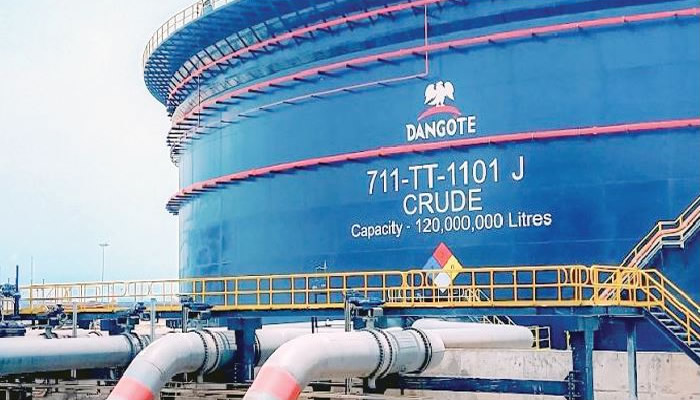
Crude oilCrude oil prices moved higher on Thursday, with WTI trading near $92 per barrel and Brent rising above $95, as markets rebounded from earlier weakness and tracked fresh developments around the US-Iran conflict. The recovery comes as traders reassess geopolitical risks and weigh whether ongoing ceasefire discussions could stabilise supply routes.

Coin Paper reports indicate that Washington and Tehran are considering extending their current two-week ceasefire to allow more time for negotiations. That possibility has started to shift sentiment.

The White House has signalled optimism about a potential agreement, with officials pointing toward a second round of talks likely to take place in Pakistan. At the same time, Iranian officials are engaging in parallel discussions, including meetings in Tehran aimed at relaying messages between both sides.

Despite the talks, the Strait of Hormuz remains effectively closed under a US naval blockade targeting Iranian ports. This chokepoint handles a significant share of global oil shipments, so any disruption quickly ripples through energy market

While US officials say they have halted commercial traffic to and from Iranian ports, some Iran-linked vessels have continued to move through the strait. That contradiction raises a key question: how much supply actually flows right now? The answer remains unclear, and that uncertainty keeps volatility elevated.

Iran has also issued warnings. Officials have indicated that an extended blockade could trigger retaliation, including disruptions across the Persian Gulf, the Sea of Oman, and even the Red Sea. Such threats continue to anchor risk premiums in oil prices.

At the same time, military developments continue to shape expectations. Reports suggest that the US Department of Defence plans to deploy thousands of additional troops to the region in the coming weeks. Meanwhile, Israeli airstrikes in southern Lebanon highlight how the conflict extends beyond a single front.

These overlapping tensions complicate the outlook. Even as diplomacy gains traction, military activity continues to influence trader sentiment. The market now faces two competing forces: optimism around talks and concern over escalation.

Attention now shifts to the expected second round of US-Iran negotiations. These discussions will likely focus on reopening the Strait of Hormuz and addressing Iran’s nuclear programme. Progress on either front could quickly shift market direction.

Investors also track broader regional diplomacy. Planned talks between Israel and Lebanon mark another potential turning point, especially as efforts to reduce cross-border tensions gain momentum.

Oil markets now move in a narrow but volatile range, reacting to every update. Traders watch closely for confirmation of a ceasefire extension and any signals that shipping routes may reopen. Each headline carries weight, and price swings reflect that reality in real time.


Nigerian Breweries strengthens operations against macro risks

Nigerian Breweries PlcNigerian Breweries Plc has assured stakeholders and consumers that it is strengthening its operations against key risks, including supply chain disruptions linked to the Middle East crisis, naira instability, and rising inflation, particularly food inflation.

The company outlined strategies to sustain growth and protect consumers from pricing shocks during its 80th pre-annual general meeting media briefing held in Lagos on Thursday. Explaining the strategies, NB Plc Finance Director Maria Karaseva said the brewer had identified three major external risks and was proactively managing them to build resilience. She noted that Heineken’s financial moat kept the company relatively secure.

Karaseva said, “We are pulling out three factors, and they have different impacts on us. First is the sustainability of supply driven by the Middle East crisis, which affects our ability to maintain consistent production levels and meet market demand. Here we are relatively in control. We are part of the Heineken Group. Heineken is our major investor. We are relying on the proven supply cusps and tracks. We are tracking regularly the sustainability of our supply. We see no big issues coming out of Nigeria from what is going on.”

Karaseva added that the company was leveraging its relationship with its majority shareholder to cushion potential supply shocks.

On currency volatility, she said the firm was deploying financial hedging tools to protect its business, particularly in response to the instability of the naira, which has been fluctuating significantly against major currencies. “The second thing is the instability of the naira. We have observed it so far. The naira passed the stress test when the crisis happened,” she noted. “It continues to be stable, and I should say that this is fundamental for the economy of Nigeria to have a stable currency. We really ask the government to continue with its efforts to keep the naira’s stability in place. From our side, we are also using financial instruments and tools to protect us against potential volatility.”

Addressing inflationary pressures, particularly rising food prices, Karaseva said the company was focused on maintaining affordability for consumers through flexible pricing strategies.

She said, “The third factor on the macro level which can impact us is the rise in inflation, especially in food. We, as Nigerian communities, feel a responsibility as leaders of this category. We feel responsible for what happens with the price of the products and the affordability of our products to the consumers. So we are doing all that we can.

“We have a very wide tool set on how not to take pricing further in this difficult environment. We have global food practices which we are bringing to Nigerian ground to contain pricing inflation.”

The finance chief added that the company was building a resilient structure capable of absorbing shocks if conditions worsen.

Karaseva said, “So these are the major risks, and we are on a pathway to build a resilient structure which will help us to absorb those shocks at least if they don’t escalate any further.”

The Managing Director/Chief Executive Officer, Thibaut Boidin, also acknowledged that the operating environment remained volatile, citing inflation, foreign exchange pressures, and weak consumer purchasing power.

He said, “It’s not a secret that we’re operating in a very volatile environment, a very complex environment. (Although) In 2025, we can all recognise that the macroeconomic environment was a bit more stable than in the previous years, but we remain dependent on FX, and purchasing power remains under pressure.”

Boidin noted that the Middle East crisis continued to pose risks to the broader economy, while inflation had constrained beer consumption due to reduced disposable income.

Despite the challenges, the company reported a strong financial rebound in 2025. Group revenue rose by 35 per cent to N1.5tn, while gross profit increased 77 per cent to N565bn. Operating profit grew 194 per cent to N205bn.

The brewer also returned to profitability, posting a profit before tax of N161bn and a net profit of N99bn, compared to losses recorded in 2024.

Finance director Karaseva attributed the turnaround partly to improved cost management and reduced finance expenses following the company’s 2024 rights issue.

She said, “2025 was really a financially successful year for us. In 2024, the operating environment was really difficult, but in 2025, the stability of the Naira, the strength of our brands, and a focus on premiumisation supported the growth in our results.”

The company also recorded a positive cash flow position after years of negative balances, reflecting improved operational efficiency.

Looking ahead, Nigerian Breweries said it would prioritise consumer protection and affordability while maintaining financial discipline.

Karaseva said, “Taking very accurate revenue management, not passing all the problems happening around us to our consumers, is our prime goal, and we will see that in the year 2026.”

NB Plc added that while it had made a significant recovery, it would retain earnings to strengthen its balance sheet amid ongoing uncertainties, with dividend payments to resume once the business fully exits its recovery phase.