I didn’t want to throw Nigeria into turmoil – Tinubu on why he signed Electoral Act

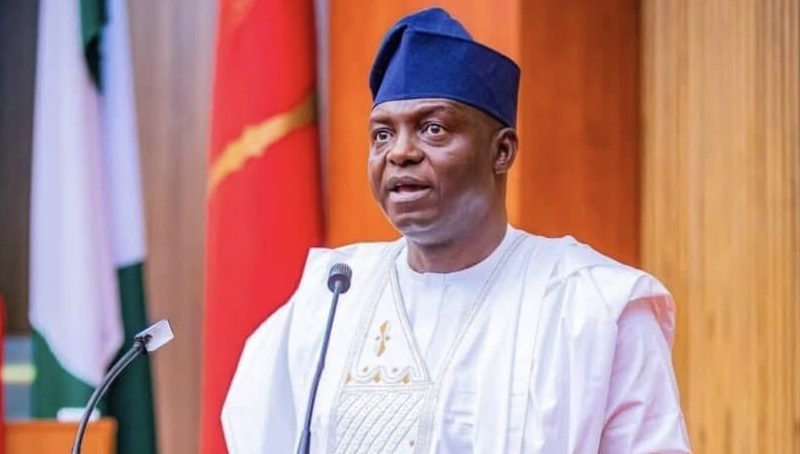
President Bola Ahmed Tinubu has said he had “no choice” but to sign the Electoral Act, explaining that the bill was passed with overwhelming support by the National Assembly of Nigeria.

According to Tinubu, he chose to respect the rule of law rather than plunge the country into political turmoil.

He made the remarks while addressing the All Progressives Congress, APC, leaders and the Inter-Party Advisory Council (IPAC) on Wednesday at the State House, Abuja, where he reflected on the challenges of governance and the nature of politics in a democratic system.

Speaking on the Electoral Act, the president said he chose to respect the decision of the National Assembly of Nigeria, which passed the legislation with overwhelming support.

“I had no choice. I didn’t want to throw the country into turmoil of argument,” Tinubu said.

“There was an overwhelming majority in the National Assembly that passed the law. If I had serious questions or reservations, I would have raised them. But I submitted myself to the principle of the rule of law and democracy. I signed, and the rest is history.”

The president stressed that democracy requires compromise and mutual support among political actors, noting that political competition often feels rewarding only when one is victorious.

“The game of politics is sweet only when you’re winning,” he said.

Tinubu added that leaders and citizens alike must learn to accommodate and support one another in order to strengthen democratic institutions.

“We must accommodate one another. We must help one another. We must strengthen the platform. But in democracy, yes, there must be peace, stability, and commitment to the rule of law,” he said.

Graduates, undergraduates undergoing rehabilitation in our Abia Centre – NDLEA

The National Drug Law Enforcement Agency, NDLEA, Abia State Command, has disclosed that about fifty persons, including graduates and undergraduates, are undergoing rehabilitation at its centre in Aba, Abia State.

According to the command, those undergoing rehabilitation were previously involved in drug addiction or abuse and were brought to the centre by their families and relatives for treatment by the NDLEA.

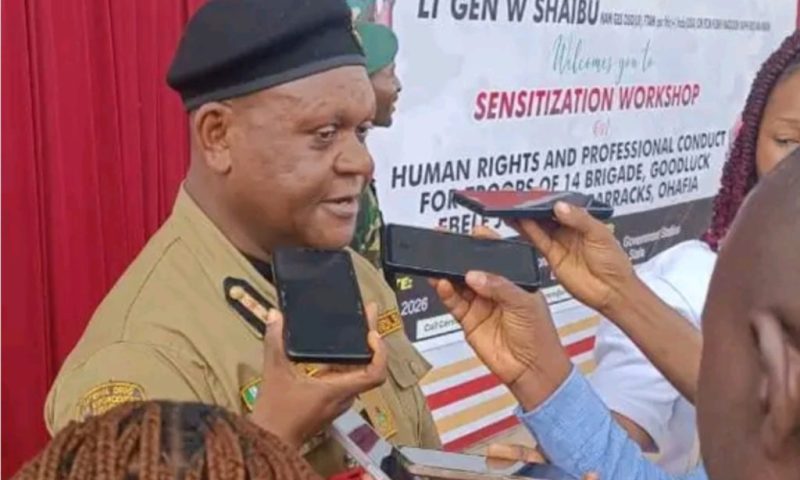
The disclosure was made by Deputy Commander of Narcotics, Bekwele Chukwu, in Umuahia when he delivered a lecture at a sensitisation programme organised by the Nigerian Army for the troops of 14 Brigade, Ohafia.

He noted that through the efforts of the NDLEA, youths and community leaders are being sensitised about the dangers of drug abuse and other harmful substances.

DCN Chukwu, who stood in for the Abia State NDLEA Commander, CN Chigbu Odoemelam Chilee, gave an in-depth presentation on the various categories of illicit and psychoactive substances, their psychological and physiological effects, and the grave consequences of substance abuse on operational efficiency, discipline, and national security.

He emphasized that drug abuse within the military undermines professionalism, compromises judgment, and endangers lives. He encouraged troops of 14 Brigade to remain vigilant, uphold integrity, and seek help where necessary, stressing that prevention remains the most effective approach.

FUTMINNA Bosso Campus: Tension heightens as students, staff oppose Niger Govt takeover

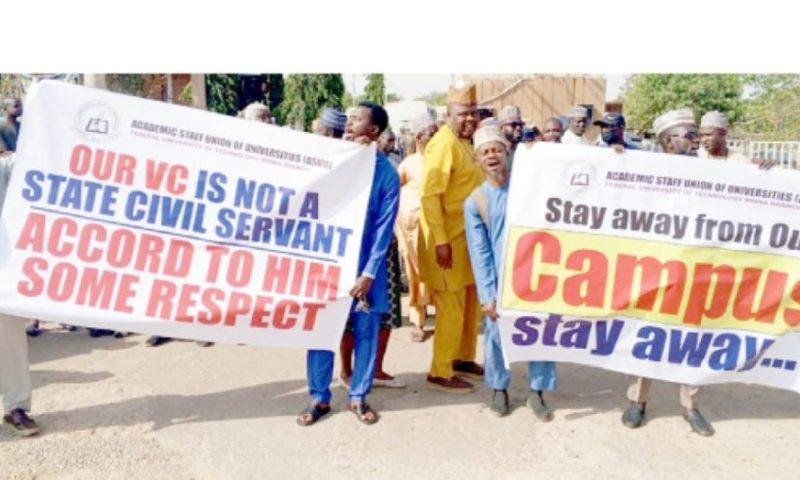
Thousands of students and staff at the Federal University of Technology, Minna, FUTMINNA, face uncertainty as the Niger State Government moves to gain access to the Bosso Campus amid ongoing exams and academic activities.

The campus has become the center of a heated dispute after letters from the state government demanded that the university vacate the property.

The state claims the campus was leased for 30 years and that the lease had expired, intending to reallocate it for pioneer medical students at the state-owned Ibrahim Badamasi Babangida University Lapai, Teaching Hospital (IBBUTH).

Students and staff, however, rejected the claim, insisting the campus remains active and fully functional.

The dispute, unfolding during continuous assessments and exam preparations, has caused significant anxiety, as many rely on Bosso for classrooms, laboratories and hostels.

“We are writing continuous assessments now and preparing for exams. If we are asked to leave the campus suddenly, it will seriously affect our academic progress,” a student at Bosso Campus told DAILY POST on condition of anonymity.

Other students stressed that sudden relocation would disrupt access to essential academic resources and could affect deadlines.

Many emphasized that Bosso Campus is critical for laboratory work, library access and hostel accommodation for both male and female students.

DAILY POST Visits Bosso Campus

A visit by DAILY POST confirmed that academic activities continue despite tensions. Laboratories, classrooms and administrative offices were operational, contradicting claims by the State that the campus had been abandoned for years.

Interactions with students highlighted Bosso Campus as central to both academic and social infrastructure, underscoring potential disruption if the dispute escalates.

Queues in Delta over hike in fuel price

Scarcity of fuel has hit Delta State, first noticed on Monday in places like Asaba, Agbor, and Umunede.

The situation worsened on Tuesday as news of a price increase spread.

Most fuel filling stations in parts of Asaba and its environs witnessed long queues of vehicles as independent petroleum marketers increased pump prices to between N1,200 and N1,400 per litre.

Many stations locked their gates, while those still dispensing fuel sold at the new prices, resulting in long queues.

Some filling stations that sold fuel at N1,050 and N1,100 over the weekend have adjusted their prices to the current levels.

Rain Oil stations along Okpanam Road, the Expressway, and other outlets in Asaba, Ogwashi Uku, and within the state capital territory are dispensing fuel at N1,250 to N1,300 per litre.

Reports from Agbor indicated that some filling stations, including North West in Asaba, were selling at N1,250 per litre around 4 p.m. on Tuesday.

Intra-state transport fares have increased, with fears of further hikes if authorities do not intervene, given petrol prices in Delta State now range between N1,250 and N1,300 per litre.

An IPMAN official in the Delta State branch, who spoke on condition of anonymity, said independent marketers should not be blamed for the pump price increase, attributing it instead to OPEC.

The official added that his members have no choice but to sell fuel between N1,200 and N1,400 per litre after purchasing it from privately owned depot agents.

He appealed to the federal government to act quickly so that marketers can access fuel at the government-approved price.

NGX loses N107bn as bearish sentiment persists

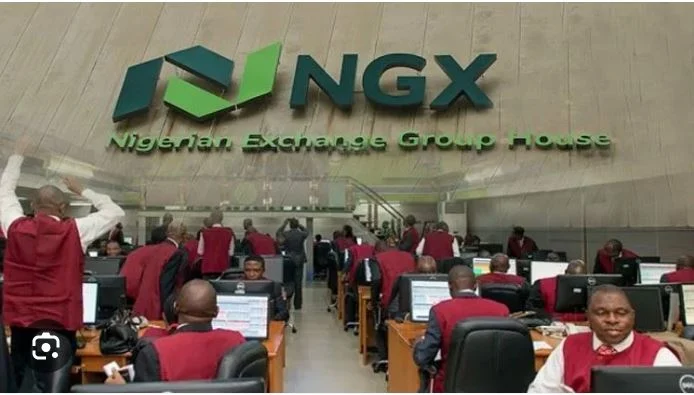
Nigerian Exchange LimitedTrading on the Nigerian Exchange closed slightly lower on Wednesday as profit-taking in selected equities continued to weigh on the market, dragging key performance indicators into negative territory.

Market data showed that the benchmark All-Share Index declined 0.09 per cent to close at 195,898.53 points compared with the previous session’s level, as investors booked profits in some large- and mid-cap stocks.

Consequently, market capitalisation shed N107.57bn to settle at N125.75tn. Despite the marginal decline, the market still maintained positive returns, with the month-to-date gain standing at 1.6 per cent, while the year-to-date return moderated to 25.89 per cent.

The downturn was largely driven by losses recorded in stocks such as Presco Plc and UAC of Nigeria Plc, both of which declined 10 per cent, alongside Dangote Cement Plc, which slipped 0.6 per cent.

Activity level on the exchange weakened as investors traded a total of 671.27 m shares valued at N26.13bn in 58,792 deals. This represents a decline of 8.61 per cent in volume, 5.18 per cent in value, and 9.31 per cent in the number of transactions compared with the previous trading session.

Wema Bank Plc emerged as the most actively traded stock by volume and value, accounting for 106.36 million shares worth N2.75bn.

Sectoral performance was mixed, with the Industrial Goods index leading the gainers after advancing 1.42 per cent, while the Banking index recorded a marginal gain of 0.04 per cent.

Conversely, the Commodities sector topped the laggards, declining 1.30 per cent. The Insurance index fell 0.44 per cent, and the Consumer Goods index dipped 0.43 per cent, while the Oil and Gas index edged down 0.06 per cent.

Market breadth closed negative, reflecting bearish investor sentiment, as 40 stocks recorded losses compared with 29 gainers, translating to a market breadth ratio of 0.7 times.

Among the top gainers were NGX Group Plc and Premier Paints Plc, which appreciated 10 per cent and 9.9 per cent, respectively. Other notable gainers included Omatek Ventures Plc, Prestige Assurance Plc, and HMC Allied Plc.

On the losers’ chart, Presco Plc and UAC of Nigeria Plc led the decline with 10 per cent losses each, followed by Morison Industries Plc, LivingTrust Mortgage Bank Plc, and SCOA Nigeria Plc.

Seplat to drill 17 wells, targets 155,000 bpd

Seplat Energy Plc

Seplat Energy Plc has announced plans to drill 17 new wells in 2026 as part of efforts to boost production, with the company targeting output of up to 155,000 barrels of oil equivalent per day.

The plan forms part of the indigenous energy firm’s 2026 business strategy aimed at strengthening production and supporting its long-term 2030 output targets, according to details contained in the company’s 2025 full-year report.

Seplat disclosed that the 2026 drilling programme will involve 17 new wells, most of which will be located onshore.

The report stated, “The 2026 programme includes drilling 17 new wells: onshore, 15 wells; and offshore, two wells.”

The company also announced that its initial production guidance for 2026 has been set at between 135,000 and 155,000 barrels of oil equivalent per day.

“Initial 2026 production guidance is set at 135-155 kboepd,” the company said.

According to the report, onshore operations are expected to account for between 43 and 48 per cent of production, while offshore assets will contribute between 52 and 57 per cent.

Seplat noted that the 2026 drilling activities form part of a broader investment programme with capital expenditure projected at between $360m and $440m.

“Working interest capital expenditure for 2026 is expected to be in the range of $360-$440 million. Capex is expected to be equally split between onshore and offshore,” the report stated.

The company said offshore drilling activities will involve the deployment of a jack-up rig currently in Nigeria for a multi-year campaign.

“The jack-up rig, Shelf Drilling Victory, is currently in Nigeria, and the multi-year, multi-well infill drilling campaign is expected to commence in 3Q,” Seplat said.

It added that the offshore drilling programme for 2026 will focus on two new well completions at Oso in Oil Mining Lease 70.

Seplat explained that its 2026 business plan maintains a strong emphasis on strategic maintenance and asset integrity activities required to support its long-term production growth.

The firm noted that production growth in 2026 will largely be driven by gas and natural gas liquids as the ANOH gas processing plant ramps up operations and the first expansion phase at Oso is completed.

According to the report, the Oso expansion will double the company’s offshore gas sales capacity.

“Production growth will be driven by high-value NGLs and gas as ANOH ramps to full capacity and we complete the first expansion phase at Oso, doubling our offshore gas sales capacity,” the company said.

Seplat added that oil production growth will be supported by restoration of idle wells and drilling of new wells, although output could be affected by planned maintenance activities and downtime at the Yoho field.

The report indicated that Yoho is expected to resume production in the second quarter of 2026 after a fire incident last year.

It also projected strong growth in natural gas liquids production in 2026.

Seplat stated that NGL output at the midpoint of its production guidance is expected to increase by about 85 per cent year-on-year following the successful replacement of the inlet gas exchanger at the East Area Project.

“Improved NGL throughput will be seen from 1Q 2026,” the company noted.

Gas production is also expected to rise significantly, with the midpoint of the company’s guidance indicating an increase of about 30 per cent year-on-year.

Seplat said the increase will be driven by equity production of wet gas from the ANOH project following its start-up in January 2026, as well as higher offshore gas sales expected from the third quarter after the completion of the Oso-BRT Phase 1 expansion.

In terms of operating costs, the company projected that unit operating costs will range between $13.5 and $14.5 per barrel of oil equivalent.

According to the report, the expected increase in production will help reduce unit operating costs compared to the previous year.

“The reduction in unit operating costs versus the prior year reflects the anticipated increase in production, with operating costs expected to remain relatively stable in 2026,” Seplat stated.

However, the company noted that partial shutdowns of offshore assets are expected during the year as part of efforts to improve reliability and asset integrity.

It said such shutdowns are likely to occur particularly in the first and fourth quarters of 2026.

The firm added that its financial strategy is designed to ensure that the company can fund capital expenditure, meet debt obligations and maintain returns to shareholders.

The company explained that its revenue stream remains largely tied to US dollar-denominated oil exports, while gas sales and domestic oil supply generate naira revenue used to fund most local costs.

The report estimated cash tax payments of between $400m and $450m in 2026, based on assumed average prices of $65 per barrel for oil, $39 per barrel for NGL and $2.75 per thousand standard cubic feet for gas.

Seplat also reiterated its dividend policy, stating that its quarterly base dividend of 5.0 cents per share will be maintained for the year.

“With respect to dividends, our quarterly base dividend of USD 5.00/shr will be implemented for the year. Any cash dividend payable in excess of the base amount will be estimated with our half-year results and paid in two instalments with the 3Q and 4Q dividend declaration,” it added.

The company further disclosed that discussions are ongoing with its joint venture partner regarding a potential sale of a 10 per cent working interest in the SEPNU-NNPC joint venture.

However, Seplat said no agreement has been reached, and it would provide updates if there are further developments.

N3.3tn debt: Gas suppliers cut supply, blackout looms

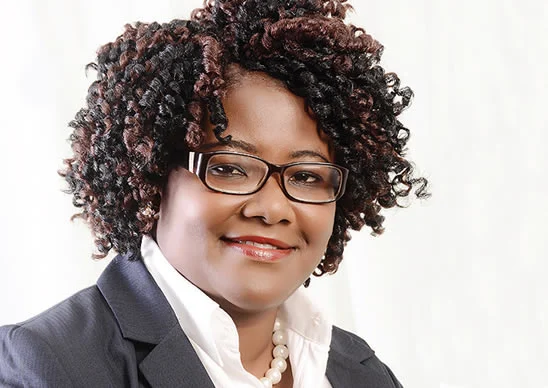
The Managing Director/Chief Executive Officer of the Association of Power Generation Companies, Joy OgajiNigeria’s electricity crisis may worsen in the coming weeks as gas suppliers halt supply to thermal power plants over an estimated N3.3tn debt owed by power generation companies, a development that could deepen the nationwide power shortage.

The Chief Executive Officer of the Association of Power Generation Companies, Dr Joy Ogaji, disclosed this during an interview on Fresh FM, monitored by our correspondent, warning that the mounting debt across the power value chain is pushing the sector toward a major crisis.

Her comments come amid worsening electricity supply across the country, with many Nigerians experiencing prolonged blackouts since the beginning of the year.

Data from the Nigerian Independent System Operator shows that power generation dropped below 4,000 megawatts in recent weeks, largely due to gas constraints affecting thermal power plants. As of Tuesday, the 11 power distribution companies were sharing only 3,053MW, making the reliable supply of electricity impossible across their franchise areas.

Electricity consumers, regardless of the supply bands they belong to, have continued to lament the situation, especially amid rising fuel prices and the severe heat.

Recently, NISO provided operational data illustrating the scale of the shortfall, noting that thermal power plants require an estimated 1,629.75 million standard cubic feet of gas per day to operate at optimal capacity. However, as of February 23, 2026, actual supply stood at about 692.00 mmscf per day—representing less than 43 per cent of the required volume.

As gas supply continues to decline, it was gathered that several power plants have shut down while the Transmission Company of Nigeria engages in load shedding, rationing the limited energy available among the DisCos. On their various platforms, the distribution companies have repeatedly appealed to customers, attributing the outages to gas shortages.

Speaking on the situation, Ogaji explained that the crisis stems from the failure of the Nigerian Bulk Electricity Trading Plc to fully pay for electricity generated by GenCos since the sector’s privatisation. According to her, the government currently owes generation companies about N6.8tn, with roughly 70 per cent of the amount relating to thermal plants.

She explained that about 70 per cent of whatever the government owes gas-fired power plants belongs to gas suppliers, meaning gas companies are owed about N3.3tn out of the N4.76tn tied to thermal generation.

Ogaji disclosed that gas suppliers have informed generation companies that they will no longer supply gas to power plants unless payments are made. She added that power generation companies have continued to keep records of all outstanding payments owed to them by the Nigerian Bulk Electricity Trading Plc.

“NBET is set up to buy power from GenCos and sell to DisCos. The aim is that as they buy power, they will pay in full, but since 2013 till today, they’ve never paid in full, so this debt is now N6.8tn,” she said.

Providing a breakdown of the debt, Ogaji stated that the liabilities have grown significantly over time.

“From 2015 to December 2024, the debt profile grew to N4tn. In each month of 2025, there is a shortfall of N200bn, so if you calculate N200bn times 12, that is N2.4tn, making the whole debt N6.4tn after December 2025. We’re already in March 2026. The debt grew to N6.6tn in January and N6.8tn in February. At the end of March, you need to add N200bn again to make it N7tn,” she said.

Ogaji added that a significant portion of the outstanding debt is owed to gas suppliers because thermal plants account for the majority of electricity generation on the national grid.

She said, “The generation companies have hydros, and we have thermal power plants. The thermal power plants are the ones that use gas. The hydro plants use water, so they do not owe gas suppliers.

“On the grid, we have 30 power plants; out of that, about 30 per cent are hydro now because Zungeru has added 700 MW, and there are other smaller hydro plants.

So, the remaining 70 per cent comes from gas.

“Therefore, for every N100 the thermal plants invoice NBET, N70 belongs to the gas suppliers. So, if we go by that ratio, out of the N6.8tn that I’m quoting, if we take out 70 per cent of that money that belongs to thermal plants, we need to work out another 70 per cent of that thermal 70 per cent, and that belongs to gas suppliers.”

Industry estimates based on this calculation show that about N3.3tn of the total debt is owed to gas producers, whose fuel powers most of Nigeria’s electricity generation.

The GenCo chief warned that the worsening debt crisis is directly responsible for the current electricity shortages. “Yes, it is 120 per cent correct to say that the debt is the reason why we are in darkness,” she said.

Ogaji added that gas producers are increasingly insisting on payment before supplying fuel to power plants.

“Gas is not available because the gas suppliers have told us that if we need gas, we need to put money on the ground to get gas in the pipe. We owed them a lot of money.

“The gas suppliers have really been very kind to us. They are the reason why the thermal plants are still generating power. But now, they have told us that if there’s no payment, there will be no gas for the thermal power plants,” she said.

According to Ogaji, the inability of generation companies to receive payments has also left them struggling to service bank loans obtained during the 2013 power sector privatisation.

“We owe gas suppliers, and we also owe lenders. You may have read in the papers that First Bank has been threatening to take over Egbin because of the acquisition loan,” she said.

She explained that GenCos’ financial burden has worsened significantly due to the sharp depreciation of the naira since the loans were obtained.

BOI, Plateau govt ink N4bn industrial support deal

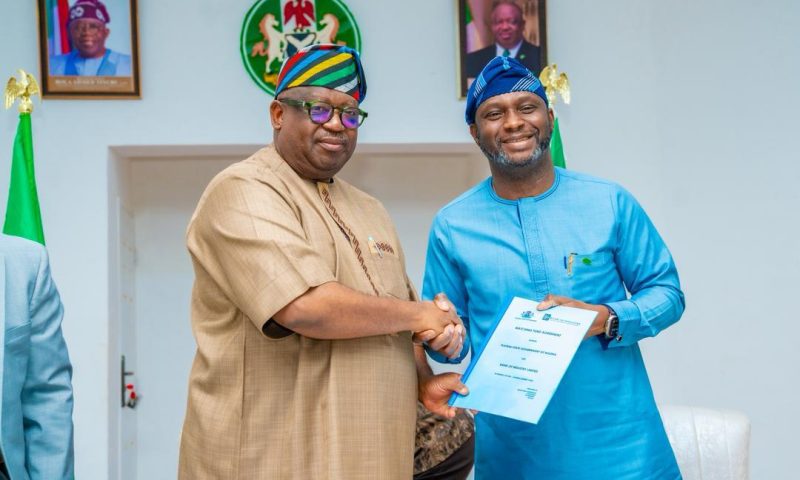
WhatsApp Image 2026-03-11 at 21.55.01The Bank of Industry and the Plateau State Government have officially signed a Memorandum of Understanding for a N4bn matching fund in a strategic move to catalyse industrial growth and provide a lifeline to small businesses.

The agreement, according to a statement, was signed on Wednesday and aims to provide affordable, long-term financing to Micro, Small, and Medium Enterprises across all 17 local government areas of the state.

Under the “BOI-PLSG” initiative, both parties are contributing N2bn each to create a pool of capital accessible at single-digit interest rates.

Speaking at the signing ceremony in Jos, the Executive Governor, Caleb Manasseh Mutfwang, emphasised that this is more than just a financial transaction; it is a blueprint for state-wide prosperity.

“This partnership will improve the state’s contribution to the country’s GDP in alignment with the vision of President Bola Tinubu to build a $1 Trillion economy,” Mutfwang stated.

He highlighted that the fund is specifically designed to stimulate the local economy by prioritising high-impact demographics, adding that “the Plateau State Government and the Bank of Industry are contributing N2bn each to facilitate this partnership aimed at stimulating MSMEs in the state with a focus on women and youths.”

The Managing Director and Chief Executive Officer of the Bank of Industry, Dr Olasupo Olusi, reiterated the bank’s long-standing commitment to the region, noting that Plateau has become a hub for successful interventions over the last six years.

“The Bank has maintained an active presence in Plateau State since 2020, disbursing N8.46 bn to 257 enterprises, supporting Micro, Small and Medium Enterprises as well as Large Enterprises across the state,” Olusi remarked.

He further commended the state’s administrative reforms, which have made Plateau an increasingly attractive destination for institutional investment, noting that “Plateau State’s improved ranking on the Ease of Doing Business index, according to the Presidential Enabling Business Environment Council’s subnational report, reflects deliberate reforms aimed at creating a conducive environment for investment and private sector participation.”

The N4bn fund is structured to ensure sustainability and manageable repayment for beneficiaries, with a single obligor limit not exceeding N100m, a maximum tenor of five years, and a moratorium period of up to 12 months from disbursement. Beyond the cash injection, the MoU includes a robust capacity-building component in collaboration with accredited Entrepreneurship Development Centres.

This programme will focus on value addition in sectors such as poultry, block making, oil and rice milling, agro-mechanisation, packaging, pharmaceuticals, and bakery services. The partnership leverages the BOI’s 65-year history of development finance to ensure that MSMEs in Plateau State do not just receive capital but also the technical expertise required to scale sustainably through the establishment of specialised product clusters.

Kebbi: ADC on life support as party structures collapse across LGAs

The African Democratic Congress, ADC, in Kebbi State appears to be battling a deep structural crisis, as its grassroots structures across several of the state’s 21 local government areas continue to deteriorate ahead of the 2027 general elections.

Despite emerging as part of a broader opposition coalition at the national level, the party’s internal structure in the state appears fragile, with many of its local government chapters reportedly inactive or deeply divided.

DAILY POST gathered that the ADC currently struggles to maintain a functional grassroots structure across several of the state’s 21 local government areas.

The development has raised concerns about its capacity to mobilise voters or effectively challenge dominant political forces.

Political observers say the strength of any political party is usually measured by its presence at the grassroots level, including ward executives, local government structures, and consistent mobilisation of supporters.

However, findings by DAILY POST indicate that many ADC local government chapters in Kebbi exist largely on paper, with little evidence of regular political activities or coordinated engagement with members.

Leadership crisis deepens party divisions

The situation has been further complicated by a series of internal leadership crises that have rocked the party in recent months.

ADC in Kebbi has been plagued by suspensions, factional disputes and competing claims to leadership positions, all of which have weakened its organisational cohesion.

One of the most prominent crises occurred in October 2025 when the party announced the suspension of Sule-Iko Sadeeq for allegedly declaring himself the state chairman without authorisation.

The suspension was confirmed by the party’s state publicity secretary, Abubakar Atiku-Musa, who said the decision followed consultations with party leaders and directives from the National Working Committee.

Sufiyanu Bala was reaffirmed as the constitutionally recognised chairman of the party in Kebbi at the time.

However, the leadership dispute escalated shortly afterwards when another faction of the party announced the suspension of Bala himself.

The party’s publicity secretary, Jamilu Muhammed, announced the suspension of Bala, his deputy, Junaidu Muhammed Mudi and the state secretary, Hauwa Muhammed.

According to him, the decision was taken after party stakeholders accused the leadership of taking unilateral decisions without consulting other executives.

Muhammed also alleged that the suspended leadership had allowed “Abuja politicians” to dominate the party’s affairs in the state, a development that triggered strong opposition among founding members.

Following the crisis, party stakeholders appointed Abdulrazaq Abubakar Isah Iko as interim state chairman, while Adamu Aliyu emerged as acting secretary pending the conduct of a new congress.

However, in November 2025, a High Court in Birnin Kebbi issued an injunction restraining a faction allegedly aligned with former Attorney-General of the Federation, Abubakar Malami, from parading themselves as leaders of the party in the state pending the determination of a substantive suit.

The court order specifically barred suspended officials from presenting themselves as chairman, deputy chairman or secretary of the party.

DAILY POST observed that the persistent internal crises have significantly weakened the ADC’s ability to build a solid grassroots network across the state.

Our reporter gathered that in several local government areas, party executives are either inactive or divided along factional lines, making mobilisation efforts difficult.

This contrasts sharply with the dominance of the ruling All Progressives Congress, APC, which currently controls all local government councils in the state.

In the 2024 local government elections, the APC won all 21 chairmanship positions and 225 councillorship seats across the state, effectively consolidating its control at the grassroots level.

With the development, it would be extremely difficult for smaller parties like the ADC to build the momentum needed for electoral success.

Yet, the party’s fortunes in Kebbi have been closely linked to the political influence of former Attorney-General of the Federation, Abubakar Malami.

DAILY POST recalls that Malami, who officially left the APC in July 2025, joined the ADC as part of a broader opposition coalition, quickly emerging as one of the party’s most prominent figures in the state and the party’s gubernatorial candidate in Kebbi.

His entry into the party initially generated expectations that the ADC could evolve into a formidable opposition platform in Kebbi.

However, political developments have since complicated that possibility.

Sources within the party say Malami’s political momentum has been slowed by ongoing investigations by the Economic and Financial Crimes Commission, EFCC, which have reportedly affected his ability to fully mobilise supporters.

While Malami remains one of the most recognisable opposition figures in the state, the legal and political pressures surrounding him have temporarily weakened the party’s organisational drive.

The absence of a clear and stable leadership structure has further compounded the problem.

Speaking in an interview, the Chief Press Secretary to Governor Nasir Idris, Ahmed Idris, dismissed ADC’s political relevance in the state.

“We are not concerned about them; we don’t see them as a strong opposition,” he said.

“In fact, their leader, Malami, never made any serious political impact in Kebbi and has even struggled to win his own polling unit in past elections,” Idris added.

He also questioned the motivations behind the opposition coalition being built around the ADC, suggesting that the effort was driven more by personal political ambition than public interest.

Despite the challenges, the interim leadership of the party insists that efforts were underway to rebuild the party’s structure.

Speaking on the situation, the interim state chairman of the party, Abdulrazaq Abubakar Isah Iko, acknowledged that the party was undergoing a period of reorganisation.

“We acknowledge that the party is going through a phase of reorganisation, but the ADC remains committed to strengthening its structure across all the 21 local government areas of Kebbi State,” he said in an interview.

“What we are doing now is to rebuild and ensure that our grassroots presence becomes more effective ahead of the 2027 general elections,” he added.

He also assured party members that the leadership was working to reposition the ADC as a credible alternative political platform in the state.

“Our focus is on unity, discipline and expansion. We are engaging stakeholders across the state to consolidate the party’s structure and mobilise new members,” he further stated.

‘Stop fighting Gov Mutfwang on my behalf’ – APC Chair, Nentawe cautions supporters

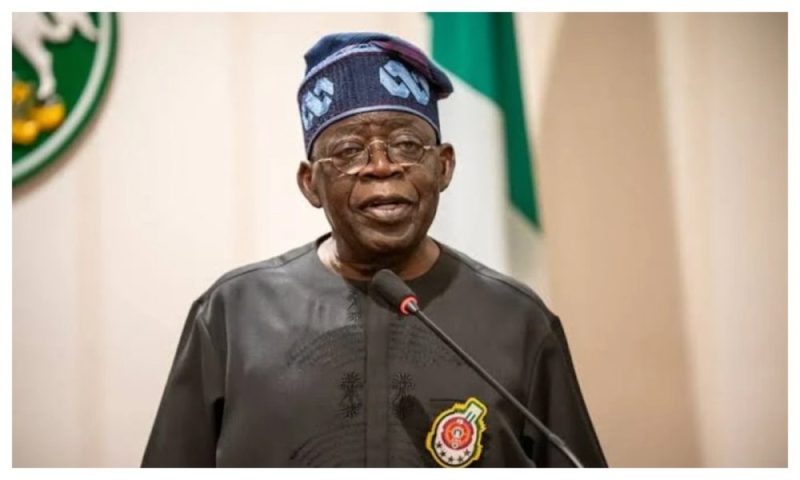
National Chairman of the All Progressives Congress, APC, Prof. Nentawe Yilwatda, has cautioned his supporters against fighting Plateau State Governor, Barr. Caleb Mutfwang on his behalf.

According to him, he and the governor have buried whatever differences they had in the past and are now working for the good of the state.

The two prominent sons of Plateau were political opponents when they contested for the governorship position in 2023, which was won by Mutfwang, who was then a member of the Peoples Democratic Party, PDP.

Since then, their supporters and loyalists have taken every opportunity to throw attacks and insults at each other ostensibly on behalf of the politicians.

But while speaking in Jos Monday, Nentawe appealed to his loyalists to desist from further attacks on the governor now that he has defected to the APC and is now working in the interest of the state.

The APC Chairman stated that whatever difference he had with Mutfwang in the past was not a personal fight but as political foes in different camps, they would naturally have differences in opinions and ideologies but now that they are in the same camp, there was no need for such differences.

“Today, I want to thank God for two reasons. We’ve united with my brother, Governor Caleb Mutfwang, in the same party, and we will provide the best we can.

“By the grace of God and with your support, we will ensure that Plateau actually gets what it deserves at the national and state levels,” the former Minister of Humanitarian Affairs and Poverty Reduction said.

“We never had any personal problems, and we never had any personal grudges. What we had was a political difference. We’ve closed those gaps, and we’re working together to ensure that we provide peace for our people, provide development for our people, and provide support for our people at any needed time.

“We now have a strong partnership. So, I’m calling upon anybody who is hearing my voice: If you have any political difference with Mutfwang because of me or for any reason, please, let bygones be bygones and let peace reign supreme in our state,” he added.