Network outages disrupt businesses as Abuja Area Council residents decry poor services

Residents and business owners in Bwari Area Council of the Federal Capital Territory have continued to lament persistent disruption of mobile networks in the area, particularly those of MTN Nigerian and Globacom. The residents say most of the network providers in the area have abandoned customers who depend largely on their networks to transact businesses.

The residents were hard hit on Wednesday when they woke up to yet another disruption in mobile network services affecting users of MTN Nigeria, a development many say is crippling communication and business activities in the area.

Reports early Wednesday morning indicated that MTN subscribers across Bwari and neighbouring communities were unable to access network services, leaving many residents stranded without communication or internet connectivity.

A check by DAILY POST confirmed the situation, with several residents complaining that the network failure had severely disrupted commercial activities, particularly transactions that depend on internet connectivity and mobile banking services.

Some residents who spoke with DAILY POST noted that the problem was not new, stressing that the community has been battling intermittent network failures from both MTN and Glo mobile for a long time without a lasting solution from the companies

Residents, Businesses Decry Impact of Poor Network

Mr. Koboko Master, a popular Nigerian comedian who resides in the area, described the situation as a recurring challenge that frequently leaves residents cut off from communication.

“MTN Internet in our area is bad, very bad, Sometimes the network disappears totally and you become completely incommunicado, except for those who have routers that can still use WhatsApp. But if you don’t use WhatsApp, it means you will miss everything entirely.” He said.

“This has been very consistent. It turns on and off regularly. It’s not something that happens once in a year or once in a month. It happens consistently, and it is a very big problem,” he added.

Madam Ogochukwu Jenifer, a building materials dealer at SCC Bwari and an MTN subscriber, also lamented that the poor network service was negatively affecting her business.

“Network is very bad in this Bwari area,” she said.

“Honestly, it is affecting our business. You cannot use your internet and so many things are not working. You want to do transactions, but there is no transaction because of network.

“So it’s not funny. No communication means no business. Things are just standing still.”

A banker in the area who spoke on condition of anonymity confirmed that the persistent network problem was affecting not only individuals and businesses but also banking operations.

“Most of the time people come with complaints about failed transactions, but at the end of the day, you discover that the problem is not from us. It’s because they don’t have good internet service to complete their transactions, or they don’t have network at all,” he explained.

“That situation is also affecting us here because people who normally do simple transactions at home are forced to come to the bank. That can lead to an increase in customer queues,” he lament.

Efforts to get a response from MTN Nigeria on the cause of the network disruption and the steps being taken to address the problem were unsuccessful as of the time of filing this report.

Social Media Reactions Highlight Widespread Frustration

The frustration of residents was also evident on social media. In a post shared in the popular Facebook group “Bwari Abuja Connect,” a user Johnson Oyakhire, raised concerns about the persistent network issues, asking other residents whether they were experiencing the same challenge.

“A beg, this MTN network wahala – na my phone get problem or na general issue?” the post read.

The question quickly drew reactions from other residents who confirmed experiencing similar problems.

One commenter, Bishop David Akin Asoore, said the situation appeared to be limited to certain areas of Bwari.

“As soon as I got to Dutse Express, network came fully,” he wrote, suggesting that the network disruption may be location-specific.

Another user, Samuel Harrison replied “Na general wahala ooo, Me since yesterday, I never use my network.To make matter worse, my 2gb don go” closed by crying emoji.

In a related post on X (formerly Twitter), a user, Adeboye Sylvia Omotayo, called on MTN Nigeria to urgently address the issue.

She wrote that the network had been unavailable for several hours, noting that she uses three MTN SIM cards but had been unable to access services.

“There is a downtime in Bwari, Abuja. Kindly look into this urgently please. I use three SIMs, all MTN, and it is sad because your service has been down for hours now,” she wrote.

Responding to the complaint, MTN Nigeria apologized for the inconvenience and asked the customer to send additional details through a direct message to enable the support team investigate the problem.

“Yello! Thank you for contacting MTN. We sincerely apologize for the network experience. Kindly DM the affected phone number, specific location, duration of the network challenge and confirm if it is voice or data related for support,” the company said.

It’s Not Just MTN – Users

Meanwhile, a GLO customer in Ushafa Abuja, Andrew Otene also lamented persistent network disruption of the network. According to him, virtually all networks in Bwari Area Council of the FCT are weak, especially Glo.

“Can you imagine that I subscribe huge data on my Glo almost every month but I don’t use it. So if we are blaming MTN for network disruption, we shouldn’t keep quiet over Glo,” he said.

Findings by DAILY POST shows that more people complain about both Glo and MTN than any other network in the area council.

According to one Okoro John, a Pharmacist, Glo network could just disappeared for days without any action from the service provider.

According to him, “ They just restore network anytime they want. They may decide to disrupt our network for even one week and it will look normal. This is sad,” he said.

There has been no official statement or notification from the companies to its subscribers regarding the situation in the area.

NSCDC deploys 620 personnel to protect Abia residents, national assets

Abia State Command of the Nigeria Security and Civil Defence Corps, NSCDC, says it has deployed 620 personnel across the State to ensure a peaceful and secure environment before, during and after the 2026 Eid-el-Fitr celebrations.

The State Commandant, CC Chukwuemeka N. Odimba disclosed that comprehensive operational orders have been issued to Area Commanders and Divisional Officers across all LGAs.

According to the NSCDC, strategic emphasis of their assignments would be on the protection of critical
national assets and infrastructure.

He stated that specialized units, including the Rapid Response Squad, Tactical Team, and Counter-Terrorism Unit (CTU), have been mobilized to conduct intensive patrols at recreational centres, vulnerable locations, and other flashpoints, to nip in the bud any criminal intentions.

The Commandant reassured residents of his Command’s commitment to professionalism and civility while discharging their duties.

He urged members of the public to remain vigilant, law-abiding, and supportive of security agencies by reporting any suspicious movements or activities within their communities.

Odimba further called on Muslim faithful to pray for peace and unity in Abia and Nigeria.

IG disburses N2.4bn cheques to deceased officers’ families

Olatunji Disu

The Nigeria Police Force has disbursed over N2.4bn in insurance benefits to 1,075 beneficiaries and next-of-kin of deceased officers under its Group Life Assurance and IGP Family Welfare Schemes.

The cheques were presented on Wednesday by the Inspector-General of Police, Olatunji Disu, during a ceremony held at the Force Headquarters in Abuja.

In a statement by the Force spokesman, DCP Anthony Placid, the total sum of N2,435,421,584.11 covers multiple policy years, including 2018/2019, 2020/2021, 2021/2022, 2022/2023, 2024/2025, and 2025/2026, as well as outstanding claims recovered from previous years.

Speaking at the event, the Force Insurance Officer, ACP Lydia Ameh, said the disbursement reflected the IGP’s commitment to prioritising the welfare of officers and their families.

So This Happened (EP 381) reviews: Outrage as bullying video from Benin school goes viral

She noted that the payments also represented the recovery of long-standing insurance obligations, adding that measures had been put in place to ensure compliance by insurance providers to prevent future delays.

Ameh further assured that the Force Insurance Unit remained committed to delivering efficient, transparent, and accountable services.

In his remarks, Disu described the occasion as a solemn recognition of the sacrifices made by officers who died in the line of duty, stressing that personnel welfare remained a key focus of his administration.

He said the gesture went beyond financial support, serving as a demonstration of the Force’s enduring responsibility to honour fallen officers while supporting their families.

The IGP also pledged to strengthen welfare frameworks, improve administrative processes, and eliminate delays in claims processing.

“Efforts would be intensified to strengthen welfare frameworks, improve administrative efficiency, and eliminate delays in the processing and disbursement of benefits.

“The Force will also leverage modern technology to enhance transparency, streamline claims processing, and ensure accountability in welfare administration,” he added.

The disbursement comes amid ongoing reforms within the Nigeria Police Force aimed at improving personnel welfare and addressing long-standing delays in insurance claims

Eid-el-Fitr: Yobe govt suspends recreational activities

Yobe State Government has suspended the operations of recreational centres during Sallah festivities aimed at safeguarding lives and property.

Special Adviser on Security Matters to the State Governor, Brigadier General Dahiru Abdussalam, (Rtd), revealed this in a statement which indicated that the current security situation does not favour large crowd of young persons celebrating the 2026 Eid-el Fitr.

“As you are aware that during festivities, recreational centres across Yobe State always attract large number of people celebrating various religious festivals. Hence, this year’s Eid-el Fitr celebration will not be an exception.

“However, the current security situation does not favour the congregation of the usually large crowd of young persons who would celebrate the Eid-el Fitr 2026”, the Security Adviser said.

He ordered all recreational facility owners in the state to temporarily suspend operations from Thursday, 19th to Monday, 23rd March 2026, while urging all commanding officers of units, officers commanding forward Operation Bases, Divisional Police Officers, and the 17 Local Government Councils to ensure full compliance with this directive within their respective areas of responsibility.

Market cap slips below N130tn threshold

NGX-750×375The Nigerian Exchange Limited experienced a modest retreat during Wednesday’s trading session as a wave of investor caution and profit-taking pulled the market valuation below the significant N130tn threshold.

The NGX All-Share Index, which serves as the primary benchmark for the health of the market, opened the day at 202,559.41 points but slipped by 0.69 per cent to close at 201,156.86 points. Consequently, the total market capitalisation fell by approximately N900bn, ending the day at N129.125tn compared to its opening value of N130.025tn.

Market analysts attribute this mid-week dip to a short-term correction following a series of recent strong rallies that had pushed prices to record highs.

Investor sentiment turned slightly bearish as the session progressed, with 38 decliners eventually outweighing 31 advancing equities. Despite the overall downward pressure on the index, several stocks managed to post significant gains against the trend

NSLTECH led the gainers’ chart with a maximum 10.00 per cent increase, moving from N1.20 to N1.32, while beverage giant Guinness Nigeria followed closely with a 9.92 per cent rise to close at N423.20.

Other notable performers included John Holt, Sovereign Trust Insurance, and Linkage Assurance, all of which recorded gains exceeding 9 per cent.

On the flip side, the bears took a firm grip on several high-value and mid-cap stocks. Red Star Express topped the losers’ list with a 9.98 per cent drop, closing at N25.70. Major players such as Aradel and Presco also saw significant declines of 9.68 per cent and 9.30 per cent, respectively, which contributed heavily to the contraction of the total market value. Other equities facing selling pressure included Living Trust Mortgage Bank and Daar Communications.

Interestingly, several large-cap blue-chip stocks remained immune to the day’s volatility. Dangote Cement, Julius Berger, Vitafoam Nigeria, and Staco Insurance Plc all closed flat.

As the market continues to navigate this corrective phase, the focus for many traders is now shifting toward upcoming earnings releases and broader economic indicators.

Overall, the session highlighted a period of consolidation in which investors are re-evaluating their portfolios after a period of rapid growth.

Analysts expect trading to remain cautious in the coming sessions as the market looks for a new support level, with participants closely monitoring corporate performance data to guide their next moves.

Africa’s fuel supply hit by Middle East crisis

Fuel PumpThe growing crisis in the Middle East is tightening the noose around Africa’s fuel supply chain, with many countries now running on just weeks of refined petroleum products as key import routes come under severe strain.

This follows escalating tensions linked to the Iran war, which has significantly disrupted shipments through the Strait of Hormuz, a critical artery for global energy flows.

According to the International Energy Agency, about 600,000 barrels per day of petroleum products typically destined for Africa from the Middle East are now at risk, as tanker traffic through the corridor slows to a trickle.

The development has forced governments across the continent to urgently seek alternative supply sources, amid fears that wealthier nations could outbid African buyers in an increasingly tight global market.

A report by Bloomberg noted that the unfolding disruption is exposing long-standing structural weaknesses in Africa’s energy system, particularly the continent’s heavy dependence on imported refined products due to years of refinery closures and underinvestment.

Data from energy analytics firm Kpler also paints a stark picture of the disruption, noting that petroleum product loadings fell sharply from 580,000 metric tonnes in January to 183,000 metric tonnes in February, representing a steep decline of 397,000 metric tonnes, or 68.4 per cent.

The situation worsened in March, as volumes plunged further to zero, marking a complete 100 per cent drop from February levels.

Overall, the region lost the entire 580,000 metric tonnes recorded at the start of the quarter, underscoring a total supply breakdown within just three months and reflecting the severity of disruptions in global fuel trade flows.

Industry tracking also showed that several cargoes originally destined for Europe and Africa have been rerouted to Asia, where demand has surged amid the crisis.

One such vessel, the Brest, initially bound for Rotterdam after loading in India, abruptly changed course near East Africa and diverted towards Indonesia, highlighting the shifting dynamics in global fuel trade.

The ripple effects are already being felt across Africa, particularly in East and Southern regions, where dependence on Middle Eastern fuel imports is highest.

“We are looking everywhere for supply options,” Director-General at South Africa’s Department of Mineral Resources, Jacob Mbele, said in an interview.

“We are comfortable that in the coming weeks or so, we are safe, but the situation is fluid; it changes every day,” he added.

The report warned that securing fuel cargoes will become increasingly difficult for African countries, many of which operate with limited foreign exchange reserves and weak bargaining power.

The crisis is further compounded by the continent’s declining refining capacity. Despite accounting for about seven per cent of global crude oil production, Africa has lost roughly a third of its refining capacity over the past two decades.

This has left many economies heavily reliant on imports from the Middle East, a dependence now proving costly.

In East Africa, countries such as Kenya, which consume about 100,000 barrels of fuel daily and import all its requirements, are particularly vulnerable. The country maintains just 21 days of fuel stock, leaving little margin for disruption.

Chairman of the Petroleum Outlets Association of Kenya, Martin Chomba, said the situation is already biting.

“The biggest suppliers are rationing product, and some distributors are experiencing stock-outs in rural areas,” he said.

Similarly, Ethiopia has urged citizens to cut down on fuel consumption as the government prioritises essential services.

Prime Minister Abiy Ahmed said in a public statement that fuel use must now be directed towards “basic and essential needs,” reflecting the growing strain on supply.

Dangote imported $3.74bn crude in 2025 – CBN

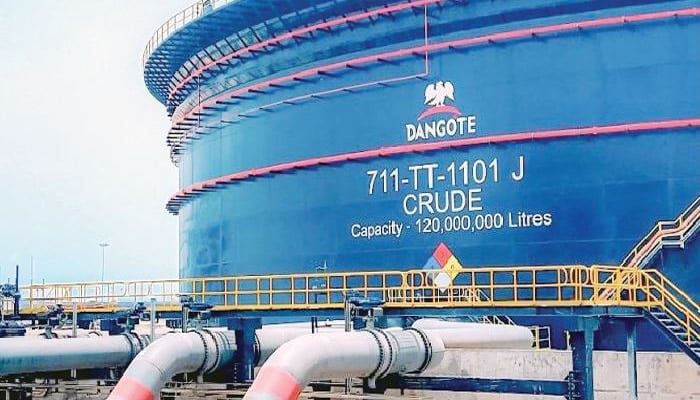
CBN Building, AbujaNigeria recorded crude oil imports worth $3.74bn linked to operations of the Dangote Petroleum Refinery in 2025, highlighting a major shift in the country’s oil trade structure despite its status as a crude producer.

This was disclosed in the Central Bank of Nigeria’s Balance of Payments report, which showed that “Crude oil imports of $3.74bn by Dangote Refinery” contributed to movements in the country’s current account position.

The report noted that Nigeria posted a current account surplus of $14.04bn in 2025, lower than the $19.03bn recorded in 2024 but significantly higher than $6.42bn in 2023.

The decline from 2024 was driven partly by structural changes in oil trade flows, including crude imports for domestic refining. Data in the report showed that crude oil exports dropped from $36.85bn in 2024 to $31.54bn in 2025, representing a 14.41 per cent decline, further shaping the external balance.

At the same time, the goods account remained in surplus at $14.51bn in 2025, rising from $13.17bn in 2024, supported largely by activities linked to the Dangote refinery and improved export performance in other segments.

The CBN stated that the stronger goods balance was driven by “significant export of refined petroleum products worth $5.85bn by Dangote Refinery,” alongside increased gas exports to other economies.

The report added that the refinery’s operations also reduced Nigeria’s reliance on imported fuel, noting that “availability of refined petroleum products from Dangote Refinery also led to a substantial decline in fuel imports.”

Specifically, refined petroleum product imports fell sharply to $10.00bn in 2025 from $14.06bn in 2024, representing a 28.88 per cent decline, while total oil-related imports also eased.

However, this was offset by a rise in non-oil imports, which increased from $25.74bn to $29.24bn, up 13.60 per cent year-on-year, reflecting sustained demand for foreign goods.

Further pressure on the current account came from higher external payments. Net outflows for services rose from $13.36bn in 2024 to $14.58bn in 2025, driven by increased spending on transport, travel, insurance, and other services.

Similarly, net outflows in the primary income account surged by 60.88 per cent to $9.09bn, largely due to higher dividend and interest payments to foreign investors.

In contrast, secondary income inflows declined slightly from $24.88bn in 2024 to $23.20bn in 2025, as official development assistance and personal transfers weakened, although remittances remained a key source of inflow.

On the financial account side, Nigeria recorded a reversal, posting a net borrowing position of $1.69bn in 2025 compared to a net lending position of $9.65bn in 2024.

Portfolio investment inflows fell sharply by 48.3 per cent to $8.04bn, while foreign direct investment inflows rose to $4.01bn from $1.61bn in the previous year, indicating a gradual shift towards longer-term capital.

The report also showed increased investment outflows by Nigerians abroad, with direct and portfolio investment assets rising significantly during the year.

Despite pressures across components, Nigeria’s overall balance of payments remained positive at $4.23bn in 2025, though lower than the $6.83bn surplus recorded in 2024.

External reserves rose to $45.75bn at the end of December 2025, reflecting a 13.83 per cent increase compared to 2024 levels, supported by inflows and improved external buffers.

The PUNCH earlier reported that despite its status as Africa’s largest crude oil producer, Nigeria imported crude oil worth a staggering N5.734tn between January and December 2025 as domestic refineries grappled with persistent feedstock shortages, exposing a deepening supply paradox in the country’s oil sector.

This comes despite the Federal Government’s much-publicised naira-for-crude policy designed to prioritise local supply.

Energy analysts earlier faulted the implementation of the Federal Government’s naira-for-crude policy, arguing that it has failed to significantly improve domestic crude supply or reduce fuel prices.

The Chief Executive Officer of Petroleumprice.ng, Jeremiah Olatide, said the policy has delivered little impact since its introduction in 2024, as most refineries continue to rely heavily on imported crude.

He said, “For me, the naira-for-crude policy that was initiated in 2024 has not yielded any reasonable output because the Dangote refinery still sources about 65 to 70 per cent of its feedstock from abroad, while about 95 per cent of modular refineries also source their crude outside the naira-for-crude initiative.

“So, the initiative, for me, is not effective, and that is why we are still seeing a large inflow and importation of crude oil in 2025. In turn, prices at the depot and pump have not been different from when we were fully importing refined products.”

He noted that while the coming on stream of large-scale refining capacity has improved product availability, it has not translated into price relief for consumers.

“The only difference now is that we no longer have supply fears; there is availability of products. But in terms of pricing, I would say the naira-for-crude policy has not translated into lower prices at the depot or pump,” he added.

Jeremiah attributed this to the continued reliance on international pricing benchmarks, even for locally supplied crude.

Transcorp hits N4.87tn market cap, eyes record dividends

Screenshot 2026-02-06 060816Transnational Corporation Plc has signalled a new era of dominance in the African investment landscape, announcing a historic combined market capitalisation of N4.87tn ($3.57bn) as of 16 March 2026.

The conglomerate, which has become a bellwether for the Nigerian Exchange, accompanied this valuation milestone with a commitment to reward its 311,000 shareholders with record-breaking dividend payouts following its best financial performance in history.

The Group’s full-year 2025 results revealed a powerhouse in ascent, with revenue surging 33 per cent to N544.41bn and profit before tax climbing to N179.50bn. These figures underscore the successful execution of a multi-sector strategy spanning power, hospitality, and energy.

Speaking during the 2025 Investors’ Call, the President and Group Chief Executive Officer of Transcorp Plc, Owen Omogiafo, emphasised that the Group’s success is a result of disciplined execution in a volatile environment.

“Transcorp achieved its best financial performance in history in FY 2025, driven by strong execution across power and hospitality.

Despite sector-wide challenges, including gas constraints and inflation, we are well-positioned for sustained expansion and long-term value creation,” she said.

The Group’s “homegrown” strategy has proven particularly effective in its hospitality business, where Transcorp Hotels Plc has insulated itself from global travel disruptions by stimulating domestic consumption and implementing an import substitution strategy for its supply chain.

At the heart of the Group’s valuation surge is its massive footprint in the power sector. Through Transcorp Power Plc and Transafam Power Limited, the Group now controls approximately 2,000 MW of installed capacity, representing 15 per cent of Nigeria’s total grid capacity.

Addressing the critical issue of gas supply and infrastructure, the Managing Director and Chief Executive Officer of Transcorp Power Plc, Peter Ikenga, noted, “We do recognise the value of ensuring consistent, reliable, and stable power generation. We have diversified our sources of gas and multiple pipelines to ensure we are robust. Even with vandalism challenges, we worked quickly to restore operations; we are back and delivering much-needed power to the grid.”

Beyond traditional thermal power, Transcorp is pivoting toward a sustainable future. The Group recently emerged as the successful bidder for a 30 MW interconnected solar-powered mini-grid project in the Federal Capital Territory, a move supported by the World Bank and the Rural Electrification Agency.

The Managing Director and Chief Executive Officer of Transcorp Energy Limited, Christopher Ezeafulukwe, highlighted the significance of this transition. “This is the most oven-fresh news to come out of the renewable energy space in Nigeria. We are taking what we know how to do best, winning assets and turning them around, and applying them to solar. When Transcorp says it is an integrated energy group, we are bringing that to fulfilment,” he stated.

The investors’ call concluded on a high note for shareholders. Despite holding significant receivables from the national power sector, the Group’s leadership assured investors that liquidity remains strong and that impairment write-backs are expected as government settlement tranches proceed.

Reflecting on the Group’s 48.7 per cent compound annual growth rate over the last five years, Ms Omogiafo reiterated the board’s intention to share the spoils of success. “We have proposed a dividend that is higher than what we gave before. We want to reassure you of our commitment to the vision. We are keen to fix power in our country, and power must be fixed. To our long-term investors: the sky is not even our limit,” she added.

With the upcoming Annual General Meetings for Transcorp Plc and Transcorp Power Plc, the market anticipates a formal ratification of these record dividends, further cementing Transcorp’s status as Nigeria’s premier diversified conglomerate.

Ex-FCT Senator Philip Aduda officially joins APC

Senator Philip Tanimu Aduda, who served as Senate Minority Leader during the 9th Senate of the National Assembly representing the Federal Capital Territory, FCT, on Tuesday joined the All Progressives Congress, APC.

This was disclosed by the party official’s X handle.

According to the statement, “He vowed to deliver victory for President Bola Ahmed Tinubu in the FCT in 2027.”

Aduda was formally received into the APC by the National Chairman, Prof. Nentawe Goshwe Yilwatda, accompanied by members of the National Working Committee.

DAILY POST recalls that this development comes shortly after Aduda formally resigned from the People’s Democratic Party (PDP), citing ongoing crises within the party as the reason for his departure.

He’s our leader – Adeleke reaffirms support for Tinubu

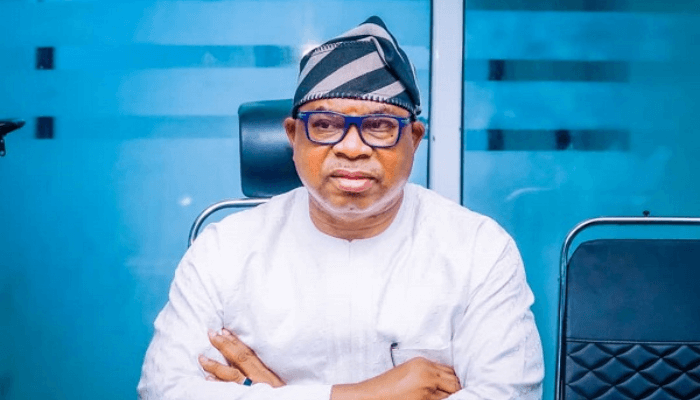
The Governor of Osun State, Ademola Adeleke, has reaffirmed his support for the re-election of President Bola Tinubu in 2027.

Adeleke made this known on Tuesday in Osogbo while addressing cabinet members, special advisers, and other top government officials, according to a statement issued by his spokesperson, Olawale Rasheed.

The governor stated that the ongoing crisis affecting local governments in Osun State has not altered his stance, noting that his backing for Tinubu dates back to his time in the Peoples Democratic Party (PDP).

“We have no problem with President Tinubu. He is our leader,” Adeleke said.

“He represents the South-West, and I reaffirm our endorsement of Mr President for re-election in the best interest of the region.”

He also expressed appreciation to residents for their continued support for the Accord Party (AP), describing its popularity as expanding beyond Osun State.

Adeleke further assured that his administration would continue to deliver democratic dividends, with a renewed focus on youths, women, and workers, while prioritising investments in infrastructure, agro-industrialisation, education, and healthcare.

The governor also directed party officials to strengthen the party’s grassroots structure through membership registration and voter mobilisation across all 332 wards in the state.