Eid-el-Fitr not just a celebration – Obasa tells Nigerians

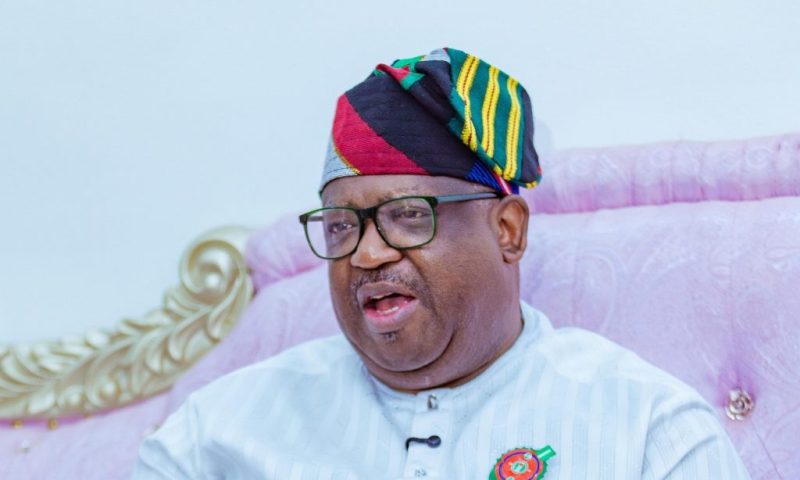
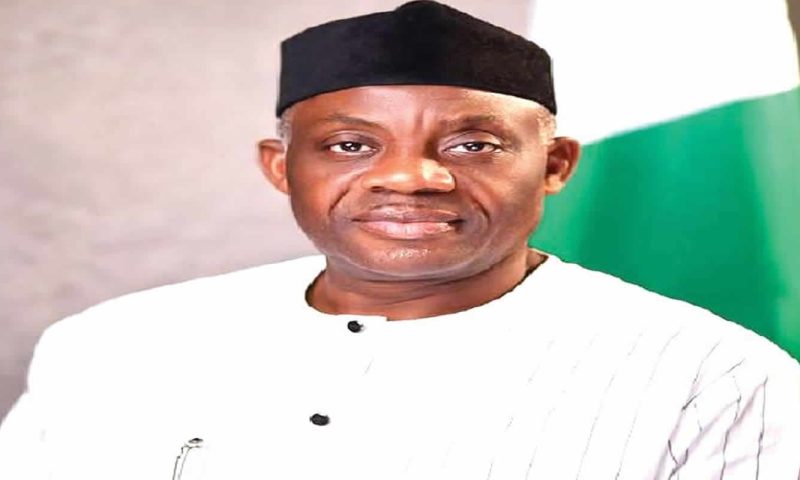
The Speaker of Lagos State House of Assembly, Hon Mudashiru Ajayi Obasa, has declared that Eid-el-Fitr festival is not just a celebration.

Obasa noted that Eid-el-Fitr festival is a reminder of the values of sacrifice, compassion, and unity that Ramadan fast instills.

He made these declarations in a statement issued through his Chief Press Secretary, Dave Agboola and made available

DAILY POST reports that the federal government, under the leadership of President Bola Ahmed Tinubu, has declared Thursday and Friday as the public holidays for Eid-el-Fitr festival celebration.

Obasa while facilitating with the Muslims on the occasion of the festival, reminded them that the festival is not about celebration alone.

He said that it is an avenue to remind the Muslims of the values of sacrifice, compassion and unity that Ramadan instills.

He described the festival as a season of joy, renewal, and gratitude.

Obasa admonished Nigerians to remain steadfast in supporting Tinubu.

He added that Tinubu’s Renewed Hope Agenda is already delivering measurable progress.

The statement reads, “Obasa, has extended warm greetings to the faithful, describing the festival as a season of joy, renewal, and gratitude.

“Obasa described Eid-el-Fitr as “not just a celebration; it is a reminder of the values of sacrifice, compassion, and unity that Ramadan instills.

“As our dear President steers the ship of Nigeria to the Promised Land, it is our duty as citizens to stand by him with prayers, encouragement, and unwavering support.”

Troops arrest four suspected bandits’ informants in Kebbi

Troops of Operation FANSAN YANMA have arrested four suspected bandits’ informants in Augie Local Government Area of Kebbi State.

The development was disclosed in a post shared by security analyst and counter-insurgency expert Zagazola Makama via his X handle.

Security sources said the suspects were apprehended at about 5:00 a.m. on Wednesday following credible intelligence on their activities within the Augie axis.

According to the sources, troops of 1 Battalion (Rear), working in collaboration with forest rangers, carried out the operation and effected the arrests without resistance.

The suspects are currently in custody, while further investigation is ongoing to determine their roles and possible links to criminal elements.

Troops have since restored calm to the area, urging residents to remain vigilant and promptly raise the alarm about any suspicious movements or activities.

Police disbands tactical teams in Abia Command

The Commissioner of Police, Abia State Police Command, CP Danladi Isa has dissolved all Police tactical teams in the Command.

He announced that new tactical teams comprising Anti-Cultism and Anti-Kidnapping units will be set up immediately to ensure accountability, proper supervision, professionalism, and orderliness.

The Commissioner of Police disclosed this on Wednesday during an emergency briefing with strategic officers in the Abia Command including Area Commanders, Tactical Team Commanders, DPOs and Sectional Heads, where he briefed them on the directives of the IGP, Tunji Disu.

The CP instructed officers to avoid duplication of cases, stressing that cases under investigation at the Divisional level must not be hijacked by Area Commands, especially in situations where suspects attempt to report the same matter as complaints at the Area Commands.

He noted that Area Commanders may only request comments for supervisory purposes and that transfer of cases from Divisions must be based on his directive.

CP Danladi warned officers against flouting the Presidential directive prohibiting the posting of police personnel to private individuals or VIPs, noting that officers found culpable will face disciplinary action.

He reiterated that officers must be effectively utilized within their jurisdictions to strengthen and maintain security across the State.

The CP also cautioned officers against involvement in civil matters, particularly land disputes, advising that parties in such cases should seek civil redress in court, even as he directed that suspects involved in bailable offences should be promptly released on bail.

He commended Commanders 28 PMF, ACP Adesina Adeniran, and CTU, CSP Chisom Ezebuiro, and their training teams for the recently concluded combat training in the Command, emphasizing that training of police personnel will continue, for enhanced tactical capacity and professionalism.

Lagos community protests alleged plan to demolish over 300 homes for rail project

Hundreds of landlords and residents in a community within the Ojo area of Lagos State, on Thursday, staged a protest against an alleged plan by the Lagos Metropolitan Area Transport Authority, LAMATA, and other agencies to demolish more than 300 homes for a rail project.

The demonstrators, who marched through parts of the neighbourhood, carried placards appealing to Governor Babajide Sanwo-Olu to intervene.

Some of the inscriptions warned that the proposed demolition could displace tens of thousands of residents and affect homes, places of worship, healthcare facilities and businesses.

The protesters described the planned exercise as unjust and contrary to due process, alleging intimidation and harassment by officials, as well as disregard for an existing court order said to have halted the demolition.

Speaking on behalf of the community, the group’s coordinator, Iniobong Offiong, said the affected area comprises four estates, with about 315 houses and an estimated population of 20,000 people developed over several decades.

He alleged that government officials, accompanied by security personnel, entered the community in May 2025 under the guise of conducting a census, only to later inform residents that the area had been earmarked for acquisition and demolition.

According to him, the authorities justified the move on grounds of overriding public interest, stating that the land was needed for a proposed train depot linked to the Lagos rail project.

However, Offiong questioned the rationale, noting that a large expanse of land reportedly acquired for the same purpose by a previous administration remains undeveloped.

“We were informed that our homes would be pulled down within four months, yet there is already a vast parcel of land designated for the depot that has not been utilised. There is no clear justification for extending the project into a fully built and occupied community,” he said.

He added that despite petitions to relevant authorities, including the state government, the police and the Lagos State House of Assembly, the community had yet to receive a concrete response, prompting legal action.

Offiong disclosed that residents secured an interim injunction from a Federal High Court restraining the demolition, but alleged that the order has not been respected.

“Despite the court directive, officials continue to enter the area with security operatives, conducting surveys and collecting data on private properties. This reflects a disregard for the rule of law,” he said.

He further alleged attempts to weaken opposition within the community, claiming that some tenants had been offered inducements to vacate, while there were efforts to disrupt electricity supply to the area.

A resident, a retiree who said he is nearly 75 years old, described the situation as distressing, stressing that many occupants have no alternative accommodation.

“This is my only home. Any compensation must be sufficient to secure a similar property in Lagos; anything less would be unfair,” he said.

Residents also expressed concern over the humanitarian implications of the proposed demolition, noting that the community includes vulnerable groups such as elderly persons, widows and children who could be rendered homeless.

They claimed that at least one resident had died after being unable to cope with the anxiety triggered by the development.

The community further alleged that physical planning officials who visited the area confirmed that it is largely occupied, contradicting claims that the land is mostly vacant.

According to them, a proposed mediation meeting between stakeholders and the transport authority did not take place, as representatives of the agency allegedly failed to attend.

The protesters urged the state government to suspend the demolition plan and revert to the original rail project design, which they said would not require displacement of residents.

They also called on civil society groups and the media to draw attention to their situation and help prevent what they described as an unlawful takeover of their properties.

Guinea Insurance targets N5.8bn via Rights Issue

Guinea Insurance PlcGuinea Insurance Plc has officially kicked off its recapitalisation journey with the launch of a N5.8bn Rights Issue in a decisive move to solidify its market position and meet looming regulatory requirements.

The move, formalised during a signing ceremony in Lagos, is designed to fortify the company’s balance sheet well ahead of the industry-wide 31 July deadline. The offer allows existing shareholders to increase their stake by issuing 5,295,200,000 ordinary shares of 50 kobo each at N1.10 per share. The issuance is structured as two new shares for every three existing shares held by stockholders.

Speaking at the ceremony, the Chairman of Guinea Insurance Plc, Temitope Borishade, emphasised that the capital injection is the engine for a broader corporate transformation. “This capital raise represents an important step in repositioning the Company to meet these realities while expanding our capacity to deliver innovative insurance solutions across key sectors of the economy,” Borishade stated.

He further reassured stakeholders that the move was rooted in a commitment to improved performance. “It also represents our commitment to our customers and brokers that our company is repositioning to offer new and improved services and to our shareholders that the returns on their investments are about to improve significantly,” he added.

While many firms are raising capital solely to satisfy the demands of the National Insurance Commission, the leadership at Guinea Insurance maintains that their goals are more ambitious. The Managing Director, Ademola Abidogun, noted that the N5.8bn target is about building a platform for long-term dominance.

“The additional capital will strengthen Guinea Insurance’s financial stability and regulatory compliance, expand underwriting capacity across key sectors of the Nigerian economy, and support investments in technology and operational efficiency,” Abidogun explained.

He highlighted that the funds would specifically allow the firm to pivot towards underserved markets: “[It will] enable greater expansion into the underpenetrated retail and SME Insurance markets to drive growth and financial inclusion.”

Abidogun concluded by framing the Rights Issue as a turning point for the insurer’s competitiveness: “The transaction represents a strategic step towards building a stronger company that is better capitalised, more competitive, more innovative and better positioned to deliver value to its shareholders and protection to its customers.”

Fuel price surge may disrupt manufacturing, operators warn

fuel attendantRising fuel prices driven by escalating tensions in the Middle East may disrupt Nigeria’s manufacturing sector and broader economy, with operators warning of mounting pressure on supply chains, production costs, and consumer prices.

The Manufacturers Association of Nigeria warned that surging fuel prices pose a significant risk to manufacturing operations, stressing that heavy reliance on trucks for logistics and generators for power makes the sector highly vulnerable to energy shocks.

The Lagos Chamber of Commerce and Industry also cautioned that Nigeria remains exposed to global oil market volatility, noting that any spike in crude prices would directly impact domestic fuel costs and the wider economy despite local refining efforts.

MAN noted that rising fuel prices, triggered by the conflict involving the United States, Israel, and Iran, including reported attacks on vessels along the Strait of Hormuz, could worsen inflationary pressures and disrupt supply chains nationwide.

In a telephone interview with The PUNCH, the Director-General of MAN, Segun Ajayi-Kadir, said the surge in fuel prices would have far-reaching consequences for manufacturers and the broader economy.

He stated, “Fuel is a major input in production, transportation, and energy supply, and it has a significant impact on the citizens and the whole sector of the economy. The recent hike in the prices of fuel as a result of the conflict in the Middle East has a negative implication on the Nigerian economy, including the manufacturing sector.”

Ajayi-Kadir stressed that manufacturers’ reliance on trucks for logistics makes them particularly vulnerable to fuel price increases, warning that distribution costs could surge and disrupt supply chains nationwide.

He explained, “Manufacturers depend on trucks for the movement of raw materials and finished products across the country. Increases in the price of fuel raise the transport fare, making distribution expensive and affecting the supply chain.”

The MAN DG further noted that rising fuel costs would significantly increase production expenses, as many manufacturers continue to depend on generators due to unreliable electricity supply.

He said, “The Nigerian manufacturing sector relies heavily on generators for production due to the inadequate supply of electricity over the years. The increase in fuel prices will increase the cost expended on power generation, thereby increasing the cost of production and reducing the profit margin.”

Ajayi-Kadir added that the higher cost burden would inevitably be transferred to consumers through increased prices of manufactured goods, worsening inflationary pressures, and weakening purchasing power.

He explained, “The extra cost will lead to an increase in the cost of finished products, thereby increasing the rate of inflation across the country, reducing the consumer purchasing power, and lowering the volume of sales of manufacturers’ products.”

He also warned that Nigerian manufacturers risk losing competitiveness to imported goods as production costs rise locally. “Whenever there is an increase in production cost in the country, Nigerian goods will be more expensive compared to their competitors. This will make imported goods cheaper, and as an alternative, consumers will shift their demand to foreign products, reducing the competitiveness and patronage of Nigerian products within and outside the country,” he said.

Ajayi-Kadir cautioned that small and medium-scale manufacturers could face severe strain, with some potentially forced to scale down operations or shut down entirely.

He stated, “The small and medium-scale manufacturers may find it difficult to cope with the fuel price increase, which may lead to reduced output or total shutdown of production. The multiplier effect will be slow industrial growth, an increase in unemployment rate, a reduction in revenue generation, and the contribution of the manufacturing sector to GDP.”

Energy prices in Nigeria have fluctuated since the full-scale attacks by the United States and Israel on Iran began on February 28, with the price of petrol exceeding N1,000 per litre on some days. Labour associations and organised private sector groups have, as a result, urged the government to provide relief to Nigerian consumers.

Meanwhile, The PUNCH reported that the landing cost of imported petrol is N94.53 cheaper than the domestic gantry price, citing the Major Energies Marketers Association of Nigeria. MEMAN disclosed that the landing cost of imported petrol as of 16 March 2026 stood at N1,080.47 per litre, while the domestic gantry price was N1,175 per litre, reflecting a N94.53 difference.

Also speaking, the President of the Association of Small Business Owners of Nigeria, Dr Femi Egbesola, urged entrepreneurs to adopt survival strategies, including increased use of local inputs and expansion into export markets. Egbesola said, “The first thing is for us to begin to look inward, to look at how we can begin to use raw materials and how we can begin to use locally made inputs to replace imported ones.”

He maintained that boosting exports could help businesses earn foreign exchange and cushion the impact of inflation. “We can target doing more exports, and that is by becoming export-ready with our business. When there is inflation like this, it puts our products and services in a competitive position in the global markets. Our products are cheaper, so it makes it possible for us to sell more,” Egbesola added.

He further highlighted the need for alternative energy sources to reduce dependence on expensive fuel, stating, “Energy is one thing that is taking away a bulk sum of our profits. Sometimes up to 40 per cent of our profit margin is taken away by energy costs. So we can also begin to look at an alternative source of energy to power our businesses.”

The ASBON president also called for diversified funding options and government support through low-interest intervention funds. Egbesola said, “It is important for us to begin to look at other sources of funding beyond the commercial bank. The government too should release more intervention funds at a single-digit interest rate to help alleviate this time.”

On the broader oil market outlook, the Chairman of the Oil Producers Trade Sector of the Lagos Chamber of Commerce and Industry warned that Nigeria could face serious economic consequences if tensions in the Middle East disrupt crude shipments through the Strait of Hormuz and push global oil prices to $200 per barrel.

Speaking on behalf of Collins Ogbu, the sector’s chairman, the outgoing Managing Director of 11PLC, Adetunji Oyebanji, said Nigeria must urgently attract more investors into oil exploration and production to increase output and achieve its target of surpassing two million barrels per day.

His warning follows reports that Iran threatened to block oil shipments through the strategic Strait of Hormuz, a key route for global crude exports.

According to Iran’s Khatam al-Anbiya military command spokesperson, Ebrahim Zolfaqari, “We will never allow even a single litre of oil to pass through the Strait of Hormuz for the benefit of the US, the Zionists, and their partners.”

Oyebanji said a spike in global oil prices would directly affect Nigeria despite the presence of local refining capacity. “We all have to understand that one of the problems Nigeria has always had is that we always feel we are an island. We are not affected by what is happening in the global economy, and that is not the case. Everybody is affected, more so we are a monoproduct country,” Oyebanji said.

He explained that the country’s heavy reliance on crude oil revenues means any price shock in the international market will inevitably impact the local economy.

“So once crude goes to $200, by definition, even what it produces locally is going to go up. At the end of the day, if petrol or crude goes to $200, it is going to affect the price at the pump in Nigeria,” Oyebanji noted.

The energy executive also questioned claims that domestic refining alone would shield Nigeria from global price volatility. “Even when refining locally, it does not shield us from what is happening with international crude prices. If it is 100 barrels we have to sell, let us sell it in dollars and maximise dollar revenue for the country,” Oyebanji remarked.

He warned that Nigeria’s crude production should already be far higher than current levels if sufficient investments had been made in exploration.

“Nigeria today should even have been at four million barrels. But to achieve that, you have to invest in exploration and production, and the people that have the financial muscle are the international oil companies,” Oyebanji said.

He added that Nigeria must improve security, attract large-scale investment, and implement policies that encourage exploration if the country hopes to increase output and cross the two-million-barrel production threshold.

MTN Nigeria rebounds with N1.1tn profit

MTN-new-logo-e1663465256894MTN Nigeria has reported a staggering N1.1tn profit for the 2025 financial year. This turnaround marks a significant departure from the fiscal headwinds of 2024, signalling a robust resurgence in the country’s digital economy.

Speaking on Channels Television on Tuesday, the Chief Financial Officer of MTN Nigeria, Modupe Kadri, broke down the numbers that defined the company’s “impressive” performance. He revealed that the firm achieved a 22.9 per cent increase in service revenue, reaching N392.2bn, fuelled by a surge in third-quarter activity.

The recovery was not a matter of chance but the result of aggressive capital expenditure. Kadri disclosed that the company’s investment in the sector has reached unprecedented levels. “We spent about N1tn in 2025, significantly higher than our 2024 investment levels. We will continue now that we have a business case to make this investment,” he explained.

Despite the massive profit and the deployment of over 2,850 new network sites, the CFO offered a grounded perspective on when consumers will feel the full impact of these billions. He addressed the recurring question of whether increased income immediately equates to better service quality. “The telecommunications industry is capital-intensive. Even when the capital is available, improvements in network infrastructure take time to materialise. We are not out of the woods yet, but the impact of such investments will be fully realised in time,” he said.

Looking towards the future, MTN is shifting its focus toward the “unconnected” segments of the Nigerian population. With the industry’s total investment exceeding $1bn, the company is eyeing a 70 per cent broadband penetration rate through a mixture of traditional and frontier technologies. “There is a growing need to expand connectivity as Nigeria’s population increases. Areas previously classified as rural require improved population coverage. Our goal is to exceed 2025 investment levels with the Bridge Project and a ‘satellite revolution’ aimed at closing the rural connectivity gap,” he added.

Kadri concluded that while private investment remains a pillar of their growth, much of this massive expansion is currently funded by the company’s own operating cash flow.

Telecom firms eye gains from UAE $1bn AI fund

Nigerian telecom

Telecommunications companies expect to benefit from a $1bn artificial intelligence fund announced by the United Arab Emirates to bolster digital infrastructure across Africa, with Nigeria a central focus.

Industry executives say the initiative could speed broadband rollout, encourage artificial intelligence adoption, and draw more private investment into the country’s rapidly expanding digital economy.

“The growing partnership between Nigeria and the UAE is a very welcome development, especially as it is beginning to extend into technology and the digital economy,” President of the Association of Telecommunications Companies of Nigeria, Tony Izuagbe Emoekpere, told The PUNCH.

“Nigeria’s digital space is expanding very quickly, and partnerships like this can help accelerate investments in areas such as broadband networks, data centres, cloud services, and even emerging technologies like artificial intelligence

UAE Assistant Minister of Foreign Affairs for International Development, Sultan Al Shamsi, highlighted the initiative in a statement, stating, “Our $1bn AI for development Initiative, designed to strengthen digital infrastructure across Africa, with Nigeria as a key partner, underscores our commitment to building long-term, future-ready cooperation. We see Nigeria not only as a major economy, but as a country positioned to lead in shaping Africa’s next phase of growth.”

The announcement comes against the backdrop of growing UAE–Nigeria economic ties. Non-oil trade between the two countries reached $4.3bn in 2024 and approximately $3.1bn during the first nine months of 2025, reflecting expanding commercial activity in logistics, agriculture, and digital services.

Emoekpere explained why Nigeria is an attractive destination for technology and telecom investment. “We have a very large population, and a significant portion of that population is young and increasingly comfortable with technology.

“Smartphone usage is rising, and people are consuming more data every year as they rely more on digital services for business, communication, education, entertainment, and financial services. This growing demand naturally creates strong opportunities for investment in telecom and digital infrastructure,” he said.

He added that the AI initiative presents opportunities to strengthen critical infrastructure.

“Nigeria still needs significant investment in broadband networks, fibre infrastructure, data centres, and other technologies that support the digital economy. Partnerships with countries like the UAE can bring in the capital, expertise, and technology needed to strengthen Nigeria’s connectivity ecosystem,” Emoekpere said.

Al Shamsi further explained the UAE’s investment in the “AI for Development” initiative, noting that “Nigeria is among the priority countries under the ‘AI for Development’ initiative due to its population and economic weight, its pivotal role in West Africa, and its clear ambitions in the digital economy.

“The initiative does not follow a rigid country-by-country distribution; funding is allocated flexibly according to national project readiness and Nigerian government priorities. The sectors expected to benefit first include government services and digital transformation, fintech and financial inclusion, digital health, smart agriculture, public data systems, and digital infrastructure, ensuring a direct impact on citizens’ lives and economic growth.”

He further noted that “all projects are implemented in partnership with national government entities and in accordance with local legal and regulatory frameworks in Nigeria, including data protection and privacy laws.”

According to Al Shamsi, “the initiative emphasises building local capacity in data management and model development, rather than merely using local data for external solutions. Supported projects are required to contribute to knowledge transfer and develop systems that can be operated and advanced locally over the long term.”

Kano APC gives NNPP 72 hours to retract allegations of influencing judiciary

The All Progressive Congress, APC, in Kano State, has issued a 72-hour ultimatum to the NNPP Spokesperson, Ibrahim Karaye and the NNPP to retract the allegations that the Kano government of Alhaji Abba Kabir Yusuf is Influencing court proceedings, and tender a public apology.

The APC, warned that failure to comply with the ultimatum would result in legal action for defamation against the NNPP and its spokesperson.

APC described the allegation as “false, malicious and legally indefensible,” stressing that the Kano state government has never interfered with judicial processes.

Recall that the New Nigeria Peoples Party (NNPP), had accused Kano state government of influencing court proceedings.

A statement issued by APC spokesperson in Kano, Auwalu Soja Gwale, said the allegation, reportedly made by the factional Spokesperson of NNPP, Ibrahim Karaye, lacked evidence and was aimed at discrediting the judiciary.

The APC specifically denied the claims that the state government paid huge sums to influence proceedings at the Federal Capital Territory High Court in Abuja, demanding immediate retraction.

According to the statement, the claim was part of a pattern of what it called “reckless rhetoric” by elements within the NNPP whenever political outcomes do not favour them.

The APC urged the Kwankwasiyya faction of NNPP to focus on resolving its internal leadership disputes, citing ongoing litigations involving factions linked to Boniface Aniebonam and Rabiu Musa Kwankwaso rather than interfering on frivolous matter.

They said it was inappropriate for a party embroiled in internal crises to accuse the judiciary of corruption without proof.

The APC reaffirmed commitment to the rule of law and urged the public to disregard the allegation, describing it as baseless.

2027: Nigerian govt doesn’t want me to contest presidential election – Peter Obi (VIDEO)

Former presidential candidate and chieftain of the African Democratic Congress, ADC, Peter Obi, has alleged that the Federal Government is working to prevent him from participating in the 2027 presidential election.

Obi made the allegation while calling for a transparent and credible electoral process.

Addressing a group of Nigerians in a video, Obi spoke about his political journey, reflecting on past challenges.

He noted that he has endured political isolation and legal battles.

“I have been in this very difficult business where people abandoned you completely for one election. I spent three years in court and no one followed me there.

“I have been impeached, returned to my village where no one wanted to see me, and removed from office twice,” he said.

He added that such experiences have prepared him for future challenges.

“So there is nothing I will not see again. All these things being said about me are not new,” he stated.

Obi further claimed that there are efforts by the Federal Government to stop his presidential ambition in 2027.

“The Federal Government of Nigeria does not want me to contest in the 2027 presidential election. We are not asking for much. They already have the governors and ministers; we are only asking for a free and fair election,” he said.

He also suggested that those in power have greater access to influential networks.

“They have all the contacts. They know the queen and the king, while we do not. They have everything,” he added.