FCT election: APC receives council chairmen-elect

The All Progressives Congress, APC, National Chairman, Prof. Nentawe Goshwe Yilwatda, alongside the Chairman of the APC National Campaign Council, Governor AbdulRahman AbdulRazaq, among others, received the newly elected chairmen for the Federal Capital Territory, FCT councils area.

DAILY POST reports that candidates of the ruling party won five councils while the Peoples Democratic Party, PDP got one.

The African Democratic Congress, ADC, the party housing the coalition of opposition leaders failed to win any of the council.

APC won the Abuja Municipal Area Council, AMAC, Abaji, Kuje, Bwari and Kwali.

In a post on its official X handle on Monday, the party said the newly elected chairmen were received by its leaders, including the Party’s National Working Committee, NWC.

Electoral Act: NASS pragmatic, realistic – APC spokesman, Morka

The National Publicity Secretary of the ruling All Progressives Congress, APC, says the Senate and the House of Representatives were pragmatic and realistic in passing the Electoral Amendment Act.

Morka said this on Monday when he featured in an interview on ‘The Morning Brief’, a programme on Channels Television.

He was reacting to the recent passage of the Electoral Act by the National Assembly and its immediate signing into law by President Bola Tinubu.

DAILY POST reports that President Tinubu signed the Electoral Act, 2022 (Repeal and Re-Enactment) Bill 2026 into law barely 24 hours after it was passed by the National Assembly.

The speedy signing of the Act has, however, generated national debates from various quarters of the country, with many criticizing the president for such a speed.

Airing his own opinion, Morka said, “The Senate and the House of Representatives in passing the Electoral Act were being very pragmatic and realistic, taking into account the state of address of communication technology in our country.

“Let’s keep in mind that that All Progressives Congress, APC, is not the only party in our National Assembly. We have other parties there.

“So whatever the outcome of deliberations and bills that are passed through the National Assembly must be considered as the output of the combined effort and collective will of the entire members of the legislature.

“We must be realistic as a people. It’s okay as a people to aspire the greatest ideals to the finest condition.

“But I think that when we look at our country, I’m speaking to you right now from Asaba, Delta state and before I connected this morning, I went through literally about three networks to be able to find a stable connectivity to be on this show.

“I don’t know whether Nigerians assume that whatever is going on in Lagos or in Abuja is the same in the rest of the country in terms of facility.

“I too wish it was different. I wish all of the connectivity issues sorted so that we can upload real-time electronic transmission of election results.”

FCT polls curfew: You must not always comment on every issue – Wike to Falana

Minister of the Federal Capital Territory, FCT, Nyesom Wike, has asked human rights lawyer, Femi Falana, SAN, not to always comment on every issue.

Speaking to journalists on Sunday after meeting President Bola Tinubu at the presidential villa, Wike urged Falana to verify and get his facts right before making comment on any issue.

Falana had faulted Wike for declaring public holiday ahead of the just concluded Area Council Polls and imposition of curfew in the nation’s capital city.

Reacting to Falana’s remark, Wike said, “With all due respect, Femi Falana must not always comment just because he wants to comment.

“Comment on something you know about and have facts on. You can’t just wake up, and you hear somebody said this, and you can’t even verify before you make comments.

“It was Mr President’s approval that movements should be restricted because of security report that people are trying to bring in hoodlums.

“It’s not everything you must comment. And if you must comment, go and find out and know what actually happened.”

NiMet predicts 3-day dust haze, cloudiness across Nigeria

The Nigerian Meteorological Agency, NiMet, has forecast dust haze and cloudiness from Monday to Wednesday across the country.

‎NiMet’s weather outlook released on Sunday in Abuja envisaged slight dust haze on Monday across the northern region throughout the forecast period.

‎NiMet said few states such as Borno and Yobe are to experience moderate dust haze with horizontal visibility ranging from 2km to 5km during the forecast period.

For the North central region, the agency stated that slight dust haze is expected across the region throughout the forecast period.

‎For the southern region, it said a cloudy atmosphere with intervals of sunshine is anticipated across the region with slim chances of morning thunderstorms over parts of Cross River and Akwa Ibom.

‎Then, later in the day, the agency revealed that thunderstorms with light rains are anticipated over parts of Ondo, Ogun, Lagos, Edo, Bayelsa, Cross River, Rivers, Delta and Akwa Ibom.

‎The agency predicted moderate dust haze on Tuesday with horizontal visibility ranging from 2km to 5km over the northern region throughout the forecast period.

‎NiMet envisaged slight dust haze across the North central region throughout the forecast period.

‎It anticipated a cloudy atmosphere with intervals of sunshine across the southern region with chances of morning thunderstorms over parts of Akwa Ibom and Cross River States.

‎It predicted thunderstorms with light rains over parts of Lagos, Oyo, Ondo, ‎Ogun, Edo, Bayelsa, Cross River, Rivers, Delta and Akwa Ibom later in the day.

‎According to NiMet, for the northern region, ‎a thick dust haze is anticipated across the region throughout the forecast period on Wednesday.

‎For North central region, it said thick dust haze is anticipated across the region throughout the forecast period.


‎For southern region, the agency disclosed that a cloudy atmosphere with intervals of sunshine across the southern region is predicted with chances of morning thunderstorms over parts of Cross River and Akwa Ibom States

‎It predicted thunderstorms with light rains over parts of Bayelsa, Lagos, ‎Ondo, Ogun, Edo, Cross River, Rivers, Delta and Akwa Ibom later in the day.

‎NiMet urged the public to take necessary precaution as dust particles are in suspension over the northern region, north central region and Inland states of
‎the South.

‎According to the agency, people with asthmatic health conditions and other respiratory issues should be cautious of the weather
‎condition.

‎It also advised airline operators to get airport-specific weather reports (flight documentation) from NiMet
‎for effective planning in their operations.

Stop cattle from messing up Umuahia streets – Abia NUJ urges relevant agencies

The Nigeria Union of Journalists, NUJ, Abia State Council has called on relevant government authorities in the State to checkmate the continuous movement of cattle in and around the State’s capital, Umuahia.

The NUJ, which made the call during its monthly Congress at the NUJ State Secretariat in Umuahia, expressed worry that animal dung was messing up some parts of the Umuahia.

A communique from the NUJ signed by Abia State Chairman, Chidi Asonye and the Secretary, Ikechukwu Onuegbu, commended the State government for commencing payment of arrears of Leave Allowances to civil servants in the State, saying that it would encourage the workers to discharge their duties better.

The NUJ, however, reminded Governor Alex Otti to fulfill his 2025 promise to pay the outstanding entitlement to next-of-kin of deceased Abia workers.

The Abia NUJ urged journalists in the State to shun praise-singing of those in positions of trust but to hold them accountable, in line with the constitutional roles of journalists.

The Council further expressed worry with the low figure of registered voters in the State as released by the INEC and urged Abia State government officials, religious and community leaders to mobilize eligible voters to register for future elections.

JOHESU suspends strike after Lagos Assembly intervention

Lagos State chapter of the Joint Health Sector Unions, JOHESU, has suspended its strike following the intervention of the Lagos State House of Assembly.

The decision was announced at the weekend in a statement signed by the union’s Lagos State Secretary, Kabiawu Gbolahan, who said the suspension followed extensive consultations with relevant stakeholders and labour bodies.

According to the statement, the leadership of JOHESU reached the decision after engagements involving the Nigeria Labour Congress, NLC, Trade Union Congress, TUC, the Joint Negotiating Council, JNC, and other professional groups, alongside what the union described as the “timely and decisive intervention” of the state legislature.

“The leadership of the Joint Health Sector Unions, after wide consultations with all relevant stakeholders and professional bodies, and based on the assurances given by the Lagos State House of Assembly, has resolved to suspend the ongoing strike action,” the statement said.

JOHESU noted that firm commitments were given that all issues raised by the union would receive favourable consideration, prompting the directive for members to resume work immediately across health facilities in the state.

The union also stressed that its members must not be penalised for participating in the strike.

“No member of JOHESU should be victimised for taking part in the industrial action, as this assurance was clearly given by the Lagos State House of Assembly,” Gbolahan stated.

Confirming the development, the Lagos State Government said on Sunday that an agreement had been reached with the union following a high-level meeting convened to resolve the dispute.

“The Lagos State Government and the Joint Health Sector Unions have reached an agreement leading to the immediate suspension of the strike previously embarked upon by the union,” the government said in a statement.

It explained that discussions during the meeting were frank and constructive, with both sides committing to protecting public health and restoring normal operations in healthcare facilities across the state.

“The state government reaffirmed its commitment to addressing the union’s demands within the framework of established regulations and provided clear assurances, including timelines for resolving outstanding concerns,” the statement added.

According to the government, JOHESU’s leadership communicated its decision to call off the strike after consulting its organs and members, citing the overriding interest of public health and industrial harmony.

Both parties also agreed to sustain dialogue and maintain open channels of communication to ensure that agreements reached are fully implemented.

The government further acknowledged the role of allied health professionals in healthcare delivery, reiterating its commitment to improved working conditions and equitable treatment.

“Healthcare workers are expected to resume duties promptly, as consultations continue to ensure that the resolutions reached translate into lasting outcomes,” the statement said.

The Lagos State Government also thanked residents for their patience during the strike and assured the public of uninterrupted access to quality healthcare services going forward.

Bank secures N2.2bn MOFI boost for housing

Gateway Mortgage Bank Limited has announced the successful acquisition of N2.2bn from the Ministry of Finance Incorporated Real Estate Investment Fund.

The fund, specifically designed to provide long-term, low-interest financing, marks a significant milestone for the Ogun State government-owned institution as it scales up efforts to make affordable housing a reality for both residents and Nigerians in the diaspora.

Speaking on the development on Wednesday, the Acting Managing Director of Gateway Mortgage Bank, Mrs Ronke Akinleye, confirmed that the bank has moved beyond the approval stage and is already actively injecting the capital into the housing market.

“We have secured N2.2 bn under this initiative and have already commenced disbursement to qualified beneficiaries. This fund is targeted at individuals seeking to finance their homes through structured mortgage arrangements, making homeownership more accessible and affordable for Nigerians, including those in the diaspora,” Akinleye stated.

With Nigeria’s housing deficit estimated at over 15 million units as of early 2026, the MREIF initiative offers a rare relief from the high interest rates typical of the commercial banking sector.

Under this scheme, eligible homebuyers can access loans of up to N100m at a fixed interest rate of 9.75% per annum. The repayment structure is equally borrower-friendly, offering tenures of up to 20 years, depending on the applicant’s income profile and retirement age.

“This initiative is a significant step toward reducing Nigeria’s housing gap, improving access to long-term housing finance, and stimulating the real estate sector,” bank officials noted in the statement.

The bank has streamlined the application process to encourage rapid uptake, requiring prospective homeowners to provide a minimum of 10% equity contribution, open an account with Gateway Mortgage Bank, and present a property with a valid title such as a Certificate of Occupancy or a Deed of Assignment.

As the real estate sector continues to grapple with high construction costs and inflationary pressures, the bank views this federal partnership as a vital lifeline for the middle class.

The further read, “The programme aligns with broader efforts to promote affordable housing and economic growth. We urge eligible Nigerians to take advantage of this opportunity to secure their future through stable homeownership.”

Sell 51% stake in NNPCL refineries, PENGASSAN urges FG

PENGASSANThe Petroleum and Natural Gas Senior Staff Association of Nigeria on Sunday renewed its call for the Federal Government to divest majority shares in the nation’s state-owned refineries, urging authorities to adopt the Nigeria LNG model by selling at least 51 per cent equity to core investors.

Under this arrangement, the government would retain a minority stake while selling a majority shareholding to core investors.

The National President of PENGASSAN and the Trade Union Congress, Festus Osifo, made the recommendation when he featured as a guest on Politics Today on Channels Television.

Osifo said the union had consistently canvassed partial privatisation of the refineries over the past two decades, insisting that government ownership structure had hindered efficiency and commercial viability.

He said, “We have always advocated in PENGASSAN in the last 20 years that the government should bring about the NLNG model in the refinery. And what is that? The government should take a minority stake in the refinery and sell the majority stake.

“At least, the government should sell a minimum of 51 per cent to investors. And these investors should be refiners. They shouldn’t just be portfolio investors or politicians or friends of the political class.

“But sell at least 51% of this refinery, you sell it to refiners. So we are not against the government selling a majority stake in the refinery. That is what we have advocated in recent years. If you check the NLNG model, it has worked. A combination of ENI, Total Energy and Shell has 51 per cent in NLNG.”

According to the union, divesting majority shares to private refiners would depoliticise refinery management, encourage fresh investment and promote profitability.

While expressing support for the current NNPCL management’s move to attract investors and divest, Osifo maintained that the government should still retain a minority stake to safeguard energy security.

“So when they are making decisions, their decisions are not subjected to any political whims and caprices. That is actually what we have advocated. The government should divest its interest in the refineries and allow a minimum of 51 per cent of its shareholding.

“Give it to private investors, let them invest, and allow them to come around the refineries. The advantage of it is that it will not be politicised. Businessmen will make business decisions that will impact and help them make a profit. That has been our position.

“Thank God, that is the direction this new NNPC management has said they are driving it to bring in investors and divest from it. But they should not sell it 100 per cent. The reason is because of energy security,” he assured.

Osifo’s position comes amid renewed debate over the future of Nigeria’s moribund state-owned refineries and the broader reform of the oil and gas sector following the commercialisation of the Nigerian National Petroleum Company Limited.

His comments also followed remarks by the Group Chief Executive Officer of the NNPC, Bayo Ojulari, who on Saturday praised Africa’s largest single-train refinery, the Dangote Petroleum Refinery, describing it as a symbol of “technological audacity and national pride.”

Ojulari spoke during a landmark visit to the 650,000 barrels-per-day facility alongside members of the NNPC board and executive management team — the first official tour of the refinery by the senior leadership of the state oil firm. NNPC currently holds a seven per cent equity stake in the privately owned refinery.

The call by PENGASSAN signals organised labour’s conditional support for majority private participation in the country’s refining sector, provided the government retains a minority stake to safeguard energy security while insulating operations from political interference.

Oando begins second tranche of stock dividend

Oando PlcOando Plc has commenced the second tranche of its stock dividend distribution, continuing the issuance of 1.28 billion additional shares to shareholders.

The milestone follows shareholder approval granted at the company’s 45th Annual General Meeting held on December 17, 2024, the firm stated in a statement on Sunday. At the meeting, shareholders authorised the Board to distribute shares received pursuant to the AGM resolution to shareholders of record on a pro-rata basis at dates determined by the Board.

Pursuant to this mandate, Oando notified the Nigerian Exchange Limited and the investing public on February 5, 2025, that the Board, at its meeting on January 30, 2025, resolved to implement the distribution in phases over a 36-month period commencing January 30, 2025.

The first tranche, covering shareholders on the register at the close of business on February 14, 2025, was completed in August 20

Building on this, on February 10, 2026, the Board of Directors approved the commencement of Tranche 2, involving the distribution of 604,348,395 ordinary shares to shareholders on record as of June 30, 2025. The shares will be distributed on a pro-rata basis of two new ordinary shares for every 27 existing ordinary shares held. The Tranche 2 distribution is expected to be completed on or before March 31, 2026.

The phased distribution approach is part of the company’s efforts to enhance shareholder value while maintaining market stability and investor confidence in its long-term prospects.

The development follows Oando’s operational and financial performance in 2024 and 2025 after its $783m acquisition of the Nigerian Agip Oil Company and expansion across Africa, including the award of Block KON 13 in Angola’s Onshore Kwanza Basin.

Through the continued share distribution, Oando said it is reinforcing its position as a shareholder-focused company pursuing value creation, operational excellence, and sustainable growth across the African energy landscape.

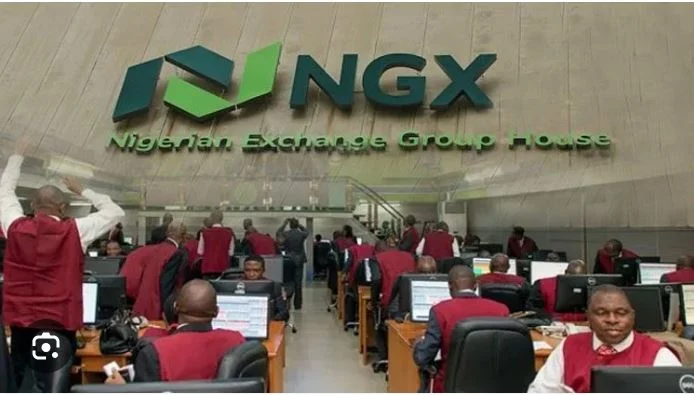
N68.83trn Growth Drives Capital Market Contribution To GDP To 33%

Nigeria’s capital market has recorded a remarkable 125 per cent growth in market capitalisation since April 2024, rising from about N55 trillion to over N123.93 trillion, the Director-General of the Securities and Exchange Commission (SEC), Dr. Emomotimi Agama, has disclosed.


Agama also said the market’s contribution to the nation’s Gross Domestic Product (GDP) has increased significantly from 13 per cent to 33 per cent within the same period, underscoring the sector’s expanding role in economic development.


He spoke in Lagos during his inaugural address to members of the Capital Market Working Group on Market Liquidity at the Commission’s office.


The SEC boss described the growth figures as evidence of strong investor confidence and the resilience of the Nigerian capital market under the current administration, but stressed that market size alone was not enough without corresponding depth and liquidity.


“Since this administration came into being in April 2024, we have seen market capitalisation grow from about N55 trillion to over N123.93 trillion. Our contribution to GDP has moved from 13 per cent to 33 per cent. These are impressive figures, but they tell only part of the story,” he said.


According to him, liquidity remains critical to sustaining the growth momentum, noting that a market must be deep and efficient to effectively perform its primary function of capital formation.


“A capital market is often described as the barometer of an economy’s health. But for that barometer to be accurate, the market must be more than just large—it must be liquid,” he said.


Agama identified key structural challenges, including high transaction impact costs for institutional investors and the concentration of trading activities in a limited number of highly capitalised stocks, which he said leaves the broader market relatively shallow.


He warned that without sufficient liquidity, investors may be reluctant to enter the market if they are uncertain about their ability to exit positions without significant price distortions.


To address these concerns, the SEC inaugurated a multi-stakeholder Working Group comprising exchanges, custodians, fund managers, dealing members and other market operators. The group is expected to develop practical recommendations to improve trading efficiency, deepen participation and enhance price discovery.


Among its mandates are a comprehensive review of trading and settlement infrastructure, identification of technical and structural bottlenecks affecting transaction speed, and proposals to make Nigeria’s settlement cycle more competitive with other emerging markets.


The group is also expected to recommend measures to broaden retail participation, with the SEC targeting the onboarding of up to 20 million new investors through digital platforms, dematerialisation of share certificates and fintech partnerships.


Agama noted that product innovation would also be central to improving liquidity, particularly through the accelerated development of derivatives and other asset classes that can provide hedging opportunities and deepen market activity.


He added that the recently enacted Investments and Securities Act (ISA) 2025 has expanded the Commission’s regulatory oversight to include digital assets, creating an opportunity to channel speculative interest into regulated and productive investment channels.


Emphasising the strategic importance of the sector, the SEC DG said it plays a critical role in financing infrastructure, supporting businesses and driving job creation.


“The capital market is not gambling; it is the engine of national development. It finances roads, powers factories and creates jobs,” he said.


Agama urged members of the Working Group to produce bold and practical recommendations that would strengthen liquidity and support the Federal Government’s broader ambition of building a trillion-dollar economy.


He added that while the recent surge in market capitalisation and GDP contribution reflects strong progress, the next phase of reforms would focus on ensuring that the market is not only large, but deep, inclusive and globally competitive.


In his remarks, chairman of the Committee and Group CEO of NGX, Mr. Temi Popoola thanked the SEC for the opportunity and assured the DG that the team understands its mandate and will diagnose structural constraints with candour, align on practical reforms, and deliver measurable actions that will deepen liquidity, restore confidence, and strengthen the resilience of our market.