NAFDAC Moves Against Sachet Alcohol, Denies Shutting Down Firms

The National Agency for Food and Drug Administration and Control (NAFDAC) has resumed its enforcement to ban  the production and sale of alcoholic beverages in sachets and small-volume PET/glass bottles (below 200ml), in line with the recent directive of the Senate of the Federal Republic of Nigeria.
This decisive action, ordered by the Nigerian Senate and backed by the Federal Ministry of Health and Social Welfare, underscores the Agencys statutory mandate to safeguard public health and protect vulnerable populationsparticularly children, adolescents, and young adultsfrom the harmful use of alcohol.
The proliferation of high-alcohol-content beverages in sachets and small containers less than 200 ml has made such products easily accessible, affordable, and concealable, leading to widespread misuse and resultant addiction among minors and some commercial drivers.
This public health menace has been linked to increased incidences of domestic violence, road accidents, school dropouts, and social vices across communities.
Placing a label to read not for children on the sachets and the small containers will not work. It cannot be enforced because of the peculiarity of the society.
 Many parents dont know their children take alcohol in sachet because the pack size can be easily concealed and the sachet is cheap.
History of six years of  moratorium given to manufacturers to reconfigure their product lines: In December 2018, NAFDAC, the Federal Ministry of Health, and the Federal Competition and Consumer Protection Commission (FCCPC) signed a five-year Memorandum of Understanding (MoU) with the Association of Food, Beverage and Tobacco Employers (AFBTE) and the Distillers and Blenders Association of Nigeria (DIBAN) to phase out sachet and small-volume alcohol packaging by January 31, 2024.
The moratorium was later extended to December 2025 to allow industry operators to exhaust old stock and reconfigure production lines.
NAFDAC emphasizes that the current Senate resolution aligns with the spirit and letter of that agreement and with Nigerias commitment to the World Health Assembly Global Strategy Resolution  to Reduce the Harmful Use of Alcohol (WHA63.13, 2010), to which Nigeria is a signatory since 2010.
The aim of the Resolution is to protect vulnerable population such as children and the youth.
The ban on sachet packaging and PET botttle less than 200 ml is to make it difficult for children to get to alcohol and its consumption.
NAFDAC approves alcohol in bigger pack sizes. The small size of the sachet makes it easier for underage to conceal from parents and teachers.
 Report from schools show that children conceal the sachets. A teacher recently reported that a student said he couldnt take exam without taking sachet alcohol.
NAFDAC did not close down any company that makes alcohol. The Agency only ban the alcohol in sachet and small containers less than 200ml.
According to Prof. Mojisola Christianah Adeyeye, Director-General, NAFDAC:
This ban is not punitive; it is protective. It is aimed at safeguarding the health and future of our children and youth by not allowing alcohol in small pack sizes.
 The decision is rooted in scientific evidence and public health considerations. We cannot continue to sacrifice the wellbeing of Nigerians for economic gain.
The health of a nation is its true wealth.
NAFDAC reiterates that only two packages of alcoholic beverages are affected by this regulationspirit drinks packaged in sachets and small-volume PET/glass bottles below 200ml.
The Agency calls on all stakeholders, including manufacturers, distributors, and retailers, to comply fully with the phase-out deadline, as no further extension will be entertained beyond December 2025.
The Agency will continue to work collaboratively with the Federal Ministry of Health and Social Welfare, the Federal Competition and Consumer Protection Commission (FCCPC), and the National Orientation Agency (NOA) to implement nationwide sensitization campaigns on the health and social dangers associated with alcohol misuse.
NAFDAC remains resolute in its mission to ensure that only safe, wholesome, and properly regulated products are available to Nigerians.
Nigerian govt apologizes for blackout in Lagos Int’l Airport

The Nigerian government, through the Federal Airport Authority, the manager of Murtala Muhammed International Airport (MMIA), has apologized to passengers and stakeholders following a power outage at Terminal 1 at the weekend in Lagos state.

The Nigerian government agency, in a statement on its official X account on Sunday, attributed the disruption to a fault in the terminal’s changeover circuit.

According to FAAN, the interruption occurred after an issue arose during a power changeover process.

FAAN explained that its technical teams were immediately deployed to bridge the gap and transfer electricity supply to the secondary grid, while interim backup measures were activated to restore services as quickly as possible.

“We acknowledge the power outage at MMIA Terminal 1 yesterday (weekend). The interruption was caused by an issue with the changeover circuit.

“We apologize to all passengers and stakeholders affected by the disruption and any discomfort it caused”, the statement reads on X.

Hunger has become tool of control in Nigeria – Aisha Yesufu

Frontline activist, Aisha Yesufu has warned that hunger and poverty have been deliberately weaponized in Nigeria, describing them as tools used to weaken citizens and suppress critical thinking.

In a post on X, Yesufu said the widespread hunger has left many Nigerians struggling to survive, with little capacity to engage politically or hold leaders accountable.

According to her, this condition has created a society where those who are not hungry must think and act not only for themselves, but also on behalf of those who no longer have the strength or space to do so.

“Hunger that is deliberately inflicted has made many lose their capacity to think,” she said, adding that poverty has become “a cancer that has eaten up the very soul of our society.”

Yesufu accused the political leadership of entrenching poverty while offering temporary relief measures during election periods.

She argued that such interventions are short-lived and designed primarily to secure votes rather than address systemic issues.

She called on Nigerians who are economically stable to come together and serve as the “soul and conscience of the nation,” urging them to take a deliberate stand for the country’s future.

“Nigeria has everything it needs to be great,” Yesufu said, emphasizing the need to confront hunger and revive what she described as the nation’s weakened spirit.

“We must unlock the spirit that has been starved the Nigerian can-do spirit.”

Her remarks come amid growing public concern over rising food prices, deepening poverty, and economic hardship across the country.

Sanwo-Olu seeks deeper World Bank partnership for development

Lagos Gov., Sanwo-OluGov. Babajide Sanwo-Olu says Lagos State is ready to partner with the World Bank Group in energy, agriculture, tourism and human capital development.

He said the state was open to deeper collaboration and investment partnerships to improve infrastructure and raise living standards across Lagos.

Sanwo-Olu spoke on Sunday at Lagos House, Marina, while receiving a World Bank delegation led by Managing Director (Operations), Ms Anna Bjerde.

The delegation also included the International Finance Corporation (IFC) Regional Vice President for Africa, Mr Ethiopia Tafara.

The governor said Lagos remained committed to reforms that attract global support and was ready to meet requirements for increased World Bank assistance.

“Lagos is ready to do more to attract investments and partnerships that will positively impact our people.

“We are open to collaboration that strengthens infrastructure and accelerates inclusive growth,” he said.

Sanwo-Olu highlighted achievements under the THEMES+ agenda, saying its implementation had delivered measurable benefits to millions of residents.

He disclosed that Lagos moved from 29th to first position in the national Ease of Doing Business ranking within four years.

“We doubled our performance across critical areas through deliberate reforms and efficiency,” the governor said.

Earlier, Bjerde said the World Bank Group was keen to work with Lagos due to its strategic importance and reform-driven impact.

She described Lagos as a key World Bank stakeholder, citing stability created by recent economic and policy reforms.

“What Lagos is doing is demonstrative of national solutions. Nigeria’s policy consistency improves predictability, especially for investors,” she said.

Bjerde commended Lagos for reducing bureaucratic bottlenecks and improving the Ease of Doing Business environment.

She said the World Bank planned a five-year country review to assess progress at national and subnational levels, including Lagos.

Bjerde added that the institution was ready to leverage Lagos’ capacity to strengthen private sector financing across key sectors.

Petrol price surge sparks calls for crude subsidy

FUEL PUMPPetroleum product marketers have argued that the only way to shield Nigerians from the shock of a sudden surge in petrol prices is for the Federal Government to sell crude oil to the Dangote Petroleum Refinery and other local refineries at subsidised rates.

The marketers, therefore, urged the Federal Government to sell crude oil to domestic refiners with a subsidy to prevent a sharp increase in petrol prices.

Specifically, the Independent Petroleum Marketers Association of Nigeria appealed to President Bola Tinubu to consider subsidising crude prices while also extending the naira-for-crude deal to other modular refineries operating in the country.

Dangote refinery recently effected a price hike, pushing the pump price of petrol to N839 per litre at MRS and other filling stations.

A few days later, crude prices surged above $70 per barrel in the global market, fuelling speculations that petrol prices could rise to N1,000 per litre in Nigeria, especially in locations far from the refinery or major tank farms.

Speaking on the development, the IPMAN spokesman, Chinedu Ukadike, said a subsidised crude oil supply had become critical to absorbing the shock of any possible price surge.

Crude oil prices, which serve as the main feedstock for refineries, change constantly, and such fluctuations directly affect the prices of petrol, diesel, and other fuels.

Ukadike said the Federal Government should offer refineries a ‘special deal’ on crude oil to act as a buffer, helping to keep pump prices stable even when global crude prices rise. In an interview with our correspondent, he said, “We need to consider crude oil subsidy.

The Federal Government can see how to subsidise crude oil being given to Dangote in naira.”

According to him, subsidised crude would help prevent what he described as a sudden increase in petroleum product prices, which often impacts the cost of domestic goods and services.

“The subsidy will ensure that there is no sudden increase in domestic goods and services. We are making this request now that the Federal Government should subsidise the crude oil it sells to Dangote and other refiners producing fuel locally,” he stated.

The IPMAN spokesman explained that the reason the refinery recently asked marketers to top up payments already made for petroleum products by N100 per litre was due to the rise in global crude prices, urging the Federal Government to consider the possibility of a crude subsidy.

Last Monday, the Dangote refinery announced an increase in its gantry price of petrol from N699 to N799 per litre. The adjustment pushed Dangote’s gantry price to about N70 higher than the landing cost of imported Premium Motor Spirit.

Findings by The PUNCH showed that marketers who had completed payments and processed final slips at N699 per litre were later asked to top up to N799 per litre before loading. This followed the refinery’s withdrawal of its temporary festive price support and the invalidation of previously issued loading authorisations.

Our correspondent reports that following the price increase by the Dangote refinery, most filling stations across the country adjusted their pump prices.

In Lagos, petrol prices ranged from N830 to N859 per litre. The Nigerian National Petroleum Company Limited sold PMS at N849 per litre along the Lagos-Ibadan Expressway. MRS filling stations dispensed the product at N839 per litre, while a few outlets sold at prices slightly lower than those of the Dangote-partnered MRS stations.

With the increase in petrol prices, Ukadike said fuel sales had slowed compared to the December festive period, noting that many consumers were becoming more conservative in their fuel consumption.

“The market is becoming slow now, unlike in the festive season when the prices were low. People were filling their tanks then, but now, people are becoming conservative because of the price increase,” the IPMAN leader stated.

Although the price of Brent crude settled at $69.32 per barrel on Sunday evening, Ukadike warned that unless crude prices decline to around $60 per barrel, petrol pump prices would continue to face upward pressure.

According to him, crude oil prices and exchange rates remain the major determinants of fuel pricing, stressing that changes in either would affect how petroleum products are sold in the domestic market.

Ukadike further warned that petrol could hit N1,000 per litre if the crude price surge persists, particularly in areas far from fuel depots. “The crude surge will definitely affect our local market. The price of petroleum products will come down if the crude price goes down; that’s the common principle of the market,” he said.

First HoldCo Records Major Impairment Charge, Grows Gross Earnings To ₦3.4tn

First HoldCo Plc has announced its unaudited financial results for the year ended 31 December 2025, reflecting a year of deliberate strategic actions aimed at strengthening its balance sheet, improving asset quality, and positioning the business for more resilient and sustainable growth amidst successful capital raise activities.

As stated in the unaudited Group financial statement, FirstHoldCo recorded a 4.8% year-on-year (y-o-y) increase in its Gross earnings to N3.4 trillion, supported by a 36.3% y-o-y growth in net interest income of N1.9 trillion on the back of enhanced earnings yield and margins of 17.11% and 11.0%, respectively. Similarly, net fees and commissions improved by 18.7% y-o-y to N290.7 billion. These are clear indications of the strength of the revenue generating capacity of the core business which continues to be solid.

 Earnings for the year were, however, lower than the prior year, primarily due to higher impairment charges in the commercial banking segment.
This is in line with a deliberate strategic decision to accelerate balance sheet clean-up and adopt more aggressive provisioning standards. Management views this as a prudent step that enhances transparency, strengthens investor confidence, and aligns fully with evolving regulatory expectations.

Additionally, increased regulatory costs affected profitability. These charges, while weighing on the results, underscore the Group’s compliance with Nigeria’s financial system stability framework and its commitment to ensuring systemic confidence. Despite these pressures, underlying performance of the Group remains strong.

Deposit liabilities grew by 10.0% y-o-y, driven by sustained deposit mobilisation and continued investment in digital banking platforms. This growth reflects strong customer confidence and deepening engagement across key segments.

The deposit mix also showed a deliberate reduction in foreign currency deposits, resulting from the repayment of expensive funding and the impact of naira appreciation. This shift supports improved funding efficiency and reduces foreign exchange risk.

Gross loans and advances declined marginally, reflecting a disciplined approach to credit growth, strengthened risk management, loan repayments, write-offs, and the translation impact of a stronger naira on foreign currency facilities.

The Group intensified its commitment to ensuring a high-quality, cleaner asset base, aiming to optimise the portfolio and enhance future earnings potential.

Furthermore, performance in earnings was impacted by a decline in non-interest income, mainly due to lower fair value gains on financial instruments following the naira appreciation in 2025. However, this was partially offset by stronger foreign exchange (FX) trading income and reduced FX revaluation losses.

Net fees and commission income also grew, supported by higher electronic banking fees, letters of credit commissions, custodian fees, and account maintenance income, reflecting the continued success of the Group’s digital-innovation strategy.

While impairment charges increased following the end of regulatory forbearance, management has intensified recovery initiatives and reinforced credit oversight.

Excluding impairment and fair value gains, pre-provision operating profit grew by 23.9% y-o-y to N973.3 billion demonstrating robust performance of the core business.

Apart from the commercial banking impairments, performance across the rest of the Group remained resilient, supported by steady customer activity and disciplined execution.

Looking ahead, the Group will continue to prioritise disciplined execution of its strategic objectives, with emphasises on enhancing efficiency and profitability, continuing to build on the Group’s digital and data capabilities, while sustaining a robust balance sheet to support increased value creation and returns for shareholders.

Alongside this, the Group will pursue selective growth initiatives, including new revenue streams, additional business verticals, and deeper participation in targeted African markets, in line with our strategy and risk appetite.

Further details and insights are to be provided when the audited full-year results are published and during the subsequent investor and analyst earnings call.

Dangote Group, NNPC Subsidiaries Seal Strategic Gas Agreements

Towards meeting the energy demands of their ongoing expansion projects, three subsidiaries of Dangote Industries Limited, Dangote Petroleum Refinery, Dangote Fertiliser Plant and Dangote Cement Plc have scaled up their Gas Sales and Purchase Agreements (GSPA) with subsidiaries of the Nigerian National Petroleum Company Limited (NNPC Ltd): Nigerian Gas Marketing Limited and NNPC Gas Infrastructure Company Limited (NGIC).
The upscaled Supply Agreements will help to drive the conglomerate’s Vision 2030, resulting in increased output, better and cleaner energy supply as well as support ongoing expansion projects. The Agreements were signed at the unveiling of the NNPC Gas Master Plan (GMP) 2026, tagged NGMP 2026 held at the NNPC Towers weekend in Abuja.
Managing Director and Chief Executive Officer of Dangote Petroleum Refinery, Mr. David Bird, signed on behalf of the refinery, while the Group Managing Director of Dangote Cement Plc, Mr. Arvid Pathak, signed on behalf of the cement company. Mr. Mustapha Matawalle signed on behalf of Dangote Fertiliser FZE.
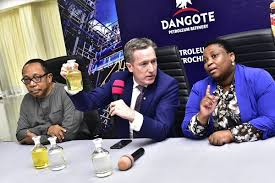
CEO of Dangote Petroleum Refinery, David Bird speaking at the signing ceremony said that the agreement demonstrates the refinery’s bold steps to expand its capacity. According to him, the agreements mark a critical milestone in the expansion drive as well as a proactive measure to lock in vast energy requirements for the anticipated increase in its production capacity.
According to Pathak, the agreement signing serves as an enabler of DCP’s strategic objectives. The agreement guarantees the gas required to support the drive towards CNG adoption as Autogas and to meet the increasing gas demand as production capacities in Nigeria are expanded. It also promotes the adoption of cleaner fuel for both Autogas through CNG and gas to support increased production output.
For Dangote Fertiliser FZE, it is anticipated the agreement will support the company’s fertiliser capacity expansion projects, given that fertiliser is a product of natural gas.
Meanwhile, speaking at the event, the Minister of State for Petroleum Resources (Gas), Rt. Hon. Ekperikpe Ekpo, described the Gas Master Plan as a deliberate pivot from policy articulation to disciplined execution, anchored on commercial viability and integrated sector-wide coordination.
He said: “Today’s launch is not merely the unveiling of a document; it represents a deliberate shift towards a more integrated, commercially driven, and execution-focused gas sector, aligned with Nigeria’s development aspirations. Nigeria is fundamentally a gas Nation. With one of the largest proven gas reserves in Africa, our challenge has never been potential, but translation: translating resources into reliable supply, infrastructure into value, and policy into measurable outcomes for our economy and our people. The Gas Master Plan speaks directly to this challenge.”
Hon. Ekpo further noted that the Plan’s strong focus on supply reliability, infrastructure expansion, domestic and export market flexibility, and strategic partnerships aligns seamlessly with the Federal Government’s Decade of Gas Initiative, positioning natural gas as the backbone of Nigeria’s energy security, industrialisation, and just energy transition.
In his address, the Group Chief Executive Officer, NNPC Ltd, Engr. Bashir Bayo Ojulari, described the NNPC Gas Master Plan 2026 as a bold, effective execution-anchored roadmap designed to unlock Nigeria’s immense gas potential and elevate the country into a globally competitive gas hub.
Ojulari noted that with about 210 trillion cubic feet (Tcf) of proven gas reserves and an upside potential of up to 600 Tcf, Nigeria possesses one of the most consequential hydrocarbon basins in the world; one reinforced by the Petroleum Industry Act (PIA) and the Federal Government’s gas-centric energy transition agenda.
“The Plan is structured not just to deliver – but to exceed- the Presidential mandate of increasing national gas production to 10 billion cubic feet per day by 2027 and 12 billion cubic feet per day by 2030, while catalysing over 60 billion dollars in new investments across the oil and gas value chain by 2030.”
He explained that the Plan prioritises cost optimisation, operational excellence, and systematic advancement of resources from 3P to bankable 2P reserves, while strengthening gas supply to power generation, CNG, LPG, Mini-LNG, and critical industrial off-takers.
Reaffirming his personal commitment as Chief Sponsor of the initiative, the NNPC Ltd GCEO stressed that the Company has adopted a more collaborative, investor-centric approach in shaping the NGMP 2026, with strong alignment to industry stakeholders, partners, and investors.
Polaris Bank Strengthens MSMEs Export Ecosystem At NAHCO/NACCIMA Export Group Programme

Polaris Bank has reaffirmed its strategic commitment to strengthening Nigeria’s non-oil export ecosystem and empowering micro, small and medium-sized enterprises (MSMEs) at the NAHCO and NACCIMA Export Group Programme themed *Breaking Barriers: Helping SMEs Navigate Export Procedures for Agro Products and Other Commodities.”
The one-day engagement brought together regulators, industry stakeholders, exporters and trade bodies to advance practical solutions for easing trade barriers, improving access to finance and building a more resilient and diversified Nigerian economy.
The programme also marked the formal introduction and launch of the NACCIMA Export Group and the NAHCO Export Support Centre for MSMEs in Nigeria, creating a structured platform for exporters to access trade facilitation services, logistics support, regulatory guidance and financial solutions across the export value chain.
Speaking at the programme, Polaris Bank’s Executive Director, Chris Ofikulu, underscored the national importance of export diversification and the central role of SMEs in building a resilient economy. He noted that reducing Nigeria’s dependence on oil revenues requires coordinated action across the public and private sectors to strengthen non-oil exports, particularly within agro-exports and commodity trade.
“Expanding non-oil exports is not optional; it is a strategic imperative for building a resilient, inclusive and competitive Nigerian economy. SMEs, particularly in agro-exports and commodity trade, hold the key to unlocking our true comparative advantage. Polaris Bank remains committed to providing the finance, advisory support and partnerships required to help them scale confidently and compete globally,” Ofikulu said.
The engagement also focused on addressing structural challenges confronting exporters, including infrastructure gaps, port inefficiencies, logistics constraints, standards and certification requirements, and policy consistency.
Participants emphasized the need for stronger public-private collaboration among government agencies, trade bodies, financial institutions and logistics partners to simplify export procedures and improve market access for Nigerian SMEs.
Also addressing stakeholders, Olaleye Arinola, Team Lead, Trade Services, Polaris Bank, highlighted the importance of removing trade and payment bottlenecks that limit exporter competitiveness and cash flow. He emphasized the Bank’s focus on building confidence and certainty into the export process through practical financial and advisory support.
“Exports cannot grow if finance and payments remain obstacles. At Polaris Bank, our focus is on removing friction from international trade by ensuring SMEs get paid faster, safer and with greater certainty through efficient trade finance, secure cross-border payments and hands-on guidance across documentation, FX and compliance,” Arinola said.
As part of its partnership with the business and trade community, Polaris Bank unveiled a Dedicated Help Desk for NACCIMA members, designed to provide direct access to trade finance and payment support, fast-track resolution of export-related enquiries, and personalized advisory services on FX documentation and regulatory compliance.
Polaris Bank reaffirmed its commitment to working closely with NAHCO, NACCIMA and other stakeholders to strengthen exporter capacity, promote value addition across agro-exports and commodities, and unlock sustainable growth opportunities for Nigerian businesses in regional and global markets.
As Nigeria advances its economic diversification agenda, Polaris Bank remains positioned as a trusted partner for SME exporters, providing the finance, knowledge and institutional support required to compete globally and contribute meaningfully to national development and long-term economic resilience.