RTEAN Chairman condemns ejection of widow, children after driver’s death

The  Chairman of Road Transport Employees Association of Nigeria, RTEAN, Abia State chapter, Nnamdi Balogu has condemned the alleged ejection of an Abia widow, Mrs Calista Chigozie and her four children from home, by her late husband’s relative.
According to the Abia RTEAN Chairman, Mrs Calista Chigozie and four kids  were ejected from their home by her late husband’s relative following the death of her husband, Mr. Chigozie Ikechukwu in a fatal road accident.

The Abia RTEAN Chairman, Balogu, who was reacting to the alleged maltreatment of the widow and her children, said he was taking steps to build a house for the woman and her children.

He recalled how the husband of Mrs Calista, Chigozie Ikechukwu a bus driver died in accident along Enugu-Port Harcourt Road in November, 2025 and buried in January, 2026 at his hometown, Avodim, Ubakala in Umuahia South LGA of Abia State.

Balogu said: “The Union shares in the pain of the bereaved and would not watch the right of the widow and her children to be violated.

“Chigozie who died from the injuries he sustained at the accident that happened in November 2025 was a dedicated driver.”

Lack of sanitation facilities forcing girls to drop from schools – Jigawa govt

The Jigawa State Government has said that lack of adequate sanitation and hygiene facilities in schools is a major reason many girls drop out of school.
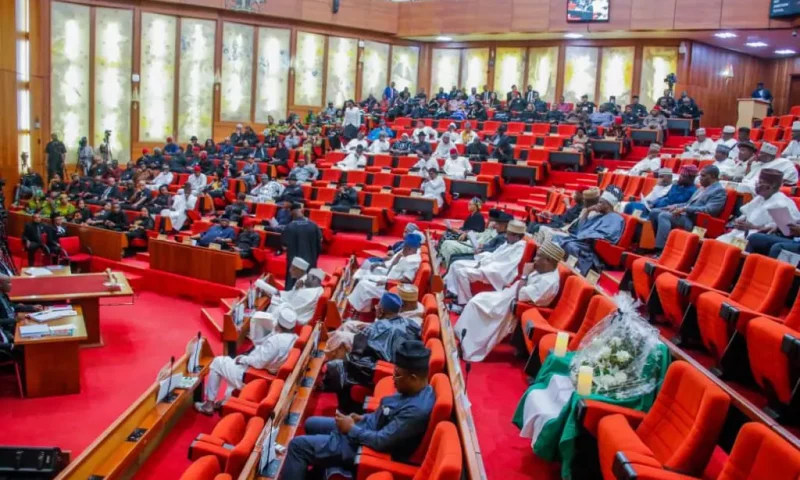
The state disclosed this during a media and stakeholders’ dialogue on WASH services in schools and primary healthcare centres, organised by the Federal Ministry of Information and National Orientation in partnership with UNICEF, following a media tour of selected schools across Jigawa State.

Speaking at the dialogue, the Technical Adviser to the Governor on Basic Education, Dr. Hauwa Mustapha Babura, said poor sanitation and lack of privacy continue to affect girls’ education in the state.

“WASH is very important to us in Jigawa State, if we truly want children to be retained in school. We don’t want our girls to just survive; we want them to thrive.”

Dr. Babura explained that many girls are forced out of school due to the absence of proper toilet facilities and privacy.

She added that the state is working to address the problem despite challenges with terrain and inherited infrastructure.

“We are doing a lot, but we also inherited a lot. We have just spent two years, give us the next two years, and we will achieve even more,” she said.

Also speaking, the Executive Chairman of the Jigawa State Universal Basic Education Board (SUBEB), Prof. Haruna Musa, said the government is aware of the challenges facing basic education, particularly infrastructure and WASH facilities, and is taking steps to fix them.

“We are aware of our challenges and we are working towards fixing them. Learning cannot stop simply because there are no functional toilets in some schools. We will get there,” he said.

Prof. Musa disclosed that the state has 2,727 primary schools and 618 junior secondary schools, bringing the total number of public basic schools to 3,345.

According to him, there are 8,689 toilets across schools in the state.

He added that systems have been put in place for strategic renovation, operation and maintenance of school facilities, with a long-term target set for 2030.

“All hands are on deck. Of course, resources are limited, but education remains a priority for us,” he said.

On her part, UNICEF Advocacy and Risk Communication Specialist, Dr. Sussan Akila, commended Jigawa State for its efforts but raised concerns over national data.

She noted that a 2021 WASH survey showed that only 11 per cent of schools in Nigeria have basic WASH facilities, with Jigawa State recording just 2 per cent.

She warned that poor WASH conditions expose children and women to health risks and affect school enrolment and retention.

She urged the state to strengthen WASH facilities in schools, particularly in rural areas.

Electronic transmission: Nigerians won’t be intimidated by Senate – CSO

A Civil Society Organization, Movement of the Transformation of Nigeria, MOTION, has said that the Nigerian people will not be intimidated by whatever stance Senate President Godswill Akpabio is taking.
Convener of the group, Hauwa Mustapha, said this on Monday while responding to questions in an interview on Arise Television.

She said the Senate must know that it is the people that matter most, stressing that the voices of the people must count.

She was reacting to the protest by Nigerian youths on Monday against Senate’s rejection of the real-time transmission of election results.

“It is high time those elected to the Senate understand that it is the people who matter most and our voices must count.

“We stand on our right to demand the electoral act amendment bill, and they don’t have the right to override our demand.

“For us, primarily, the objective is to categorically express our feelings, our disappointment, first of all, with the way the Senate appears to be toying with the fate and the interest of Nigerians, and we made our voices very clear and loud. And I think that’s the most important thing.

“And then we also saw that broadly, we had support of Nigerians from everywhere, those that were not able to come, we saw their solidarity on the social media. So, to that extent, it was quite successful,” she said.

NAFDAC raids Lagos warehouses, intercepts N3bn worth of fake, banned drugs

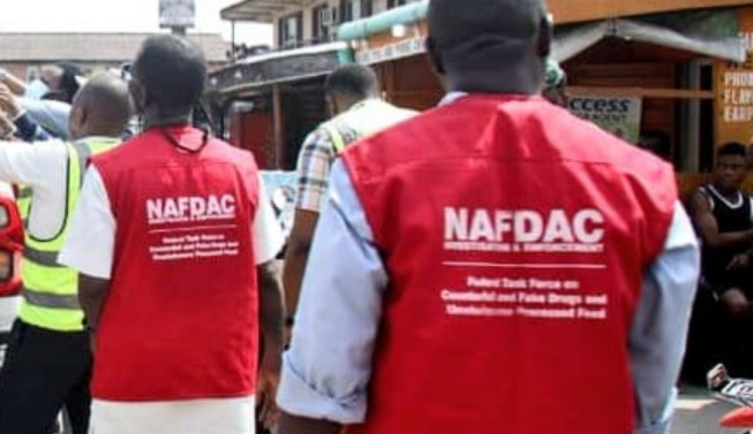
The National Agency for Food and Drug Administration and Control, NAFDAC, has uncovered a massive counterfeit drug syndicate in Lagos State, seizing more than 10 million doses of fake and prohibited medicines in what it described as one of the most extensive operations of its kind in recent years.
Addressing journalists in Lagos, NAFDAC’s Director of Investigation and Enforcement and Chairman of the Federal Task Force on Fake and Substandard Products, Mr Martins Iluyomade, said the bust followed actionable intelligence generated during a security and enforcement meeting held on February 3, which flagged suspicious movements around the Trade Fair–Navy axis.

“Based on intelligence from that meeting, our officers moved into the area and discovered several warehouse facilities disguised as residential buildings but used exclusively for storage.

“The location is largely deserted, which likely allowed the operators to function unnoticed for a long time,” Iluyomade said.

A search of the premises revealed huge volumes of counterfeit and banned pharmaceutical products, including injectable anti-malarials, antibiotics, sachet medications, blister-packed drugs, and Analgin, a painkiller that has been outlawed in Nigeria for more than 15 years.

Iluyomade described the discovery as deeply alarming.

“What we found should concern every Nigerian. These are not harmless fake supplements. Many of the products are critical, life-saving medicines, including injections used in emergencies such as severe malaria. Administering fake drugs in such cases can be fatal,” he said.

He noted that the counterfeit products were produced with a high level of sophistication, making them extremely difficult to detect.

“In many cases, even the original manufacturers struggle to differentiate the counterfeits from genuine products. That is how advanced these criminal networks have become,” he added.

According to NAFDAC, the estimated street value of the seized drugs exceeds N3 billion. Eight truckloads of assorted fake medicines and cosmetics were evacuated from the warehouses during the operation.

“This is a significant success for public health and consumer protection in Nigeria. These products have been intercepted and will not find their way into the market,” Iluyomade said.

He further disclosed that preliminary findings point to the involvement of an international criminal syndicate.

“These groups obtain samples of original products, replicate them abroad with near-perfect precision, and reintroduce them into Nigeria’s supply chain. This is organised crime with both local and foreign collaborators,” he explained.

Warning that counterfeit medicines pose a grave threat to the nation’s health system, Iluyomade said profit-driven criminals were willing to sacrifice lives to make money.

“Nigeria is under attack by people who prioritise profit over human life, even if it means killing fellow citizens and damaging trusted pharmaceutical brands,” he said.

He also revealed that some manufacturers had complained about fake versions of their products circulating in the market for months, noting that criminals often release such drugs in small batches to evade detection.

Iluyomade urged Nigerians to be cautious when purchasing medicines, warning that unusually cheap drugs could be dangerous.

“If the price looks too good to be true, it probably is. Cutting corners with medicines can cost lives,” he cautioned.

N3.6tn power subsidy plan should go beyond 2028 – GenCos

The Managing Director/Chief Executive Officer of the Association of Power Generation Companies, Joy OgajiPower generation companies under the aegis of the Association of Power Generation Companies have urged the Federal Government to extend its proposed N3.6tn power subsidy payment plan beyond 2028, warning that the electricity sector’s liquidity crisis cannot be resolved within three years.
The Chief Executive Officer of APGC, Joy Ogaji, made the call while reacting to documents indicating that the Federal Government plans to make provisions for power subsidy payments between 2026 and 2028, covering a total of N3.6tn.

The PUNCH had reported earlier that the Federal Government proposed a N3.6tn deduction from the Federation Account to fund electricity subsidies in 2026, 2027, and 2028, a move designed to distribute the financial burden across federal, state, and local governments.

The move is a planned step by the Federal Government to confront the mounting electricity subsidy debt, which has severely constrained liquidity across the power sector, while also strengthening fiscal transparency by making subsidy obligations explicit and better accounted for.

The deduction proposal, detailed in the Medium-Term Expenditure Framework Fiscal Strategy Paper for 2026–2028, reflects a strategic shift towards distributing the financial burden of the power sector across all tiers of government, amid growing concerns over unsustainable debts and systemic inefficiencies.

According to the MTEF document, which outlines “Other FAAC Deductions” under the Federation Account Revenue – Main Pool, VAT and Stamp Duty, the electricity subsidy for 2026 is pegged at ₦1.2tn, the same for 2027 and 2028.

Though Ogaji welcomed the government’s move, describing it as a proactive step, she cautioned that the plan would fall short if it is not fully appropriated, transparently implemented, and backed by strong political will.

“We appreciate the Federal Government for coming up with this proactive approach. From the documents provided, there will be provisions for 2026 to 2028, which is three years. We are hoping that it is fully appropriated and that the funds are actually paid to the GenCos,” she said.

Questioning the sustainability of the government’s plan, the APGC CEO asked why the subsidy framework should end in 2028, warning against unrealistic expectations of a sudden turnaround thereafter.

“Is it not possible to extend the period beyond 2028? Are we expecting a miracle after 2028? Do we have a magic wand to wave off the crux of the liquidity conundrum?” Ogaji queried.

According to her, while the subsidy plan could provide temporary relief, it does not address the structural weaknesses undermining the power sector, particularly poor financial discipline and weak accountability across the value chain.

“This still calls for a better structured financial plan, as this will only fund a leaking basket without establishing the discipline and accountability required to stop the contagion,” Ogaji stated.

She stressed the need for the government to take retroactive action to clear outstanding obligations owed to power generation companies, noting that legacy debts continue to constrain operations and investment in generation capacity.

“I will, however, advise that this plan take retroactive action, as necessary, to clear all outstanding and legacy debts. A more comprehensive approach to make the sector viable is needed,” she added.

Ogaji warned that the challenges facing the power sector are far deeper than what short-term subsidies can resolve, likening the situation to a severe wound requiring decisive intervention rather than temporary fixes.

“The power sector wound is beyond plasters and bandages. There is a cure—a renewed focus on the sector with strong political will,” she said.

Despite her concerns, she expressed confidence in the Federal Government’s capacity to fix the sector, noting that GenCos remain ready to work collaboratively with relevant stakeholders to achieve lasting reforms.

“We are confident that the Federal Government has all it takes to fix the sector, and we are ready and willing to collaboratively work to achieve sustained success,” she said.

However, industry stakeholders have expressed pessimism about the proposed subsidy payments, citing past experiences where budgetary provisions failed to translate into actual disbursements.

Some stakeholders warned that the subsidy plan may not be fully implemented and could bear little or no resemblance to actual expenditure unless stronger safeguards are put in place to ensure transparency, consistency, and timely payments across the power value chain.

Recall that the Federal Government recently issued a ₦501bn bond to settle part of the ₦4tn legacy debt owed to the generation companies. The bond was designed to address payment arrears owed to power generation companies for electricity supplied over the past decade. But Ogaji said GenCos’ unpaid debts keep increasing by about ₦200bn monthly.

She said, “As of December 2025, the Federal Government debt to the GenCos via the Nigeria Electricity Trading Plc is already ₦6.4tn. You also need to look at how much of that has been provided for. Just a ₦501bn bond.”

According to her, the bond was structured to run for seven years and focused largely on historical debts without addressing ongoing shortfalls. “This bond is earmarked to run for seven years with a focus on the ₦4tn without dealing with the haemorrhaging ones,” Ogaji said.

But the Federal Government said the deductions from the Federation Account were to ensure that the burden of electricity subsidies was borne by all three tiers of government and not the Federal Government alone.

Start-ups raise $174m amid record low deal count

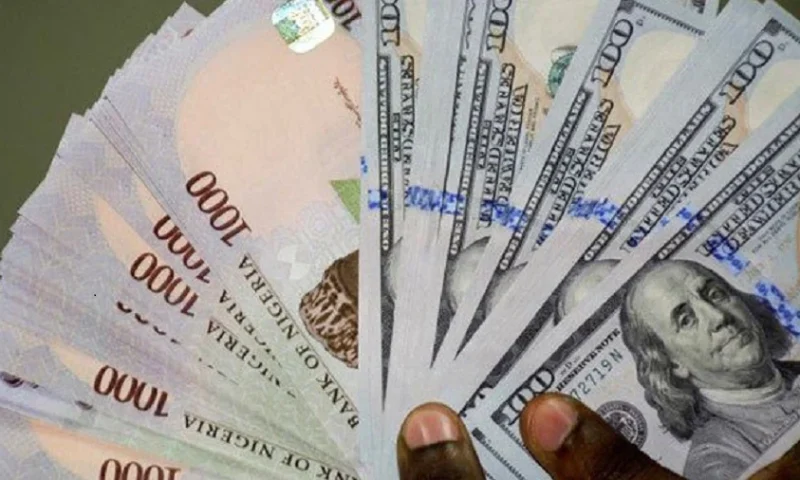
Naira and DollarStart-ups in Africa raised a total of $174m in January 2026 through deals valued at $100,000 and above, including equity, debt and grants, excluding exits, even as the number of deals dropped significantly.
This was disclosed by Africa: The Big Deal, a platform that monitors activities in the continental start-up ecosystem.

According to Africa: The Big Deal, the figure is significantly lower than the $276m raised in January 2025 and below the monthly average of $263m recorded over the previous 12 months. However, it is higher than the totals recorded in January 2023 ($106m) and January 2024 ($85m).

“What is more concerning, however, is the fact that only 26 start-ups announced at least $100k in funding in January. That is very low: just above half of the monthly average over the previous 12 months and of January 2024. As a matter of fact, on this specific metric, this is the lowest monthly tally on record since at least 2020,” the report indicated.

On the month-on-month dip between December and January, Max Giacomelli, who authored the piece, said that the trend is not new to the ecosystem, having occurred in 2023, 2024 and 2025. He maintained that a relatively slow start to the year does not necessarily signal a downward trend.

Among the biggest fundraisers was Nigerian mobility financing start-up MAX, which secured $24m in a mix of equity and asset-backed debt. The raise positions MAX as one of the continent’s top recipients of capital in January and reinforces investor appetite for asset-backed mobility and transport financing models in key African markets.

Egyptian fintech valU led the continent overall with a $64m debt facility from the National Bank. Four additional companies raised equity rounds exceeding $10m: NowPay (Egypt, $20m); Yakeey (Morocco, $15m Series A); Terra Industries (defence, $12m); and the Ivory Coast’s fintech Cauridor.

The sectoral distribution shows fintech continuing to dominate large-ticket funding, with mobility, property technology and defence also attracting significant investor interest.

Although not included in the funding totals, January also saw notable exit activity. Flutterwave acquired Nigerian fintech infrastructure start-up Mono in an all-stock transaction valued at approximately $30m, signalling continued consolidation in the payments and API infrastructure space. Tech talent platform Savannah was acquired by Commit, while Izili Group completed the acquisition of off-grid solar provider Qotto.

The combination of reduced deal flow and ongoing consolidation suggests a maturing funding environment, with capital increasingly flowing to established players and strategic mergers reshaping segments of the ecosystem.

For now, January’s figures may reflect seasonal moderation rather than structural decline. However, the historically low number of funded start-ups could indicate a tougher capital-raising climate ahead, particularly for early-stage ventures seeking their first institutional cheques.

Dangote Cement, Aradel buying lifts NGX by N1.4tn

Dangote-Cement-Logo

Buying interest in Dangote Cement (+8.81 per cent), Aradel (+2.78 per cent), Nigerian Breweries (+2.66 per cent), International Breweries (+2.00 per cent) and Lafarge Africa (+1.74 per cent) drove the market performance on Monday on the Nigerian Exchange Limited.

The extension of the bullish trend on the local bourse resulted in a 1.29 per cent increase in both the All-Share Index, which rose to 173,946.22, and the market capitalisation, which stood at N111.66tn at the close of trading.

Investor sentiment remained bullish, with 59 gainers emerging compared to 26 laggards. Overall, CAP (+10.00 per cent), MAYBAKER (+10.00 per cent), and DAARCOMM (+10.00 per cent) jointly led the gainers’ log, while EUNISELL (-9.98 per cent), Tripple Gee (-8.90 per cent), and Abbey Mortgage Bank Plc (-8.03 per cent) topped the laggards.

However, trading activity moderated as total volume and value traded fell 18.72 per cent and 35.21 per cent, respectively, to 775.2 million units and N27.9bn, compared to the previous session, whereas deal count increased 29.32 per cent to 65,960 transactions.

Banking stocks topped the volume and value charts, as Access Corp led the volume log with 67.1 million units (8.66 per cent of total volume) traded, while Zenith Bank topped the value log with N3.4bn (12.29 per cent of total value).

Sectoral performance was broadly positive. The Industrial Goods sector rose 4.76 per cent, largely due to a price increase in DANGCEM (+8.81 per cent). The Consumer Goods sector climbed 0.74 per cent, driven by gains in NB (+2.66 per cent). Additionally, ARADEL’s rise (+2.78 per cent) helped boost the Oil & Gas sector1.29 per cent and the Commodity Index 0.65 per cent.

On the other hand, the Banking (-0.04 per cent) and Insurance (-0.03 per cent) indices trended lower, pressured by losses in ETI (-5.01 per cent) and AIICO (-4.44 per cent), respectively.

The PUNCH reported that in the past week, the Oil & Gas index drove the NGX to a historic high, with the All-Share Index reaching an unprecedented 171,727.49 points and the market capitalisation boosted to N110.23tn.

Analysts attribute this bullish streak to a “fragile but positive” stabilisation of macroeconomic indicators and a shift toward productivity-led growth. Looking forward, the bullish performance is expected to be sustained in the near term, supported by improving investor sentiment and the continued release of corporate earnings results, though some profit-taking may emerge following the recent rally.

On their outlook for this week, the analysts at Afrinvest said that they expect the “bullish performance to be sustained, supported by improving investor sentiment and the continued release of earnings results”.

The experts at AIICO Capital echoed similar sentiments, saying, “We expect the market to sustain its positive sentiment in mid- to high-cap stocks in relation to released earnings and the bid for dividend season.”

CBN, NCC propose instant refunds for failed airtime, data

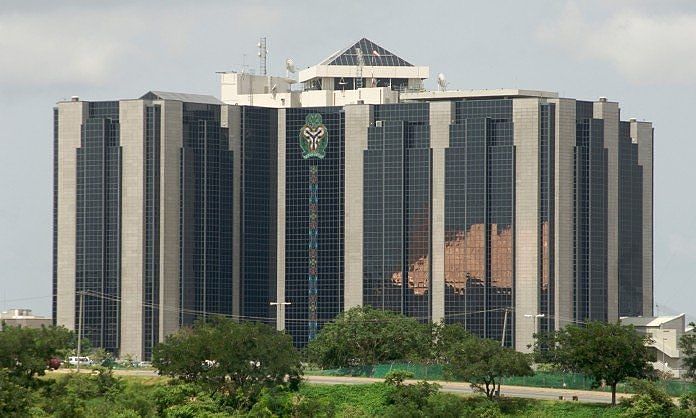
CBN headquartersThe Central Bank of Nigeria and the Nigerian Communications Commission have proposed that customers must receive refunds within 30 seconds for failed airtime and data purchases to curb persistent billing complaints in the telecommunications sector.
This was indicated in the Exposure Draft of the Joint CBN–NCC Framework for Resolution of Failed Airtime and Data Purchase Transactions, which was published on the website of the CBN on Monday.

The landmark exposure draft, dated 5 February 2026, seeks to “institutionalise clear accountability” and establish a “coordinated approach to consumer redress” across the financial and telecommunications sectors.

The most significant shift in the proposed framework is the introduction of standardised, automated timelines for resolving failed transactions. Currently, Nigerians often face long delays when airtime purchases fail at the bank, aggregator, or Mobile Network Operator level.

To solve this, the regulators have proposed a 30-second window for automated reversals. Section 6.0 (ii) of the draft exposure, which dwelt on failed transactions, especially as it relates to unfulfilled airtime/data delivery, proposes a time to refund the purchaser of 30 seconds “if the transaction failed at the bank level… Failed transaction delivery from NCC Authorised Licensees… Failed transaction delivery from MNO to the NCC Authorised Licensee.”

The draft emphasised that stakeholders must “automate reversal processes across all stakeholders” to ensure that refunds require no human intervention from the customer. The draft exposure also stated that “all parties involved in airtime and data transactions shall take the following actions to ease usage and facilitate consumer satisfaction: a. Stakeholders must immediately connect ONLY to relevant authorised licensees of the NCC and CBN. b. MNOs and banks must only connect to NCC Authorised Licensees/MNO digital channel partners for airtime and data vending… Notifications of failure create final settlement obligations between MNO and NCC-authorised licensees… The NCC and CBN will audit stakeholder compliance jointly or individually at quarterly or other intervals as may be determined.”

From a business and oversight perspective, the regulators are proposing a Central Monitoring Dashboard to be hosted jointly by the CBN and NCC, which will track reversals, Service Level Agreement breaches, and customer complaints in real-time.

“There shall be a Central Monitoring Dashboard hosted by CBN/NCC for tracking reversals, SLA breaches, and customer complaints. This will facilitate the establishment of a real-time national ‘Failed Transactions Dashboard’ with a uniform error code with end-to-end visibility across the value chain’, read the draft exposure.

This is designed to eliminate the “unclear ownership of liability” that often occurs when banks and telcos blame each other for failed recharges. To support this, banks and MNOs will be required to maintain and share daily reports of successful and failed cases.

The proposed framework also addresses the common problem of “lost” money when customers recharge ported phone numbers. The draft mandates that MNOs must validate a phone number against the ported number database before processing any recharge. If the system identifies a number as ported out or invalid, it must “proactively stop recharges” and send a failure code back to the bank to ensure the customer is not debited.

For erroneous recharges sent to the wrong person, the framework sets clear protocols: below N20,000, MNOs will request the recipient’s consent before a reversal, and when it is above N20,000, an affidavit of indemnity or notarised letter is required to process the recovery.

The CBN and NCC in the exposure draft signalled they will take a firm stance on compliance. Both agencies will conduct joint quarterly audits of all stakeholders, including banks, payment service providers, and MNOs, to verify compliance with the new rules. The regulators have warned they will “impose penalties for any breach” of the framework’s provisions.

Banks and other financial institutions have until 10 February 2026 to submit their inputs on the draft before it is finalised. Once implemented, the framework is expected to significantly restore “subscriber trust” in Nigeria’s digital financial ecosystem.

Zamfara political realignments continue as Hajiya Mariam dumps PDP for APC

A prominent female political figure in Maru Local Government Area of Zamfara State, Hajiya Mariam Usman Shehu Yaro (Zarar Maru), has formally defected from the People’s Democratic Party (PDP) to the All Progressives Congress (APC).
In a statement she personally signed,  Hajiya Mariam said the defection was witnessed by top APC stakeholders in Zamfara State, including the former APC governorship candidate in the 2019 general election, His Excellency Mukhtar Shehu Idris, and the member of the House of Representatives representing Maru/Bungudu Federal Constituency, Hon. Abdulmalik Zubairu (Zannan Bungudu).

Leaders of the APC from across the major political blocs in the state were also present, including representatives from the camp of former Governor Senator Abdulaziz Yari Abubakar, as well as allies of the Minister of State for Defence, Dr. Bello Mohammed Matawalle. Notable stakeholders such as Lawal M. Liman (Gabdon Kauran Namoda) and Alhaji Tukur Danfulani (Gusau) also attended.

Hajiya Mariam Yaro previously served as Managing Director of the Zamfara State Investment and Property Development Company, where she played a key role in promoting trade, investment, and economic development initiatives within the state.

Political realignments have continued to intensify across Zamfara State, with defections occurring across party lines.

Speaking on her decision, Hajiya Mariam Yaro stated that her move to the APC was driven by a renewed commitment to service, unity, and development for the people of Zamfara State, emphasizing that politics must remain a vehicle for improving lives, strengthening communities, and creating opportunities for sustainable growth.

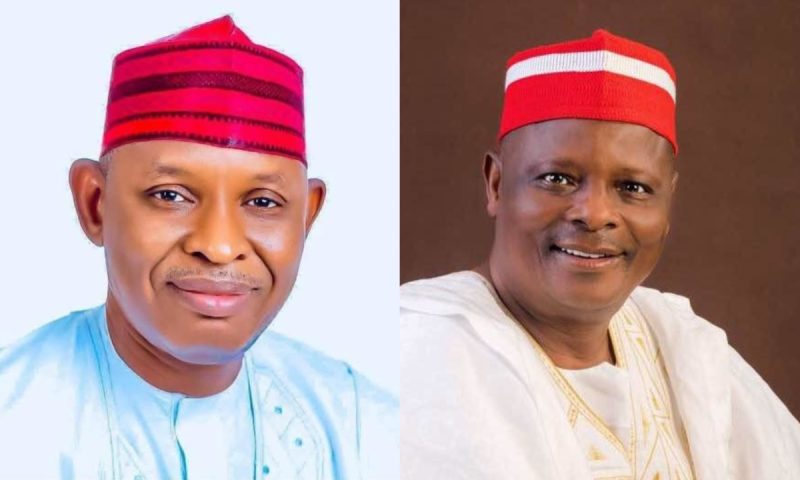
Kano 2027: Mixed reactions as Kwankwaso, Yusuf set for epic battle

The New Nigerian Peoples Party, NNPP, last month lost the only state they controlled to the All Progressives Congress, APC, after Governor Abba Yusuf joined numerous other state governors seeking survival ahead of the 2027 general elections.

DAILY POST reported that Kano recently faced biggest political defection as Governor Yusuf parted ways with Dr. Rabiu Kwankwaso and aligned himself with Kwankwaso’s longtime rival or what some people have called political enemy, Abdullahi Ganduje.

For NNPP loyalists, the governor chose shelter over loyalty, power over pedigree and survival over structure.

There have also been questions about Kwankwaso being overbearing, a reason attributed to a similar decision from Ganduje when he was governor.

In his letter of resignation from the party that brought him to power,  Yusuf said he could no longer stay in the NNPP because of persistent internal crisis, unresolved leadership disputes at state and national levels, prolonged court cases involving party leadership, deep divisions and disenfranchisement of members, a belief that the cracks in the party had become irreconcilable, adding that his staying in the party would no longer serve the best interest of Kano State.

Kwankwaso, a former minister of defence, former governor and the leader of the Kwankwasiyya group and the NNPP, could not hide tears over Yusuf’s defection.

The former governor  described Monday, January 26, 2026, the day Abba Yusuf, also known as Abba Gida-Gida formally joined APC, as one that should be marked in the world as a day of ‘betrayal’.

Speaking after the Governor’s defection, the 2023 presidential candidate of the NNPP, said, “Today, as the leader of this movement, I declared the 23rd of January as Betrayal Day.

“We believe that day should be permanently recorded in history to ensure global awareness of betrayal and the breaking of trust exists”.

In a separate interview with the BBC Hausa, Kwankwaso said by allowing Ganduje to raise his hand publicly, Abba Yusuf will not win the governorship election in 2027.

He said, “When I saw Ganduje raising Abba’s hand, I knew automatically that Abba would not win any election. People of Kano don’t support Gandujiyya. Ganduje lost the 2019 election, and his candidate also lost in 2023. So, Abba will not win in 2027.”

The APC in the state immediately countered this through its Director of Publicity, Bala Ibrahim, saying, “Ganduje has raised the hands of many governorship candidates, and they have emerged victorious.

“He has supported the governors of Imo, Kogi, Osun, and others, and his backing has consistently translated into wins. Kwankwaso needs to examine the number of hands raised by both himself and Ganduje, and the resulting victories. Abba cannot be an exception.

“The hands of Ganduje are truly hands of victory. Victoria ascerta. Our party is popular in Kano; it enjoys the support of the people because of the laudable achievements through the Renewed Hope Agenda. So victory is certain for our party and candidates in 2027.

“Kwankwaso has contested against the APC in the past and lost. Losing to the APC is therefore not a new development. No rhetoric can change the trajectory of the people, and it is clear that there is no victory in the direction of the opposition party and Kwankwaso in Kano State.”

Also, the Secretary of the NNPP Board of Trustees, Buba Galadima, told Arise News that the Governor moved to APC on his own personal interest and not Kano.

“Had Governor Yusuf moved from NNPP to another platform other than APC, I would have said he moved well. But in this case, it is only a matter of survival, not the Kano people, not the peace in Kano he wanted us to swallow.

“And I want to say with clarity that this betrayal is the third in the history of the whole world, one by Judas against Jesus, the second was Brutus against the Caesars. Now the third one that ought to go to the world Guinness Book of Records, is the one just announced by Governor Yusuf of Kano.

“That’s why our leader had asked that we should declare every 23rd of January the world’s greatest betrayal day. I’m well above 75, and if I could shed tears on anything, it must have touched me beyond expression, because I don’t give into sentiments just like that.”

Asked what becomes of Kwankwaso, Amb. Auwal Musa Muhammad, the National Youth Leader, NNPP, told DAILY POST, “The NNPP structure across the federation—at national, state, LGA, ward, and grassroots levels—remains firmly loyal to Kwankwaso. This loyalty is built on trust, ideology, consistency, and proven leadership over the years.

“The NNPP cannot be weakened by political decisions driven by personal interest or convenience. Senator Rabiu Musa Kwankwaso is not a political accident.

“He is a tested, consistent, and results-oriented leader whose political journey spans decades of service, sacrifice, and people-focused governance. His achievements as Governor of Kano State remain visible and verifiable.

“The decision of His Excellency, Abba Kabir Yusuf, Governor of Kano State, to move to the APC is his personal political decision, and we wish him well. That is politics.

“However, this decision does not in any way affect Senator Rabiu Musa Kwankwaso, the NNPP structure, or its political strength—either in Kano State or nationwide.

“Senator Kwankwaso is not in competition with defectors. He operates from a position of ideology, legacy, and a solid political base built over time. Political relevance is earned through service, consistency, and the confidence of the people— not by changing political platforms.

“NNPP remains intact, united, disciplined, and unwaveringly loyal to Senator Rabiu Musa Kwankwaso. It is a party built on structure, ideology, and grassroots strength, not on convenience.

“No defection can erase history. No individual decision can dismantle structure. NNPP is strong,  united and remains loyal.”

Also speaking to DAILY POST, a former presidential candidate and activist, Chief Peter Ameh, said that there was no way Governor Yusuf would return to power after the 2027 governorship election.

“I think those who are judging Kwankwaso as somebody who has fallen are mistaking the facts. The facts are very clear, and they are stubborn.

“The fact that in 2019, Kwankwaso put Yusuf on the line to become governor. Himself was not a governor. They relied on the structure of the Kwankwasiyya and fought very seriously to try to defeat the APC structure, including the authority and power of state; they won the election but it was rigged.

“There was retreat but there was no surrender. In 2023 they got back. They contested the election, and they won against Ganduje with all the federal might and all the federal structure and with all the power of the state, which is the federal government might.

“So what made Abba Yusuf governor is Kwankwaso because nobody knew him in Nigeria. He became governor because of the Kwankwasiyya movement.

“And as long as Kwankwaso remains in NNPP and does not join APC, Yusuf should be afraid of the consequences of his action, because Kwankwaso is the person pioneering and piloting the affairs of the conversation.

“So I believe that as angry as I can see the people of Kano, who are politically inclined against what obtains in other parts of this country, I’m very sure that in 2027 Abba Yusuf will be taught a lesson.

“Our election dynamics have changed. It has changed from people rigging, stuffing ballot boxes and rewriting results without the vote, democratic theft of electoral mandates.”

Meanwhile, the Kano State Government has maintained that Abba Yusuf will cruise to victory in the 2027 general election with or without Kwankwaso.

The government rubbished claims that Yusuf cannot secure a second term without the backing of political godfathers, insisting that his re-election prospects rest on performance and popular support.

The Commissioner for Information and Internal Affairs, Ibrahim Waiya, in a statement, while responding to remarks attributed to Galadima, said that supporters of the governor should sleep with their two eyes closed as victory is assured.

“Kano operates on its own historical rhythm, civic memory and political consciousness.

“Power in the state ultimately rests with the electorate, whose loyalty has always been conditional on performance, character, trust and credibility,” he said.

However, warning the Governor of an impending doom, the NNPP,  through its National Publicity Secretary, Ladipo Johnson, reminded him that, “this is not the first time such a betrayal has occurred in the political history of Kano.

“In the early 1980s, Alhaji Abubakar Rimi defected from the People’s Redemption Party, PRP, to the Nigerian People’s Party, NPP, taking with him the vast majority of elected officials—including nearly all local government chairmen and councillors, 120 out of 126 members of the Kano State House of Assembly, and most Kano representatives in the National Assembly.

“Yet, the electorate delivered a resounding verdict: In the 1983 gubernatorial election, Rimi was humiliatingly defeated by Mallam Aliyu Sabo Bakin Zuwo of the PRP, finishing second. Even more telling, of the 120 state assembly members who joined Rimi’s defection, only one was re-elected— an outcome that should serve as a sobering lesson to any politician contemplating the path of disloyalty.

“History has consistently shown that those who trade loyalty for expediency, and honour for deceit, rarely escape the judgment of the people. The truth endures, and the loyalty of Kano’s masses to principled leadership will ultimately prevail.”

Kwankwaso and Yusuf tested their popularity at Singer Market in Kano on Thursday when both men made separate appearances to sympathize with traders after a devastating fire incident.

Kwankwaso was the first to arrive at the market and was hailed by a crowd of supporters and a few hours later, Governor Yusuf paid his own visit and was similarly welcomed by a crowd.

Governor Yusuf offered immediate government intervention and pledged financial support to the affected traders, while Kwankwaso’s appearance and reception served as a reminder that the godfather’s influence still permeates the state.