FAAN Rolls Out New Management Policy for Safer, Greener Airports

The Federal Airports Authority of Nigeria (FAAN) has reaffirmed its commitment to safety, service quality, and environmental sustainability with the adoption of a revised Integrated Management System (IMS) Policy aimed at strengthening operations across all federal airports in the country.
The policy, approved under FAAN’s Integrated Management System framework, underscores the Authority’s resolve to deliver safe, secure, and high-quality services to passengers, airport host communities, and other stakeholders, while ensuring the efficient use of natural resources in support of sustainable development within Nigeria’s aviation sector.
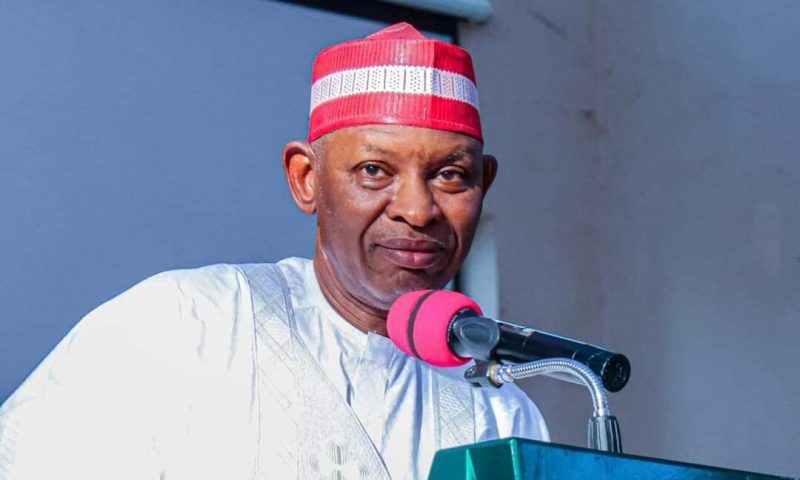
According to the policy statement endorsed by the FAAN Managing Director/Chief Executive, Mrs..Olubunmi Kuku, the Authority will continue to comply with all applicable laws and regulations governing airport operations and will consistently improve its management systems to enhance operational excellence, stakeholder satisfaction, and the highest standards of safety and operational integrity.
It also pledged to proactively identify, manage, and eliminate operational risks while delivering world-class airport services in line with global best practices.
As part of the revised IMS policy, FAAN committed to fully integrating Quality, Health, Safety, and Environment (QHSE) principles into its day-to-day operations, ensuring that all airports and workplaces remain safe and conducive for staff, passengers, and other users.
The policy further emphasised FAAN’s commitment to preventing pollution, workplace injuries, and ill health, as well as complying with international standards, including the ISO 9001:2015 Quality Management System and ISO 14001:2015 Environmental Management System.
Other key areas outlined in the policy include the provision of a structured framework for staff training, setting and reviewing IMS objectives, continuous improvement of service quality, and transparent communication of IMS requirements to all personnel working under FAAN’s control.
The statement also highlighted its intention to promote openness in quality and environmental matters, encourage stakeholder engagement, draw lessons from accidents and incidents to strengthen safety controls, and ensure strict compliance with policies on alcohol and drug use in the workplace.
In addition, the Authority reaffirmed its focus on customer satisfaction, noting that service delivery across its airports must consistently meet defined quality standards and intended outputs.
The IMS policy also commits FAAN to contributing to the development of sustainable energy systems and technologies, while demonstrating leadership commitment to quality and environmental excellence through responsible behaviour at all levels of management.
Kuku said the policy would be communicated across the Authority, fully implemented, and periodically reviewed to ensure its continued relevance and alignment with FAAN’s operational and business objectives.
She noted that the policy represents another step in FAAN’s efforts to modernise Nigeria’s airport operations and align them with international safety, quality, and environmental benchmarks.
Kano defection: I believe in action, not to much talk – Gov Yusuf

Governor Abba Kabir Yusuf of Kano State who is believed to be planning to defect to the All Progressives Congress, APC, on January 12, has for the first time since the controversy erupted made some comments on the matter.

The Governor seen in a viral video talking to a group said that, ” I have never commented on the discussions that follow the issues at stake, because I don’t believes in talking too much.”

DAILY POST is unable to confirm the date and time of the comment, but it generally referred to the current controversy over his planned defection.

He added that, “What started small has been magnified as said by a Hausa Singer, Karamar Magana Tazama Babba. As everyone knows, I  don’t believe in talking too much.

“I’m always an action man; the actions that will help my people as seen by everyone, that is what I believed in, not too much talk,” he said.

Kano was recently agog with news of the Governor’s planned move to the APC.

While a faction in the state believe his decision was coming at the right time as it will help the state to align with the centre, others in the New Nigeria’s People’s Party, NNPP, see his decision as nothing but a betrayal of trust given to him by the leader of the Kwankwasiyya group, Dr Rabiu Musa Kwankwaso.

Kebbi 2027: Malami’s camp in disarray as court case cripples guber ambition

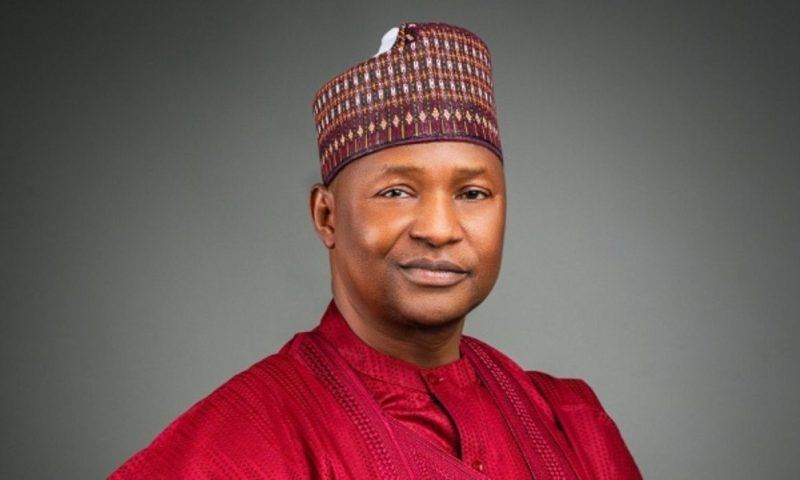
The political camp of former Attorney-General of the Federation and Minister of Justice, Abubakar Malami, has been thrown into disarray following his ongoing legal battle with the Economic and Financial Crimes Commission, EFCC, a development widely seen as a major setback to his 2027 governorship ambition in Kebbi State.

Recall that in July 2025, Malami dumped the All Progressives Congress, APC, for the African Democratic Congress, ADC, and formally declared his intention to contest the 2027 Kebbi governorship election, promising to “restore hope” to the state.

His declaration was greeted with mixed reactions across Kebbi.

While many of his supporters applauded the move and described it as a bold and welcome development, critics insisted that his ambition was “dead on arrival.”

Among the most vocal critics was Yahya Sarki, Chief Press Secretary to Kebbi State Governor, Nasir Idris, who openly questioned Malami’s eligibility to contest for any elective office.

Saraki argued that the former AGF “lacks the integrity” to seek public office, citing the pending 16-count charges against him.

Barely four months after declaring his ambition, Malami was arrested by the EFCC on December 8, 2025, over allegations bordering on money laundering and abuse of office.

The EFCC is prosecuting Malami alongside his son, Abdulaziz Malami, and an employee of Rahamaniyya Properties Limited, Hajia Asabe Bashir, over allegations of conspiracy and concealment of proceeds of unlawful activities amounting to billions of naira.

The alleged offences are said to have been committed between November 2015 and June 2025. Malami has consistently denied all the allegations, including claims involving N12 billion allegedly laundered.

However, a Federal High Court sitting in Abuja recently ordered the interim forfeiture of 57 properties suspected to be proceeds of unlawful activities allegedly linked to the former AGF.

The order was granted by Justice Emeka Nwite following an ex parte application filed by the EFCC through its counsel, Ekele Iheanacho.

The court development has further unsettled Malami’s political camp.

DAILY POST gathered that Malami’s supporters in Kebbi State have been left in confusion following his arrest and detention.

A visit to his residence at Gesse Phase II, Birnin Kebbi on Wednesday, showed an unusual calm, as the once-busy mansion was almost deserted.

A few individuals seen around the premises spoke in hushed tones, apparently discussing the former AGF’s ordeal. Attempts to speak with them were declined.

Similarly, a visit to the ADC secretariat along Emir Haruna Rasheed Road in Birnin Kebbi revealed minimal activity, a sharp contrast to the usual political bustle since Malami joined the party.

Many attributed the lull to the uncertainty surrounding Malami’s legal trouble.

Malami has remained in the eye of the storm since declaring his intention to govern the state.

DAILY POST recalls that in September 2025, he narrowly escaped death when his convoy was attacked by suspected political thugs in Birnin Kebbi.

The attack occurred shortly after he returned from a condolence visit, with about 10 vehicles destroyed and several supporters injured.

Many political observers linked the incident to opponents allegedly bent on weakening and frustrating his ambition.

Clearing the field for the incumbent?

With the unfolding developments, Malami is widely believed to be facing serious distractions ahead of the 2027 polls, a situation some analysts said could clear the path for the incumbent governor, Nasir Idris.

Before Malami’s defection to the ADC, Idris was believed to have no serious challenger in the state.

The hitherto leading opposition PDP had largely weakened following the defection of key figures in May 2025, including: Senator Adamu Aliero (Kebbi Central), Senator Yahaya Abdullahi (Kebbi North) and Senator Garba Musa Maidoki (Kebbi South) to the APC.

Malami’s entry into the race initially changed the political equation, but the ongoing court case now appears to have stalled the momentum.

Malami camp cries foul

However, supporters of the former AGF have remained unperturbed over the developments, dismissing it  as a media trial and political persecution.

Mohammed Bello Doka, Special Assistant on Media to Malami, alleged that his principal was only being witch-hunted.

He said, “It is therefore disturbing that the EFCC chose to weaponise a routine judicial admonition and spin it into a sensational narrative aimed at tarnishing Malami’s image in the court of public opinion.

“This approach further reinforces our long-held position that the EFCC is persisting in a media trial, rather than allowing the case to be determined strictly on the basis of evidence and due process before the court,” he said in a statement.

The case has also attracted criticisms from opposition figures both in the state and the country.

Former Vice President Atiku Abubakar accused the EFCC of turning the fight against corruption into “a full-blown political witch-hunt,” alleging selective prosecution of opposition figures.

“The politicisation of corruption investigations has rendered the EFCC’s credibility suspect and rubbished the ideals that inspired its establishment,” Atiku said.

He added that the agency became “suddenly hyperactive” following the emergence of the ADC as a strong opposition platform, allegedly targeting figures such as Malami and former Sokoto State Governor Aminu Waziri Tambuwal.

The Kebbi State chapter of the ADC also condemned Malami’s prosecution, describing it as politically motivated and aimed at undermining his governorship ambition.

“From all available evidence, Malami did not violate any of the legal conditions attached to his initial bail.

“As a senior lawyer and former number one law officer in the country, he understands what it means to violate bail conditions.

“However, what he probably did not understand was that attending a political gathering in furtherance of his governorship ambition in his home state of Kebbi could be the basis for revoking his bail by the EFCC, even though he has cooperated fully with the agency’s investigators,” the party said.

2027 outlook

Political observers have said the outcome of Malami’s trial could significantly influence the dynamics of the 2027 Kebbi governorship race.

While constitutional provisions allow him to contest as long as he is not convicted, analysts have noted that his 2026 political trajectory will largely be shaped by two factors: his ability to secure bail and sustain grassroots mobilisation and his capacity to manage what many describe as a “trial by public opinion.”

The central question remains whether Malami can maintain political relevance while defending himself in what is shaping up to be one of the most consequential corruption trials in recent Nigerian history.

Amnesty condemns arrest of Abubakar Salim by Nigeria police, demands immediate release

Amnesty International has condemned the arrest of Abubakar Salim Musa by the police in Abuja.


The group warned against what it described as a growing attempt to silence young Nigerians for expressing their opinions online.
The rights group made this known in a statement shared on X on Wednesday.

They described Salim’s arrest as arbitrary and unlawful.

Amnesty said the arrest was linked to Salim’s use of social media to criticise government officials, an action it said falls within his fundamental right to freedom of expression.

“Salim had been tracked and monitored by police officers attached to the Gusau Central Police Command before his arrest. No formal invitation, complaint, or allegation was ever communicated to him,” the group said.

Amnesty stated that despite efforts by Salim’s lawyers to seek clarification from the police, he was later tracked to a hotel in the Apo Legislative Quarters area of Abuja, where he was arrested by heavily armed security personnel.

“He was detained at Abbatoir, a notorious police detention centre,” Amnesty said.

They added that when his family and lawyers went there to ask about his arrest, the police denied that he was in custody.

The human rights organisation said Salim committed no crime and should not be punished for criticising public officials.

“No one should be punished for criticising a government official. It is perfectly within his right to criticise any public office holder, no matter their position or status.”

Amnesty described Salim’s detention as a clear abuse of power and a violation of the rule of law.

He stressed that under international human rights law, criticism on social media cannot justify arrest or detention.

Amnesty called on Nigerian authorities to release Abubakar Salim immediately and unconditionally.

The organisation also raised concern about what it called increasing threats to young people’s freedom of expression in Nigeria.

OAUTHC resident doctors threaten strike over unpaid salary arrears

Resident doctors under the aegis of the National Association of Resident Doctors, NARD, Obafemi Awolowo University Teaching Hospitals Complex, OAUTHC, chapter have declared readiness to join a nationwide strike.


DAILY POST gathered that the strike was called by the NARD national leadership over demands for improved conditions of service.

The resident doctors made this known in a statement jointly signed by its President, Dr Jesunbo Martins, and Secretary, Dr Toyyeb Oladipo, obtained in Osogbo on Wednesday.

According to the statement, “the decision was reached at an emergency general meeting of the association to participate in the national strike scheduled to commence at midnight on Monday, January 12.”

The doctors drew attention to the situation of 83 resident doctors at the complex, noting that 40 of them are owed salary arrears ranging from 10 to 14 months.

They added that another 40 members are still owed their March 2024 salary, describing the situation as prolonged and unresolved.

“This prolonged non-payment has subjected affected members to severe financial, psychological, and professional hardship,” the association stated.

The OAUTHC chapter called on the Federal Government and relevant authorities to urgently remit all outstanding salary arrears and ensure full payment of all accrued entitlements.

It said the strike would only be suspended if issues raised at both local and national levels were addressed, including the reinstatement of five resident doctors disengaged at the Federal Teaching Hospital, Lokoja.

Other demands listed include “the full implementation of the Professional Allowance Table, with arrears captured in the 2026 budget, and clarification on skipping and entry-level placement by the Federal Ministry of Health and institutional chief executives.”

The doctors also demanded “the re-introduction and full implementation of the Specialist Allowance, as well as the resolution of House Officers’ salary delays and arrears through the issuance of a formal pay advisory.”

Other demands include “5he re-categorisation of membership certificates and the issuance of certificates after Part I examinations by the National Postgraduate Medical College of Nigeria.”

The association also called for “the commencement of locum engagement and work-hours regulation committees, alongside the resumption and timely conclusion of the Collective Bargaining Agreement process.£

In line with the directive of the Nigerian Association of Resident Doctors, the statement said, “Resident doctors will withdraw their services with effect from midnight, Monday, January 12, 2026, in compliance with TICS 2.0.”

While noting that although the association remained open to dialogue, such engagement must include clear timelines and concrete actions.

“Members will also participate in coordinated peaceful protests as directed,” it added.

YMR awards N24m business grants

daniel olawandeIn a move signalling a broadened focus beyond spiritual formation, the Young Ministers Retreat has partnered with Premium Trust Bank to provide N24m in business grants to young entrepreneurs.
In a statement, it was noted that the 2025 Young Ministers Retreat concluded at Redemption City with a landmark shift in its mission, awarding N24m (approx. $15,000+) in business grants to over 1,000 young entrepreneurs.

The statement said, “The four-day event, traditionally known for its rigorous spiritual focus on fasting and prayer, pivoted this year to address the economic realities of Nigeria’s youth through a strategic partnership with Premium Trust Bank.

“Pastor Daniel Olawande (popularly known as PDaniel), the convener and pastor in charge of RCCG Youth Province 20, described the initiative as a move to equip a ‘New Army’ that is holistically prepared for societal impact.

“While we ensure spiritual growth, we must ensure young Nigerians are financially capable of growing their businesses. This is how we contribute to the economic growth of the country. To ensure transparency, participants submitted detailed business operations for review by a jury. Prequalified candidates then entered a raffle draw.”

Mary Anu, winner of the N2m grant, expressed her gratitude to both the convener and Premium Trust Bank for the business grant, which came as a surprise but a huge boost to her business.

Meanwhile, the Executive Director of Digital and E-Business at Premium Trust Bank, Shina Atilola, oversaw the distribution, noting the bank’s commitment to supporting the next generation of Nigerian entrepreneurs.

“Now in its ninth year, YMR has grown from its 2017 inception to a global phenomenon, recording over 300,000 attendees this year. As the 2025 ‘New Army’ cohort departs, PDaniel has already set the stage for next year, announcing the 2026 theme: City Takers,” the statement concluded. Josephine Ogundeji

ICPC insists on NMDPRA ex-CEO probe as Dangote withdraws petition

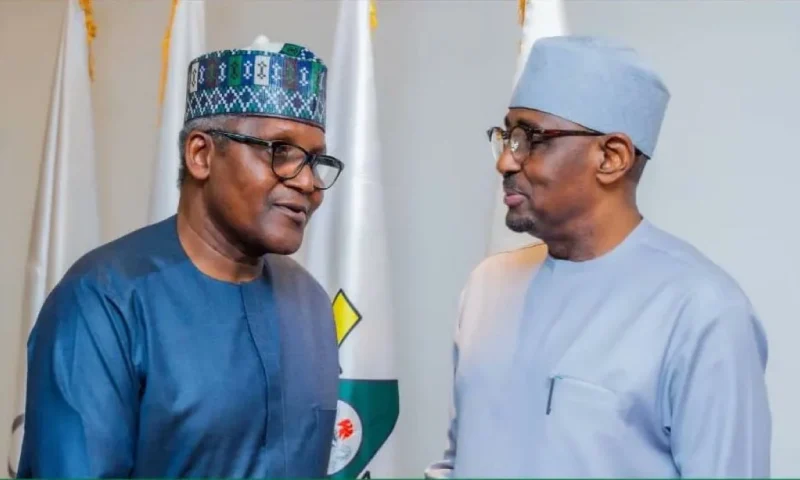
GTHUr9TWQAAhC_DThe Independent Corrupt Practices and Other Related Offences Commission has reaffirmed its commitment to investigating the immediate past Chief Executive Officer of the Nigerian Midstream and Downstream Petroleum Regulatory Authority, Farouk Ahmed, despite the withdrawal of a petition by billionaire businessman Aliko Dangote.
Dangote had filed the petition on December 16, 2025, through his lawyer, Ogwu Onoja (SAN), urging the ICPC to investigate and potentially prosecute Ahmed over allegations of corruption and financial impropriety.

The petition alleged that Ahmed spent over $7m on the education of his four children in Switzerland, reportedly paid upfront for a six-year period, without any lawful source of income to justify such expenditure.

It also accused Ahmed of diverting public funds for personal gain through his position at the NMDPRA, claims which Dangote said had fueled public outrage and civil society protests.

The petition stated:“Engr. Farouk Ahmed has grossly abused his office contrary to the extant provisions of the Code of Conduct for Public Officers, enmeshing himself in monumental corruption and unlawful spending of public funds running into millions of dollars. That Engr. Farouk Ahmed spent, without evidence of lawful means of income, a humongous sum of over $7 million of public funds on the education of his four children in different schools in Switzerland for a period of six years upfront.”

However, the ICPC said it received a letter dated January 5, 2026, from Dangote’s lawyer notifying the commission that the petition had been withdrawn and that another law enforcement agency had taken over the matter.

In a statement, ICPC spokesperson John Odey emphasised that the withdrawal of the petition would not halt its investigation.

He said the commission’s probe had already commenced in line with sections 3(14) and 27(3) of its enabling Act.

“The Independent Corrupt Practices and Other Related Offences Commission is in receipt of a letter dated January 5, 2026, titled ‘Notice of Withdrawal of Petition against Engineer Farouk Ahmed,’ submitted to the Commission by Dr. O.J. Onoja, SAN and Associates, legal counsel to Alhaji Aliko Dangote.

The letter states that the petitioner has withdrawn the petition dated 16th December, 2025, in its entirety and that another law enforcement agency has taken over,” Odey said.

Power: GenCos invoices fall N80.56bn on weak demand

NERC

The total invoice issued by power generation companies fell by N80.56bn in the third quarter of 2025, following a reduction in energy offtake by electricity distribution companies, according to industry data.

Figures released by the Nigerian Electricity Regulatory Commission in its Q3 2025 report indicate that GenCos billed N782.46bn in 2025/Q3, down from N863.02bn in 2025/Q2.

This was because the DisCos reduced their energy offtake by 6.08 per cent and also contributed to a reduction in the Federal Government’s subsidy obligation, which fell to N458.75bn from N514.35bn over the same period.

The report noted that the current open-ended subsidy regime exposes the government to indeterminate subsidy obligations due to volumetric risks and variations in generation costs arising from changes in the supply mix, with higher thermal generation typically increasing costs.

“6.08 per cent reduction in energy offtake by DisCos between 2025/Q3 and 2025/Q2 was the key driver for the reduction in the total GenCo invoice (N782.46bn vs. N863.02bn) and subsidy (N458.75bn vs. N514.35bn) across the period. The current open-ended subsidy regime leaves the FGN exposed to indeterminate subsidy obligation because of volumetric risk; generation cost variation arising from changes in supply mix (more thermal = higher generation cost),” NERC said.

It added that the monthly subsidy obligations during the quarter were N163.7bn in July, N153.32bn in August, and N141.72bn in September.

Under the DisCos’ Remittance Obligation framework, the government covers the gap between cost-reflective tariffs and allowed tariffs, applying the subsidy to the generation cost payable by DisCos to the Nigerian Bulk Electricity Trading Plc at source.

In 2025/Q3, the DRO-adjusted invoice from NBET to DisCos was N323.70bn, while total remittances amounted to N308.25bn, representing a remittance performance of 95.23 per cent.

All DisCos except Kano, Benin, Jos, and Kaduna reportedly achieved full remittance. Jos DisCo improved by 4.29 percentage points compared to Q2, while Benin, Kaduna, and Kano recorded slight declines.

For transmission and administrative service costs billed by the market operator, DisCos remitted N73.03bn of N76.77bn, translating to 95.13 per cent performance. Jos and Kaduna were the only DisCos that did not remit fully.

Experts have said the DisCos’ reduction of energy offtake would impact the GenCos while leading to a reduction in the quantum of energy distributed to the consumers.

PwC sees Nigeria achieving 4.3% GDP expansion

PwC NigeriaPwC Nigeria has projected that Nigeria’s real Gross Domestic Product growth in 2026 would settle around 4.3 per cent.
This was disclosed in a statement shared with The PUNCH on Wednesday following the release of its 2026 Economic Outlook.

This projection broadly aligns with that of the World Bank, which, in its latest Africa’s Pulse report, anticipates that Nigeria’s economic growth will strengthen to 4.4 per cent between 2026 and 2027, driven by higher activity in ICT, finance, and real estate.

“Looking ahead, the outlook projects real GDP growth of about 4.3 per cent in 2026, with inflation moderating gradually and the naira remaining broadly stable. Fiscal constraints persist, reinforcing the importance of capital efficiency and balance-sheet discipline.

“Against this backdrop, PwC Nigeria highlights practical imperatives for business leaders in 2026: making selective investment bets in attractive sectors and regions, scenario-planning for macroeconomic and geopolitical shocks, adapting business models and cost structures for resilience, accelerating digital transformation and responsible AI adoption, and strengthening regulatory and tax compliance as reforms move from design to execution,” the statement read.

Also, PwC Nigeria’s 2026 Economic Outlook asserted that recent gains in macroeconomic stability are reshaping the operating environment for businesses, investors, and markets.

The report indicated that Nigeria recorded improvements in macroeconomic stability in 2025 following key monetary and foreign-exchange reforms, with inflation easing, exchange-rate conditions stabilising, and external reserves strengthening. PwC’s Economic Outlook 2026 highlighted how this stability is influencing strategic business choices in 2026, particularly around investment, cost and funding decisions, and regulatory, tax, and digital priorities.

Commenting on the report, the Country Senior Partner, PwC Nigeria, Sam Abu, said, “PwC Nigeria’s Economic Outlook 2026 provides forward-looking analysis of key macroeconomic indicators and what they signal for the economy and for business leaders. Nigeria has achieved improved macroeconomic stability over the past year. The focus now is on how that stability is translated into sustainable economic growth and how businesses position themselves for 2026. For companies, this stability provides a more predictable operating environment for planning, investment, and growth decisions.”

The Economic Outlook 2026 also identified seven key issues shaping Nigeria’s economic performance in the year ahead, spanning global and domestic forces. These include monetary policy effectiveness, fiscal sustainability and reform execution, global economic and geopolitical dynamics, domestic security and social pressures, uneven sectoral growth, consumer affordability constraints, and the expanding role of the digital economy and artificial intelligence.

Speaking on the outlook, Partner and Chief Economist, PwC Nigeria, Olusegun Zaccheaus said, “The seven themes in the Outlook show how global and domestic forces will shape economic performance in 2026. Globally, growth is projected at around 3.1%, while merchandise trade growth slows to about 0.5 per cent, keeping oil prices, capital flows, and access to foreign inflows as key channels influencing Nigeria’s growth and FX liquidity.

SIFAX targets expansion with innovation strategy

SIFAX GroupSIFAX Group has opened the 2026 business year with a strong declaration of intent.

This comes as the company rolled out an innovation-led growth strategy designed to enhance operations, accelerate technology adoption, and broaden its presence across West Africa.

SIFAX announced this in a statement on Tuesday, signed by its Head of Corporate Communications, Olumuyiwa Akande.

According to the statement, the Chairman of the Group, Dr. Taiwo Afolabi, made this known in his New Year message to employees, partners, and stakeholders, where he outlined the company’s strategic priorities for the year while reflecting on a strong performance in 2025.

According to Afolabi, the Group’s focus for 2026 is anchored on “growth through innovation”, with renewed emphasis on operational excellence, collaboration across subsidiaries, sustainability, and customer-centric service delivery.

He noted that SIFAX Group is positioning itself to respond proactively to industry changes and emerging opportunities across its diverse business portfolio.