Petrol imports hit 1.3bn litres despite local production
petrol price hike1Nigeria imported approximately 1.31 billion litres of petrol in December 2025, according to data released by the Nigerian Midstream and Downstream Petroleum Regulatory Authority.

During the same period, the Dangote refinery reportedly supplied 992 million litres, showing a notable contribution from domestic refining compared to November. In December, total petrol supply was 74.2 million litres per day: imports took 42.2 million litres per day, while Dangote supplied 32 million litres per day.

The figures represent a stark contrast to November, when petrol imports were 1.57 billion litres, and Dangote supplied just 585 million litres. The average daily supply in November was 71.5 million litres per day; 52.1 million litres were imported, while 19.5 million litres were sourced from the Dangote refinery, the only petrol-producing plant in Nigeria as of the time of this report.

It was observed that the jump in petrol supply from 2.15 billion litres in November to 2.3 billion litres in December reflects seasonal demand pressures during the Yuletide.

It was observed that while local refining is growing, some marketers still have a passion for imported petrol.

According to a report released for November, the NMDPRA justified fuel import licences, stating that there was a shortage in September and October. Data from the authority showed that NNPC and other marketers imported 1.5 billion litres of petrol in November alone.

The November import figure of 52.1 million litres per day was the highest since the Dangote refinery started petrol production in September 2024.

The NMDPRA explained that low supply in September and October 2025, below national demand, necessitated increased imports. It said that in September, Dangote supplied 17.6 million litres per day, while imports stood at 22.1 million litres per day.

Reacting, the President of the Dangote Group, Aliko Dangote, accused the former NMDPRA Chief Executive, Farouk Ahmed, of granting what he called “reckless licences” for fuel importation while his tanks were full, accusing Ahmed of sabotaging the economy.

“As we speak now, even our tanks are full because the NMDPRA has issued reckless licences. And we have to now go and complain to the government,” Dangote said.

“They are now ready to issue licences for about 7.5 billion litres for the first quarter of 2026, despite the fact that we have guaranteed to supply enough quantity,” he added.

In response, Dangote disrupted the market by crashing the pump price of petrol from around N900 to N739/litre, though at a heavy loss to both refiners and importers.

On Wednesday, the Managing Director of the Dangote refinery, David Bird, disclosed that the Dangote refinery has commenced night-time loading operations as it intensifies efforts to sustain a daily supply of more than 50 million litres of petrol across Nigeria, signalling a major shift to full 24-hour operations at Africa’s largest refinery.

Speaking during a press briefing at the refinery, Bird said the transition to round-the-clock loading had become necessary to meet market demand and improve turnaround time for product evacuation.

According to him, the refinery is now meeting the 50 million litres daily petrol requirement in both production and evacuation.

“What I’m incredibly proud of is that, in the second half of 2025, while we were still ramping up capacity of our conversion units and downstream units, we were still able to deliver 50 million litres a day, more frankly than 52 million litres on some occasions,” Bird said.

He added, “We’re already doing nighttime loading. So it’s a 24-hour operation. We have celebrated over 50 million litres of offtake as well, which means over a thousand trucks progressing through the gate and through the gantry.”

Meanwhile, The PUNCH observes that the landing cost of imported PMS has remained stuck at rates above the Dangote refinery’s ex-depot price of N699 per litre.

According to reports by the Major Energies Marketers Association of Nigeria, while the Dangote refinery’s ex-depot price has remained at N699 since December, the landing cost has been fluctuating between N780 and N750, intensifying the price war for importers.

In its bulletin on Wednesday, MEMAN disclosed that the landing cost dropped to N754.96 from N758 last week. The association noted that Dangote’s gantry price was still N699 per litre, representing a difference of about N44.

As a result, many importers are finding it difficult to sell petrol at competitive prices compared with the Dangote-backed MRS filling stations.

When Aliko Dangote slashed the petrol gantry price by N129 in December, he said the move was to ensure Nigerians bought petrol at prices not above N740 during the Yuletide. He added that it was also intended to discourage importation.


LIRS fixes Jan 31 deadline for 2025 tax returns

LIRSThe Lagos State Internal Revenue Service has reiterated the statutory deadline of January 31, 2026, for all employers of labour in the state to file their annual tax returns for the 2025 financial year.
In a statement issued on Thursday, the Executive Chairman of LIRS, Dr Ayodele Subair, reminded employers that the obligation to file annual returns is in line with the provisions of the Nigeria Tax Administration Act 2025.

Subair explained that employers are required to file detailed returns on emoluments and compensation paid to their employees, as well as payments made to service providers, vendors, and consultants, and to ensure that all applicable taxes due for the 2025 year are fully remitted.

He emphasised that the filing of annual returns is a mandatory legal obligation and warned that failure to comply would attract statutory sanctions, including administrative penalties, as prescribed under the new tax law.

According to Section 14 of the Nigeria Tax Administration Act 2025, employers are required to file detailed annual returns of all emoluments paid to employees, including taxes deducted and remitted to the relevant tax authorities.

The Act stipulates that such returns must be filed and submitted no later than January 31 of each year.

Subair urged employers to treat tax compliance as a core business responsibility, stressing the importance of early and accurate filing.

“Employers must prioritise the timely filing of their annual income tax returns. Compliance should be part of our everyday business practice. Early and accurate filing not only ensures adherence to the law as required by the Nigerian Constitution, but also supports effective revenue tracking, which is important to Lagos State’s fiscal planning and sustainability,” he said.

He further noted that electronic filing through the LIRS eTax platform remains the only approved and acceptable mode of filing in Lagos State, as manual submissions have been completely phased out.

According to him, the move to full electronic filing is aimed at simplifying and standardising tax administration processes across the state, while improving efficiency and transparency.

Employers are therefore required to submit their annual tax returns exclusively through the LIRS eTax portal at https://etax.lirs.net.

Subair described the eTax platform as secure, user-friendly, and accessible 24 hours a day, adding that it was designed to provide employers with a convenient and efficient means of meeting their tax obligations.

He advised employers to ensure that the Tax Identification Number of all employees is correctly captured during the filing process, noting that employees without a TaxID are required to generate one promptly to avoid delays or disruptions.

The LIRS boss also encouraged employers who require further information or assistance to visit any of the service’s offices or make use of its official support channels.

Recapitalisation: 20 banks hit capital mark ahead of deadline

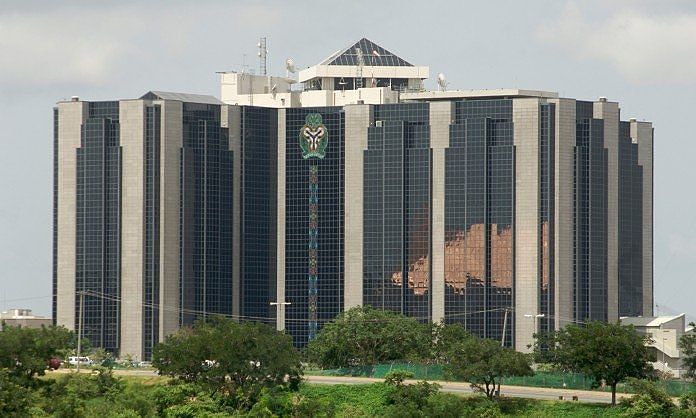
CBN headquartersThe Central Bank of Nigeria has said that about 20 deposit money banks have already met the new capital requirements under the ongoing banking recapitalisation programme, as the apex bank shifts focus toward ensuring that stronger balance sheets translate into real sector credit growth.
This was disclosed by the Deputy Governor, Economic Policy, Central Bank of Nigeria, Dr Muhammad Abdullahi, on Thursday while speaking on a panel at the launch of the 2026 Macroeconomic Outlook of the Nigerian Economic Summit Group in Lagos.

The PUNCH had earlier reported that at the last Monetary Policy Committee meeting of 2025, the Governor of the Central Bank of Nigeria, Olayemi Cardoso, disclosed that 16 banks have achieved full compliance with the revised capital requirements, ahead of the deadline.

According to Abdullahi, the recapitalisation programme was designed to build stronger banks capable of supporting Nigeria’s ambition of becoming a trillion-dollar economy.

“I think that even at the inception of the capitalisation programme, the major focus is how do we ensure that we have stronger banks that can support our drive towards a trillion-dollar economy? And the only way to get there is through the credit-review sector, to SMEs, to businesses that require funding at good rates. So as we close up towards March, I mean, the efforts have been quite impressive. We have about 20 banks that have already met it. A number of banks are meeting it every day.

They’re huge. It’s very busy within CBN today, tomorrow, and through to March, as you can imagine.”

However, he stressed that recapitalisation alone was not sufficient, warning that the focus must now shift from bigger balance sheets to productive and sustainable lending.

“The focus that we really are turning our attention to, especially from the financial system stability side, is that we ensure that a strengthened capital base translates into credit that is productive, that is well-targeted, and that is sustainable,” he said.

He said the CBN has spent the past year strengthening its regulatory capacity through technology to ensure that the benefits of recapitalisation are transmitted to priority sectors of the economy.

“The entire work we’ve been doing institutionally over the last year is to ensure that the Central Bank itself improves its regulation capacity through using technology to ensure that we can actually monitor that the effects of this capitalisation translate into real sector credit to SMEs,” Abdullahi said.

He added that the apex bank would intervene where banks fail to channel increased capital into productive lending.

Beyond banking, Abdullahi said Nigeria faces a significant development finance challenge, estimating the country’s funding needs at about N230tn across critical sectors.

“Nigeria needs about N230tn in terms of development finance for various sectors. The capitalisation on average for all of the development finance institutions combined is not up to nine trillion naira, so there’s a huge gap,” he asserted.

According to him, the focus has shifted toward mobilising private sector capital, both domestic and international, to close the funding shortfall.

“How do we crowd in private sector capital globally and domestically? How do we ensure that when that capital comes in, it’s used efficiently?” Abdullahi asked.

He disclosed that the Central Bank has held extensive discussions with the Ministry of Finance, which has now taken the lead on development finance strategy, while the CBN supports the framework through financial system stability and regulation.

Abdullahi said efforts are also underway to correct incentives within development finance institutions to ensure funds are deployed efficiently and not treated as expendable public resources.

“There’s a clear programme to see how we correct the incentives in each of the DFIs to ensure that when people give up money, it’s not seen as government money that should just be wasted,” he said.

He expressed optimism that progress would become evident in the coming months as fiscal and monetary authorities align to mobilise capital for growth and development.

Meanwhile, the Senior Economist for Nigeria, World Bank Group, Dr Samer Matta, noted that the monetary authorities had done as much as they could with the instruments available to them.

The Minister of State for Industry, Senator John Enoh, also unveiled the National Industrial Policy, aimed at driving job creation, boosting manufacturing capacity, and reducing the country’s long-standing dependence on imports.

According to him, the policy is built on execution-led design, clear sequencing, institutional ownership, performance benchmarks, timelines, and alignment across trade, investment, finance, energy, skills, infrastructure, and regulation.

The policy is structured around six pillars, including competitive industrial production, value-chain deepening and import substitution, MSME-to-industry transition, trade competitiveness and AfCFTA readiness, and institutional governance anchored on a strong Nigeria First policy.

Enoh said the value-chain pillar targets sectors such as agro-processing, solid minerals, petrochemicals, automotive, and pharmaceuticals, with defined local value-addition thresholds. He raised the question of whether manufacturing’s contribution to GDP could reach 20–25 per cent by 2030, describing the target as ambitious but achievable with commitment.

On MSMEs, he noted that while Nigeria has over 40 million small businesses, the challenge lies in ensuring they feed into industrial value chains through supply development, access to long-term finance, and industry-aligned skills.

He also cited the controversy over last year’s temporary ban on shea nut exports as an example of the need to take industrial aspirations seriously, noting that Nigeria is a major producer but exports mostly raw materials.

Enoh said implementation would define the success of the policy, acknowledging public fatigue with policies that fail to deliver results. An implementation framework, he said, will be unveiled alongside the policy.

“The question is no longer what the policy is,” he said. “The question is how we deliver.”

NMDPRA: Dangote supplied 32.12ml/d of petrol to Nigeria’s market in December

Nigeria supplied 12.6m barrels to Dangote, says NMDPRA

The Nigerian Midstream and Downstream Petroleum Regulatory Authority (NMDPRA) yesterday revealed that of the 74.2 million litres per day (ml/d) of the Premium Motor Spirit (PMS) supplied to the domestic market in December 2025, the Dangote Refinery accounted for 32.12 ml/d.
The state-owned refineries – Warri Refinery Petrochemicals Company (WAPC) and the Kaduna Refinery Petrochemicals Company (WAPC), which remain in shut down contributed none.
This was made in the NMDPRA Factsheet titled: “State of the Midstream and Downstream December 2025,” which was released in Abuja.
According to the document, national domestic supply of petrol rose from the 71.5ML/D in November.
In the period under review national petrol consumption hit 63.7ml/d from the 52.9ml/d recorded in November.
NMDPRA revealed that PMS stock sufficiency rose to 29.20 days from the 16.64 days in the previous month.
Specifically on Dangote, the report said average capacity utilization of the 650barrels stream per day (bspd) plant in December was 62.94 per cent while its PMS performance was 64.02 per cent.
The report revealed that although the actual domestic supply planned by the plant was 50ml/d, it sent 32.12ml/d of petrol to the Nigeria’s market.
Commending the Dangote Refinery’s performance in the period under review, NMDPRA said, “Dangote Refinery shows strong capacity utilization for the month of December realizing a maximum of 71 per cent utilization.”
According to the report, Dangote also supplied an average of 5.783ml/d of the Automotive Gas Oil (AGO) to the domestic market in the month under review.
NMDPRA said the national refineries of the Nigerian National Petroleum Company (NNPCL) – PHPRC and WRPC did not record production activities in December as they remain in shut down.
“No production activities as the refinery remained on shut down mode. However, evacuation of prior AGO produced while the refinery was operational before the 24 May 2015 averaged 0.247million litres/day,” said the factsheet.
On key refinery project update, the factsheet said the Waltersmith Refinery train 2 completed, pre- commissioning hydrocarbon to be introduced by January.

Nigeria Revenue Service faults VAT charges report 

NRS Dismisses Claims Of New VAT On Banking Services, Says Tax Has Always  Existed - TheNigeriaLawyer

The Nigeria Revenue Service (NRS) has dispelled misinformation doing the rounds on the imposition of Value-Added Tax (VAT) on banking services, including electronic money transfer, fees and commission, describing the reports as incorrect and misleading.

In a statement on Thursday, NRS said VAT has always applied to banking services and is not newly introduced under the new tax law, the Nigeria Tax Act.

The statement signed by Dare Adekanmbi, Special Adviser on Media to the NRS chairman, Zacch Adedeji, said, “The Nigeria Tax Act did not introduce VAT on banking charges, nor did it impose any new tax obligation on customers in this regard.

“The Nigeria Revenue Service (NRS) wishes to address and correct misleading narratives circulating in sections of the media suggesting that Value Added Tax (VAT) has been newly introduced on banking services, fees, commissions, or electronic money transfers. This claim is categorically incorrect.

“VAT has always applied to fees, commissions, and charges for services rendered by banks and other financial institutions under Nigeria’s long-established VAT regime.

The Nigeria Tax Act did not introduce VAT on banking charges, nor did it impose any new tax obligation on customers in this regard.

“The Nigeria Revenue Service urges members of the public and all stakeholders to disregard misinformation and to rely exclusively on official communications for accurate, authoritative, and up-to-date tax information.”

The statement also included a list of Frequently Asked Questions (FAQs) on VAT as it relates to the tax law to provide further clarity on other areas of concern to Nigerians.

FREQUENTLY ASKED QUESTIONS ON VAT
To further address public concerns and prevent misunderstanding, the Nigeria Revenue Service (NRS) provides the following clarifications.

Q1: Is VAT charged on banking services?

Yes, where a fee or commission is charged for a service.
VAT applies to commissions, fees, and charges for services rendered by banks and other financial institutions, such as transfer fees, USSD charges, card issuance fees, account maintenance fees, and similar service charges.

This has always been the position under Nigerian VAT law, and was not introduced by the Nigeria Tax Act.

Q2: Does VAT apply to the money I transfer or withdraw?
No. VAT is not charged on the amount of money transferred or withdrawn.

It applies only to the service charge or commission imposed by the bank. For example, if a bank charges ₦10 for a transfer, VAT of 7.5% (₦0.75) applies to that ₦10 charge—not to the amount being transferred.

Q3: Is VAT charged on savings account interest or interest on bank deposits?
No. Interest earned on savings accounts, fixed deposits, and similar deposit accounts is not subject to VAT. Interest income is not a supply of goods or services and therefore does not attract VAT under the Nigeria Tax Act, 2025 .

Q4: Are basic food items and essential goods subject to VAT?
No. The Nigeria Tax Act expressly exempts basic food items and essential goods from VAT in order to protect consumers and reduce the cost of living. These exemptions are clearly listed under the VAT exemption provisions of the Act .

Q5: Are medical and pharmaceutical products vatable?
No. Essential medical services and pharmaceutical products are VAT-exempt under the Nigeria Tax Act, consistent with longstanding policy to ensure access to healthcare.

Q6: Are educational services subject to VAT?
No. Tuition and core educational services provided by recognised educational institutions are exempt from VAT under the Act.

Q7: What exactly changed recently if VAT is not new?
What changed is compliance and enforcement, not the law. Financial institutions are being reminded of their existing obligation to remit VAT already charged and collected from customers, in line with the Nigeria Tax Act.

Q8: Did the Nigeria Tax Act introduce any new VAT burden on ordinary Nigerians?
No. The Act did not introduce VAT on savings, basic food, medical care, education, or essential consumption. Claims suggesting otherwise are misleading and incorrect.

Morning Recap: AFCON heartbreak for Nigeria, US visa shock, FG–ASUU deal, other top stories

Nigeria end historic AFCON scoring streakNigeria woke up on Thursday to a mix of sports disappointment, major policy decisions, and international developments with far-reaching implications.
From the Super Eagles’ narrow miss at the AFCON semi-finals to a long-awaited agreement between the Federal Government and Academic Staff Union of Universities, as well as fresh concerns over US immigration policy, these are the top stories making headlines this morning, Thursday, January 15, 2026.

Here are the top stories:

1. Nigeria miss out on AFCON final as Morocco advance

Nigeria’s Super Eagles failed to secure a place in the final of the 2025 Africa Cup of Nations after losing 4–2 on penalties to Morocco following a goalless draw in regulation and extra time.

Morocco will now face Senegal in the final of the tournament.

Meanwhile, fans have continued to criticise the officiating in Nigeria–Morocco clash.

Following the semi-final defeat, Nigerian fans expressed dissatisfaction with the performance of referee, Daniel Nii Laryea, citing concerns over officiating decisions during the match.

The complaints centred on perceived inconsistencies and missed calls.

2. FG, ASUU unveil agreement to end strikes

The Federal Government and the Academic Staff Union of Universities unveiled a new agreement aimed at ending recurring industrial actions and prolonged university closures.

The deal follows years of negotiations over the 2009 FGN-ASUU agreement and is expected to improve lecturers’ welfare and funding for federal universities.

3. FG orders banks, fintechs to remit VAT on service fees

The Federal Government has directed banks and financial technology companies to remit Value Added Tax (VAT) on service fees.

The directive is part of efforts to enhance revenue collection and ensure compliance with existing tax laws in the financial sector.

4. US visa shockwave hits intending Nigerian immigrants

A new U.S. policy directive under former President Donald Trump may delay visa processing for about 5,000 intending Nigerian immigrants.

In a related development, the United States has suspended immigrant visa processing for Nigeria, Ghana, and 73 other countries, according to an official list released by U.S. authorities.

5. FG confers national honours on fallen hero Uba, other soldiers

The Federal Government has conferred national honours on fallen soldier Brigadier General Musa Uba and other military personnel in recognition of their service to the nation.

These honours were awarded during activities marking the Armed Forces Remembrance Day in Abuja.

The government said the gesture was to acknowledge the sacrifices of officers and men of the Nigerian Armed Forces who paid the supreme price in the defence of the country.

Dangote refinery begins 24-hour petrol loading operations

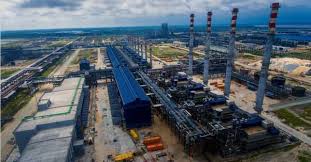
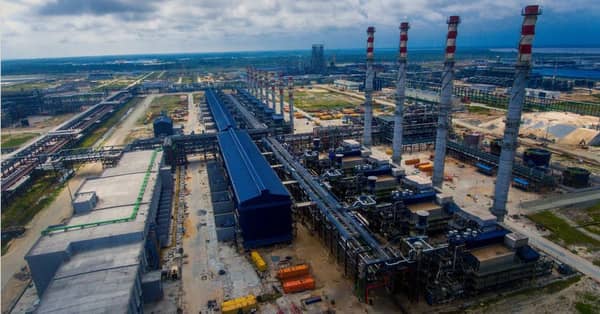
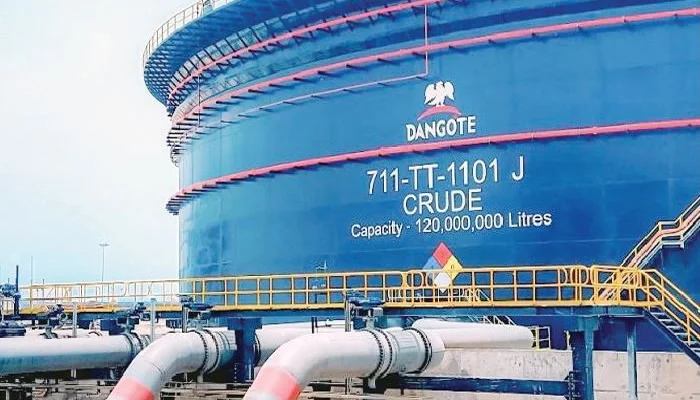
DANGOTE REFINERYThe Dangote Petroleum Refinery has commenced night-time loading operations as it intensifies efforts to sustain a daily supply of more than 50 million litres of Premium Motor Spirit (petrol) across Nigeria, signalling a major shift to full 24-hour operations at Africa’s largest refinery.
The move comes as the refinery continues to ramp up production, stabilise logistics, and strengthen fuel security, while countering speculation around maintenance activities and supply disruptions. Originally designed for daytime evacuation, the facility has now expanded loading to night hours to ensure that rising output is matched with uninterrupted offtake.

Speaking during a press briefing at the refinery on Wednesday, the Managing Director, David Bird, said the transition to round-the-clock loading had become necessary to meet market demand and improve turnaround time for product evacuation.

According to him, the refinery is now meeting the 50 million litres daily petrol requirement in both production and evacuation.

“What I’m incredibly proud of is that, in the second half of 2025, while we were still ramping up capacity of our conversion units and downstream units, we were still able to deliver 50 million litres a day, more frankly than 52 million litres on some occasions,” Bird said.

He added, “We’re already doing nighttime loading. So it’s a 24-hour operation. We have celebrated over 50 million litres of offtake as well, which means over a thousand trucks progressing through the gate and through the gantry. Really learning and continuously improving our logistics and our turnaround time of getting those trucks through.”

Bird emphasised that sustaining high output is not only about production but also efficient offtake. “It’s volatile. We see a dip on weekends and so forth. It all depends on demand and available stocks; if not, we can export. But for me, the primary objective is to demonstrate that we can continue to produce over 50 million litres a day and then see where true market demand in Nigeria lies.”

He linked stable supply to economic activity, noting, “Having a lower price and an abundance of supplies will stimulate demand, which is a good thing. That will continue to stimulate economic activity by having stable, affordable, clean fuels available. I do expect the demand to increase as a result of this stability and abundance of our product.”

Bird also highlighted the refinery’s operational flexibility, explaining that it can maintain output even during planned maintenance. “We have continued to deliver 50 million litres a day. We have built this flexibility into our system so that individual units can be taken out for maintenance and still meet finished product demand,” he said.

The MD described the Dangote refinery as a highly flexible merchant refinery, capable of producing petrol through multiple routes, including crude processing, intermediate feedstocks, and blending components.

“This is not just a single crude processing plant. It is a very flexible, resilient production process where we can make our finished product from crude, from intermediates through our conversion and treatment units, or by bringing in blending components,” Bird said.

This flexibility, he added, allows the refinery to supply the Nigerian market consistently while maintaining export capability, a requirement for operating on a global merchant refining scale.

“We have the requirement to be able to always export our finished product. By definition, that means we have to make world-quality fuels and ensure that we can land our product competitively anywhere in the world. We must make sure our production is compliant with Euro-5 gasoline and diesel,” he said.

Bird also credited the refinery with transforming Nigeria’s fuel market. “Nigeria has gone from fuel scarcity to fuel abundance. Beyond volume, we are supplying cleaner, Euro V-compliant fuels, ending West Africa’s long-standing reputation as a dumping ground for substandard petroleum products.”

NGX lists 3.16 billion UBA shares

NGX_Exchange_Identity

The Nigerian Exchange Limited has officially listed an additional 3,156,869,665 ordinary shares of United Bank for Africa Plc on its Daily Official List, marking a step in strengthening the bank’s capital base and deepening liquidity in the Nigerian capital market.

The listing follows the successful conclusion of UBA’s recent rights issue exercise, which offered shareholders one new ordinary share for every thirteen ordinary shares held at a price of N50.00 per share.

The NGX confirmed the formal listing in a letter dated 12 January 2026, addressed to UBA and signed by Godstime Iwenkehai, Head of the Issuer Regulation Department at NGX.

In the letter, Iwenkehai stated, “Following the submission of all post-approval documents, please be informed that United Bank for Africa Plc’s Rights Issue of 3,156,869,665 ordinary shares of 50 kobo each at N50.00 per share on the basis of one new ordinary share for every thirteen ordinary shares held was formally listed on the Daily Official List of Nigerian Exchange Limited on Monday, 12 January 2026.”

The listing of these shares increases UBA’s total outstanding shares on NGX from 41,039,305,642 ordinary shares to 44,196,175,307 ordinary shares. This injection of additional shares represents a substantial enhancement of UBA’s market capitalisation and is expected to significantly improve liquidity in the trading of the bank’s stock.

UBA’s Group Managing Director and Chief Executive Officer, Oliver Alawuba, welcomed the confirmation, describing it as a clear demonstration of investor confidence in the bank.

“We welcome the formal confirmation from NGX on the listing of our rights issue shares. This successful transaction reflects strong investor confidence in UBA’s financial strength, governance, and growth strategy,” Alawuba said. He added, “Needless to say, the additional capital will further support our Pan-African and global expansion and enhance our capacity to deliver sustainable value to all stakeholders.”

The recently concluded rights issue raised N158bn for UBA, which, when combined with the N239bn raised in November 2024, has increased the bank’s total capital base to N513bn. This latest capital infusion ensures that UBA’s qualifying capital now comfortably surpasses the N500bn minimum requirement set by the Central Bank of Nigeria for banks with international authorisation, solidifying its position as one of Nigeria’s leading financial institutions.

Petrol price hike looms as crude crosses $66/barrel

Excess Crude AccountThe pump prices of Premium Motor Spirit (petrol) and other refined petroleum products, including Automotive Gas Oil (diesel), and Household Kerosene, among others, may spike soon as crude oil, the major feedstock for refined fuel, crossed $66/barrel on Wednesday.


Brent, the global benchmark for crude, traded above $66 on Wednesday, as other oil grades also appreciated in price, heightening concerns that the cost of refined products might balloon in the coming days.

Industry players fingered the instability in Iran and Venezuela, coupled with the actions of the United States on Venezuela, and its recent threat to Iran. They noted that the cost of crude may continue to rise unless there is stability in these two nations that produce large volumes of the commodity.

Oil marketers projected that crude oil prices may reach $80/barrel, following the uncertainties in the international market. Crude is the major feedstock for the production of refined petroleum products. The foreign exchange rate is another factor that mainly affects the cost of imported fuel

The National President of the Petroleum Products Retail Outlets Owners Association of Nigeria, Billy Gillis-Harry, confirmed these developments in the sector while speaking with The PUNCH on Wednesday, as he noted that fuel consumers should brace for imminent price hikes.

“It is simple economics, crude oil is the main feedstock for refined petroleum products, so as the price of crude oil grows, the costs of these refined products are bound to rise. We have only one major refiner in Nigeria currently, and no one can certainly say whether the plant will retain its prices amid the spike in crude.

“Imported petrol will, of course, rise, and the same is expected of domestically produced PMS. The instability in Iran and Venezuela is definitely playing out. Even if the US decides to sell the crude produced from Venezuela at a reduced cost, it may not bring down the global crude oil prices.

“So, as fuel consumers, we should brace for hikes in the cost of refined products. It may not be now, but a sustained hike in crude oil prices would definitely lead to a spike in the costs of refined products domestically,” Gillis-Harry stated.

He noted that the instability in the Middle East may force the price of crude to hit $80 before the end of the month, adding that this may bring more FX to the Federal Government, but would raise the pump prices of refined products.

“There is apprehension that the price of crude doesn’t cross $80/barrel before the end of the month, because with the way things are going, and the seeming daily increases in crude oil price lately, the cost might get to that.

“Of course, the government would make more foreign exchange earnings as a result of this, but this will mean higher prices of refined petroleum products, and the masses would have to bear the brunt. This is the situation in the oil and gas sector right now,” Gillis-Harry explained.

The global oil industry has experienced several developments that pushed oil prices above the $60/barrel level at which it traded about a month ago. On Wednesday, The PUNCH reported that global oil prices surged on Tuesday as markets reacted to escalating drone attacks on Russia’s Novorossiysk terminal, which handles about two per cent of global daily oil supply, according to a report by Oilprice.com.

The report stated that Brent crude rose from $63 per barrel on Monday to trade around $65.14 on Tuesday evening, while US West Texas Intermediate climbed to $60.75, up from $59, representing a gain of about $2.1 per barrel.

The spike followed reported disruptions at the Caspian Pipeline Consortium infrastructure, a key export route for Kazakhstan’s crude oil operated by Western oil majors, including Chevron and Shell, raising concerns of a potential supply squeeze.

Reuters reported that two oil tankers waiting to load crude from some of Kazakhstan’s largest oilfields were hit by drones at the CPC marine terminal near Novorossiysk on Russia’s Black Sea coast.

As crude maintains the recent spike in price, data from the Major Energies Marketers Association of Nigeria on Wednesday indicated that the landing cost of imported petrol has remained stuck at rates above the ex-depot price of N699/litre of the Dangote Petroleum Refinery.

MEMAN disclosed in its bulletin that the landing cost of petrol dropped to N754.96 on Wednesday, from N758 last week. The association noted that Dangote’s gantry price was still N699 per litre, representing a difference of about N44.

But oil marketers stated that the prices of both domestically produced fuel and imported fuel would rise in the coming days if crude oil continues to spike in price. According to them, the government has to work hard to get Nigeria’s refineries under the management of the Nigerian National Petroleum Company Limited, working

Nigerian govt launches Lagos gold refinery, prepares $600m lithium processing plant

The Minister of Solid Minerals Development, Dr. Dele Alake, on Tuesday emphasized that the establishment of lithium processing and gold refining facilities across Nigeria is positioning the country as a leading minerals hub in Africa and a key global partner in minerals essential for the transition to green energy.

Dr. Alake made the disclosure during a meeting with the Saudi Arabian Minister of Industry and Mineral Resources, Mr. Ibrahim Al-Khorayef, ahead of the Future Minerals Forum, FMF, in Riyadh, Saudi Arabia.

According to the minister, Nigeria’s value-addition policy is already producing concrete outcomes. He revealed that a high-purity gold refinery is now operational in Lagos, with three additional refineries at various stages of development, while a $600 million lithium processing plant in Nasarawa State is ready for commissioning.

Dr. Alake commended Saudi Arabia for its role in promoting collaboration among governments across Africa, the Middle East, Asia, and Europe through the FMF. He expressed Nigeria’s eagerness to deepen its partnership with the Kingdom, leveraging each nation’s comparative strengths in solid minerals development.

“There are areas where Saudi Arabia excels and others where Nigeria has advantages,” Dr. Alake said.

“We are keen to structure agreements that foster meaningful and constructive engagement. Key focus areas include capacity building, training of mining professionals, technology transfer, and exploration, where Saudi Arabia has demonstrated expertise,” he added.

He further highlighted Nigeria’s vast mineral wealth, including critical minerals and rare earth elements vital to the global economy. He stressed the importance of using the FMF platform to establish actionable partnerships grounded in fairness, equity, and mutual benefit.

Reflecting on engagements following the 2025 FMF, Dr. Alake disclosed that a joint working group comprising Nigerian officials and the Saudi Chamber of Commerce has been active over the past year. The group’s report is ready and is expected to be presented before the conclusion of the current forum.

The minister also underlined the need for collaboration on mineral traceability, Environmental, Social and Governance, ESG, standards, and mine-pit remediation.

He explained that traceability strengthens investor confidence and should be a core feature of any partnership, alongside clearly defined implementation timelines and effective monitoring and evaluation mechanisms.

In response, Minister Al-Khorayef reaffirmed Saudi Arabia’s longstanding partnership with Nigeria and highlighted the importance of developing a practical and actionable agreement on solid minerals development.

He proposed that the working group draft a memorandum of understanding based on prior engagements, with a view to signing it on the sidelines of the FMF.

He also encouraged Nigeria to showcase investment opportunities in its mining sector to Saudi investors and urged African nations to adopt advanced mining technologies, noting that Nigeria could benefit significantly from Saudi Arabia’s experience and progress in this field.