
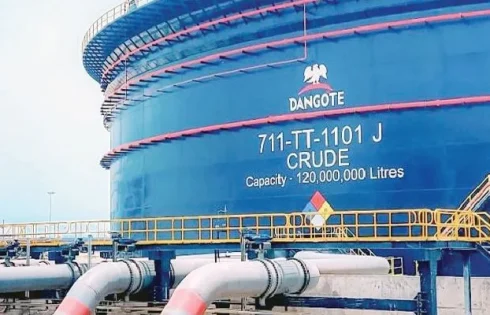
 Energy and economic experts have commended Dangote Petroleum Refinery & Petrochemicals for cushioning Nigeria from the full force of the global oil shock triggered by escalating tensions in the Middle East.
International developments highlight the scale of disruption across global markets. In the United Kingdom, The Mirror reported petrol prices climbing to 169.9 pence per litre, with long queues forming at filling stations amid fears of supply shortages linked to the crisis.
Analysts argue that without the refinery’s 650,000 barrels per day capacity, Nigeria would have faced acute product scarcity and significantly sharper increases in petrol prices as crude oil surged on the international market.
Managing Director and Chief Executive Officer of Financial Derivatives Company Limited, Bismarck Rewane, noted that crude prices have risen by over 32.39 per cent since the crisis began, climbing above $84.5 per barrel. In contrast, the Dangote Refinery implemented a measured adjustment of N100 per litre in its ex-depot price of Premium Motor Spirit, representing an increase of about 12 per cent.
“The price of crude has gone up about 32% but the price of PMS has gone up about 12%, so the Dangote Refinery has absorbed over half of the increase,” Rewane said. He added that in China, which operates a 10-day averaging pricing window, petrol prices have risen by about 15% within the same period.
Also speaking, Dr Muda Yusuf, former Director General of the Lagos Chamber of Commerce and Industry, described the refinery as a major stabilising factor for Nigeria’s energy security.
“We are fortunate as a country to have the Dangote Refinery because many countries are currently in crisis as far as energy is concerned, occasioned by skyrocketing prices and product shortages,” he said. “Yes, there has been some increase in price, but that is inevitable because crude feedstock is the major cost variable. The increase cannot be compared to what would have happened if we did not have a functioning local refinery. The volatility has been moderated because we are more energy secure.”
Development economist, Prof Ken Ife, observed that the Middle East tensions would have wider implications for Africa, where refining capacity remains limited. He noted that the continent spends over $120 billion annually importing petroleum products, despite concerns over quality in some markets.
Citing data from OPEC, Ife said Nigeria has about 445,000 barrels allocated for domestic refining under existing arrangements. However, the Dangote Refinery requires about 13 vessels of crude to meet local consumption needs but currently receives only five. He called for stricter enforcement of domestic crude supply obligations to strengthen local refining capacity.
On his part, a university lecturer and public affairs analyst, Dr Abimbola Oyarinu, said the refinery came on stream at a critical moment, particularly as tensions around the Strait of Hormuz, which accounts for roughly 20 to 30 per cent of global oil supply, continue to exert upward pressure on crude prices.
“The strategic value of the Dangote Refinery lies in supply security and reduced scarcity risk,” he said. “However, stabilisation is not the same as insulation. Because crude is priced at international market rates, global volatility will still transmit into the domestic economy, particularly through fuel price induced inflation. Sustainable economic stability will require complementary policy discipline, transparency in pricing and the development of strategic reserves.”
Managing Director and Chief Economist at Analysts’ Data Services and Resources (ADSR) Limited, Afolabi Olowookere, said the issue of inadequate crude supply to Dangote Petroleum Refinery & Petrochemicals by domestic producers must be urgently addressed, given the strategic benefits the facility offers to both Nigeria and the wider African region.
Olowookere explained that although Nigerians expect refined products from the refinery to be significantly cheaper, prevailing market realities such as global crude oil prices, the cost of crude supply and refining margins make substantial price reductions unlikely in the short term. He stressed that improving domestic crude allocation to the refinery would strengthen supply stability and enhance the long term benefits of local refining for the economy.