
UBA announces board appointments

uba-logoUnited Bank for Africa has announced strategic appointments to its executive board, effective 1 January 2026.

In a statement made available to The PUNCH on Sunday, it was indicated that the appointments followed the completion of tenure by four long-serving Executive Directors.

The retirements, which take effect on 1 January 2026, include Deputy Managing Director Mr. Muyiwa Akinyemi and Executive Directors Mrs. Abiola Bawuah, Mr. Alex Alozie, and Mrs. Sola Yomi-Ajayi.

To replace the retiring directors, the UBA Board has approved the appointment of three new Executive Directors—Mr. Emmanuel Lamptey, Mr. Tosin Adewuyi, and Mr. Chidi Okpala—effective 1 January 2026, subject to regulatory approval by the Central Bank of Nigeria.

Lamptey, appointed Executive Director, Digital Banking, is said to bring 25 years of multinational and cross-functional experience spanning retail and corporate banking, asset management, securities brokerage, pensions, insurance, and microfinance, with operations across more than 30 African countries.

He is an alumnus of Harvard Business School, a Fellow of the Association of Chartered Certified Accountants (UK), and holds a Bachelor of Commerce degree from the University of Cape Coast, Ghana.

Adewuyi, the new Executive Director, Corporate Banking, has over 25 years of experience across Sub-Saharan Africa, including more than 15 years in senior management and FCA- and CBN-approved roles in London and Lagos. He has driven senior client engagement across a broad corporate and sovereign clientele.

Adewuyi is a Fellow of the Association of Chartered Certified Accountants (FCCA) and holds a BA (Hons) in Economics and Accounting from the University of Manchester. He is an honorary member of the Chartered Institute of Bankers of Nigeria and an alumnus of The Wharton School.

Okpala will serve as Executive Director, UBA Nigeria. Prior to his appointment, he served as Executive Director for Payments, Group Integration, and Strategy at Heirs Holdings, where he provided leadership across the Group’s payments businesses while overseeing strategic investments in technology and healthcare.

Okpala has more than 20 years of banking experience and holds a BSc in Finance, an MBA in Banking and Finance, and an MSc in Leadership and Strategy from London Business School, where he is a Sloan Fellow.

Commenting on the new appointments, Group Chairman Tony Elumelu said: “I congratulate the incoming Executive Directors on their appointments. The Board is confident that they will bring the experience, depth, and execution capability needed to build on the solid foundation laid by their predecessors and to propel UBA into its next phase of growth.”

Elumelu also expressed appreciation to the retiring executives, saying: “I extend my sincere gratitude to our retiring Executive Directors for their years of dedicated service and unwavering commitment. Each has played a significant role in UBA’s growth and success. On behalf of the Board, I thank them for their contributions and commend the impact they have made. They remain cherished members of the UBA family and enduring ambassadors of our values.”

Africa’s global bank also announced other Group Executive Management appointments, including that of Mr. Vikrant Bhansali as Group Executive, International Banking. Before his appointment, Bhansali served as Chief Executive Officer of United Bank for Africa Plc in Dubai, where he led the bank’s Middle East operations and strategic expansion across the region. With more than 25 years of international banking experience spanning Sub-Saharan Africa, the United Kingdom, the Middle East, North Africa, and India, he brings deep expertise in cross-border financial services and emerging markets.

Mr. Joel Owoade, who has been approved as Group Chief Risk Officer, brings over two decades of experience in the financial services industry, with a strong background in credit risk management, strategic planning, and regulatory compliance. He holds an MSc in Banking and Finance from the University of Ibadan, Nigeria, and qualified as a member of the Institute of Chartered Accountants of Nigeria in 1991. He also serves as Vice President of the Chartered Risk Management Institute of Nigeria. His academic background and professional qualifications have equipped him with a deep understanding of the financial landscape, enabling him to make significant contributions to the institutions he has served.

Mr. Samuel Ocheho, appointed Group Executive, Treasury and Financial Institutions, is a seasoned financial markets executive with over 27 years of experience spanning banking, trading, and investment management. Throughout his distinguished career, Ocheho has successfully led diverse financial portfolios and large teams across Nigeria and West Africa. His expertise covers liquidity management, fixed income, derivatives, and foreign exchange. Renowned for his results-driven leadership, he has consistently delivered exceptional performance, driving revenue growth, shaping market behaviours, and sustaining operational excellence.

UBA operates in 20 African countries, as well as the United Kingdom, the United States, France, and the United Arab Emirates. The bank provides retail, commercial, and institutional banking services and is a leader in financial inclusion and technology-driven banking solutions.

UBA is one of the largest employers in the African financial sector, with 30,000 employees across the Group and more than 50 million customers globally.

Dangote names N739 as new petrol pump price

Dangote_Group_Logo.svgBarring any last-minute change, MRS and other partners of the Dangote Petroleum Refinery are set to begin selling petrol at N739 per litre.

This comes two days after the refinery slashed its petrol gantry price from N828 to N699 per litre. Speaking at a press briefing at the Lekki refinery on Sunday, the President of the Dangote Group, Alhaji Aliko Dangote, said he was aware that despite lower gantry prices, some filling stations often choose to keep pump prices high, thereby sabotaging his efforts.

According to him, MRS would commence the sale of petrol at N739 per litre from Tuesday, while other partners would follow. Dangote alleged that some officials had met with certain marketers and encouraged them to keep prices high in order to frustrate the price reduction, stressing that he would fight to enforce the new price regime.

“I was told that the marketers have met with (some officials) and were told to make sure that the price is maintained high. But this price we are going to introduce, we are going to start with MRS stations most likely on Tuesday in Lagos; that N970 per litre, you won’t see it again. We have also asked members of IPMAN to come now.

We have asked anybody who can buy 10 trucks to come and buy 10 trucks at N699.

“We are going to use whatever resources that we have to make sure that we crash the price down. We will get these sales; maybe it will take us a week to 10 days. But first of all, within a week to 10 days, we will be able to deliver. For this December and January, we don’t want people to sell petrol for more than N740 nationwide. Those who want to keep the price to sabotage the government, we will fight as much as we can to make sure that these prices are down. That’s not the price. If you have money to come and buy, you can pick up petrol at N699,” he said.

Dangote said transporting petrol from the refinery costs no more than N15 per litre, questioning why pump prices would rise as high as N900 per litre. He also accused the Nigerian Midstream and Downstream Petroleum Regulatory Authority of issuing 47 import licences to bring in more than seven billion litres of petrol in the first quarter of 2026, a move he said was killing local investments.

“Freight within Lagos is N10 or N15, maximum. So if it’s N10 to N15, everything is going to cost you N715. Why do you want to sell at N900? People should get the real price. I cannot come now and take the hit. Did we make money? No, we didn’t make money. But as we speak now, even our tanks are full because the NMDPRA has issued reckless licences. And we have to now go and complain to the government.

“They normally issue licences in the middle of the month. So, they are now ready to issue licences for about 7.5 billion litres for the first quarter of 2026, despite the fact that we have guaranteed to supply enough quantity.

“If you are talking about monopoly, did we stop anybody? They issued 47 licences. Let those people come and put up a refinery here, or let them go and buy even NNPC’s and operate them. If it’s profitable, they should go and do that now. NNPC was the only business that was bringing in fuel before.

“Now, we are the only one and one of the few modular refineries that are producing. Those modular refineries, I can tell you for nothing that they are almost on the verge of collapse. None of them is making a dime,” he added.

The billionaire businessman assured Nigerians that the N739 per litre price would be enforced, beginning with MRS stations on Tuesday. “Starting from Tuesday, MRS will start selling petrol at N739/litre. Definitely, we will enforce that low price. We will make sure that it’s implemented. If you have your truck, you can come here and buy it. We are selling at N699. The N699 includes the percentage of NMDPRA. So what actually comes out to us is about N389 or so,” he stated.

Contacted for his reaction, the NMDPRA spokesman, George Ene-Ita, said, “For now, no comment.”

Haelsoft Digital among Nigeria’s 100 fastest-growing SMEs

WhatsApp Image 2025-12-13 at 12.43.06 AMHaelsoft Digital Limited has been named one of Nigeria’s Top 100 Fastest Growing SMEs for 2025 by BusinessDay, spotlighting the company’s rapid expansion in digital services and technology training.
Founder and CEO Michael Onyeka Ezeadichie, who also launched Inside Haelsoft and Haelsoft EdTech, has spent over a decade delivering software development, digital consulting, and online education solutions. Ezeadichie said the company’s growth stems from identifying gaps in digital skills and readiness.

“We began as a digital services company,” he said, “but the market quickly showed that the bigger gap was in skills, structures, and digital readiness. Our growth has largely come from responding to those gaps.”

Haelsoft’s EdTech arm now offers courses in software development, cybersecurity, UI/UX design, digital marketing, and data science, addressing rising employer demand for practical digital competence.

In 2025, the firm partnered with Heligande to provide advisory support to family-owned businesses, focusing on digital adoption, operational restructuring, and strategy execution.

“Many companies recognize the need to transform,” Ezeadichie said, “but the real challenge is knowing where to begin and how to sustain the process. That is where our work with Heligande became important.”

Receiving the BusinessDay award on December 4, 2025, Ezeadichie described it as a benchmark rather than a celebration.

“For us, the award is simply data, it tells us we are moving in the right direction, but it also tells us how much more work is ahead,” he said.

Haelsoft’s recognition highlights the growing role of technology-driven SMEs in Nigeria’s digital economy and the impact of founders with strong technical backgrounds in driving growth.


FG approves N6.4tn PPP projects to boost ports, power

Infrastructure Concession Regulatory CommissionThe Federal Executive Council has approved three major Public-Private Partnership projects valued at over N6.43tn, signaling another significant wave of private-sector investment into Nigeria’s infrastructure landscape.
The projects — two deep seaports and a 460-megawatt hydropower plant — form the second batch of PPP initiatives cleared by the Council within one month, underscoring President Bola Tinubu’s push for private capital as a driver of growth under the Renewed Hope Agenda.

The approvals were announced in a statement released by the Director-General of the Infrastructure Concession Regulatory Commission, Jobson Ewalefoh, on Friday.

He said the deals represent one of the strongest signals yet that the government’s reform agenda is yielding measurable impact

The statement read, “The Federal Executive Council has approved three transformative Public-Private Partnership (PPP) projects, confirming an injection of over N6.43tn (approximately $4.29bn) in private capital into the Nigerian economy. These approvals underscore the practical impact of President Bola Ahmed Tinubu’s Renewed Hope Agenda, which prioritises private-sector-led infrastructure delivery as a catalyst for national growth, economic competitiveness, and job creation.”

He explained that improved policy clarity, economic liberalisation, and strengthened regulatory institutions have boosted investor confidence, enabling the Federal Government to unlock billions of dollars in long-term investments.

The newly approved projects constitute the second batch of seven PPP initiatives endorsed by the Council in the last month, all under the regulatory guidance of the Infrastructure Concession Regulatory Commission.

The new projects include the $2.27bn Bakassi Deep Seaport, the $1.14bn Port of Ondo Deep Seaport, and the $878.1m Katsina-Ala Hydropower Plant, all to be fully financed, developed, and operated by private investors.

Ewalefoh said the projects reaffirm the Tinubu administration’s resolve to deploy PPPs to accelerate economic competitiveness, enhance trade, and expand Nigeria’s renewable-energy footprint.

He explained that the Bakassi Deep Seaport, a greenfield development, would create a new maritime gateway for the North-Central and North-East and serve as a major hub for West and Central Africa.

“These are decisive, multi-sectoral investment portfolios that directly address national needs. The approval of the two deep-seaport projects alone, totalling over $3.4bn in private capital, will fundamentally optimise our maritime trade routes and decongest existing port facilities.

“The Bakassi Deep Seaport is a greenfield development designed to accommodate larger vessels and integrate an industrial cluster and Free Trade Zone, creating thousands of jobs and positioning Nigeria as a first-choice maritime destination.

“The approval of the two deep-seaport projects alone, totalling over $3.4bn, will fundamentally optimise our maritime trade routes and decongest existing port facilities,” he said.

He added that the Port of Ondo Deep Seaport is expected to open up the South-West’s solid minerals and agro-allied value chains while positioning Ondo State as a new logistics and export corridor.

On the hydropower project, he said, “The 460MW Katsina-Ala Hydropower Plant is a monumental greenfield project that will help address Nigeria’s persistent electricity deficit while unlocking vast renewable-energy potential.

“This $878 million investment will supply essential base-load power to the national grid and stimulate immense economic activity across the region. It is a strategic commitment to a cleaner, more reliable, and more sustainable energy future for our country.”

The latest approvals follow the clearance of three PPP projects earlier in November — the Product Authentication and Tracking System, the V-PASS contactless biometric verification platform, and the Port Harcourt International Airport concession — which attracted an additional $230.9m in private capital.

With the approvals announced on Thursday, the total number of PPP projects endorsed in 2025 has now exceeded 13, spanning maritime, health, aviation, power, and industrial sectors.

Other PPP projects approved this year include the MediPool initiative under the Health Ministry; the Maritime Electronic Management System of NIMASA; the Ikere Gorge 6MW Hydropower Plant; the Borokiri Coastal Fisheries Terminal; the Farin Ruwa 20MW Hydropower Project; and the concession for Enugu International Airport.

Ewalefoh commended President Tinubu for what he described as “consistent support” for the ICRC, noting that the President’s push to strengthen regulatory institutions has repositioned the Commission as the engine room for PPP development.

“These consistent approvals reflect Mr President’s trust in the ICRC’s mandate and further empower us to deliver even greater value to the nation,” he said.

Nigeria has increasingly turned to PPPs to expand its ageing infrastructure stock amid tight public revenues and rising fiscal pressures. The model allows private investors to finance, build, and operate major assets — particularly in ports, airports, and power — with returns tied to user fees or long-term concessions.

The strategy is crucial for Nigeria’s growth trajectory, with the country requiring an estimated $100bn annually in infrastructure spending to close its deficit.

It also confirms the administration’s intent to shift heavy infrastructure financing to the private sector while improving regulatory oversight to attract long-term capital.

Current Petrol Pump Price Slash By Dangote Reflects Domestic Market Competitive Trends

The recent pump price slash of petrol by Dangote refinery is in line with the company’s commitment to maintaining competitive domestic fuel prices despite global volatility and ongoing smuggling along Nigeria’s borders.
The management reduced its petrol gantry price from N828 to N699 per litre, a move industry observers say could influence retail fuel pricing across Nigeria.

The adjustment, effective from 11 December 2025, which represents a reduction of N129 per litre, or approximately 15.58 per cent, according to real-time market data from Petroleumprice.ng.

The recent price cut marks the 20th price adjustment by the refinery within the current year.

The reduction follows remarks by Dangote Petroleum Refinery Chairman Aliko Dangote during a closed-door meeting with President Bola Tinubu on 6 December, in which he reaffirmed the company’s commitment to maintaining competitive domestic fuel prices despite global volatility and ongoing smuggling along Nigeria’s borders.

“Prices are going down. The reason why prices have to go down is that we have to also compete with imports,” Dangote said. He added that while smuggling has declined, it remains a challenge, noting that petrol in Nigeria is “about 55 per cent lower than the price of our neighbouring countries.”

Dangote emphasised that the refinery’s petroleum products, including diesel and petrol, “will continue to be sold in the market at a very reasonable price,” and stressed that the operation is a long-term investment. “We are not here to make our $20 billion back quickly; it’s a long-term investment,” he said.

The latest adjustment by Dangote has prompted ripple effects across private depots, with Petroleumprice.ng reporting reductions at several locations. Sigmund Depot cut its ex-depot price by N4 to N824 per litre, Bulk Strategic reduced by N3, and TechnoOil implemented a sharper decrease of N15. Other depots, including A.A. Rano, NIPCO, and Aiteo, also made marginal adjustments in response to the new Dangote pricing template.


NAFDAC destroys N5bn fake, expired products in Nasarawa

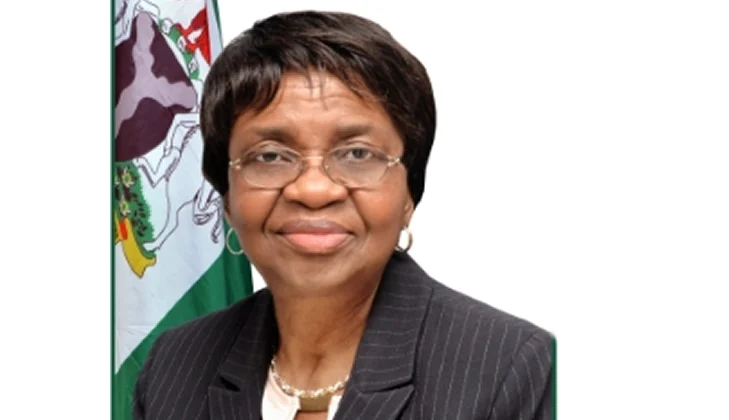
Prof-Mojisola-AdeyeyeThe National Agency for Food and Drug Administration and Control, on Thursday, destroyed unwholesome and substandard products worth over N5bn in Nasarawa State.
Our correspondent gathered that the unwholesome and substandard products, which were seized from Nasarawa, Benue, Kogi, Niger, and Plateau states of the North-Central region, were destroyed at the Angwan Rere dumpsite in Lafia, Nasarawa State.

Speaking at the event, the Director-General of NAFDAC, Prof. Mojisola Adeyeye, stated that the fake products were confiscated by the agency’s personnel during outine monitoring exercises.

The DG, who was represented at the event by the North-Central Zonal Director of the agency, Kenneth Azikiwe, said the exercise was aimed at preventing such dangerous products from re-entering into the markets and causing harm.

She listed some of the seized products as fake drugs, falsified medical devices, unsafe cosmetics, fake detergents and expired chemicals.

“Some of these products were intentionally hoarded, concealed, deliberately revalidated after their expiration date, maliciously positioned and displayed for sale by some unscrupulous merchants of death for unsuspecting Nigerians.

“Also up for destruction today are damaged and expired products voluntarily handed over to us by some well-meaning and God-fearing businessmen and women.”

The DG gave the assurance that NAFDAC would continue to ensure that only the right quality products are available for sale and consumption in the country.

She appealed to members of the public to provide the agency with useful information on the activities of those either selling fake products or producing substandard products that constitute threats to human life.

In his goodwill message on behalf of the state government, the Nasarawa State Commissioner for Security and Safety Matters, Usman Baba, commended NAFDAC for sanitising the state and ensuring that only genuine products are sold for human consumption.

Oil output rose by 35,000bpd in November – Report

OPECNigeria recorded one of the strongest month-on-month production gains among Organisation of the Petroleum Exporting Countries members in November 2025, pumping 1.436 million barrels per day, up from 1.401 mbpd in October, according to the December 2025 OPEC Monthly Oil Market Report.
The figures, drawn from direct communication between member countries and the organisation, show that Nigeria added 35,000 bpd in November, its most significant rise in recent months.

However, this is still below the country’s allotted quota of 1.5 mbpd, even as the country continues efforts to restore output toward the target.  The increase underscores gradual improvements in upstream security and project optimisation across major producing terminals.

This will be the fourth consecutive month Nigeria has failed to meet its assigned quota, the last time being in July 2025.

Oil production, which fell sharply in August and September due to maintenance downtime and industrial action, appreciated slightly again in October and November, showing the struggle to return to meeting the OPEC quota once again.

The Minister of State for Petroleum Resources (Oil), Heineken Lokpobiri, said recently that Nigeria would demand a higher oil production quota. Lokpobiri said the country’s current quota, pegged at about 1.5 mbpd, no longer reflects its true production capacity.

According to him, Nigeria would make a strong case for an upward review to at least two million barrels per day. Lokpobiri’s comment came at a time when the country’s crude output dropped from over 1.5 mbpd in July to 1.39 mbpd in September.

It was observed from the report that despite Nigeria’s growth, overall OPEC crude production was largely flat, rising by just 39,000 bpd to an estimated 25.17 mbpd in November.

Saudi Arabia, OPEC’s largest producer, recorded the biggest absolute increase, adding 48,000 bpd to reach 10.05 million bpd. The kingdom continues to carry the heaviest share of the group’s voluntary output adjustments.

Libya’s production also ticked up, rising by 14,000 bpd to 1.365 mbpd, maintaining its recovery trajectory despite lingering internal instability. Kuwait and the UAE reported mild increases of 10,000 bpd and 8,000 bpd, respectively.

Venezuela sustained its slow output recovery, adding 10,000 bpd to reach 1.142 million bpd, supported by incremental operational improvements.

Iraq posted the most notable drop, cutting 40,000 bpd to 4.1 mbpd amid renewed pressure from OPEC to improve compliance with agreed output levels. Congo recorded a smaller decline of 8,000 bpd, producing 269,000 bpd. Iran, Gabon, and Equatorial Guinea did not provide direct production figures.

Reps move to regulate CBN operations

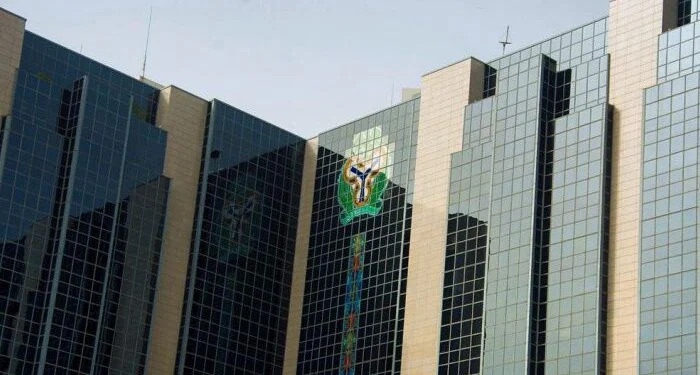
CBN-VUILDING-700×375The House of Representatives on Thursday took initial legislative steps to strengthen transparency and accountability in the operations of the Central Bank of Nigeria, following the second reading of a bill seeking comprehensive amendments to the Central Bank of Nigeria Act, 1991.
The proposed legislation, co-sponsored by the House Leader, Prof Julius Ihonvbere, and Lagos lawmaker, Jesse Onakalausi, received unanimous support during plenary.

Titled “A Bill for an Act to Amend the Central Bank of Nigeria Act, 1991, to allow for proper day-to-day operations, professional oversight and enhance checks and balances, and for other matters connected thereto, 2025,” the bill responds to mounting concerns about gaps in governance and oversight at the apex bank—issues that gained national prominence following recent controversies surrounding monetary policy decisions, foreign exchange management, and the 2022 currency redesign.

Nigeria’s central banking framework has long been criticised for its weak corporate governance structure, particularly the concentration of operational and oversight powers in the office of the CBN Governor.

This fusion, analysts argue, contributed to years of opacity in policy formulation, excessive discretion in foreign exchange administration, and insufficient checks on fiscal financing through Ways and Means advances. These concerns set the backdrop for the latest legislative push.

Explaining the rationale behind the bill, Onakalausi said it arose from an urgent need to reinforce governance, autonomy, transparency, and accountability within the apex bank, “In light of recent national and global economic realities.”

Addressing lawmakers on the general principles of the proposed amendments, he emphasised the overarching responsibility of the central bank, noting that, “The CBN plays a central role in stabilising the financial system, ensuring monetary credibility, safeguarding price stability, and promoting public confidence in the Nigerian economy.”

However, he observed that recent developments have exposed deep-seated weaknesses. According to him, “Developments in recent years – ranging from governance concerns, foreign exchange distortions, monetary policy inconsistency, weak oversight mechanisms, to the challenges witnessed around currency redesign and policy communication – have exposed structural gaps in the principal Act.”

A key objective of the bill, Onakalausi said, is restoring sound corporate governance. He argued that in most jurisdictions, the Governor manages day-to-day operations while the Board provides oversight—an arrangement that ensures institutional balance.

While stressing that “Both roles are meant to be separate to avoid conflict of interest,” he noted that “The current CBN Act merges the positions of Governor and Board Chairman, creating an avoidable concentration of power. This bill separates these roles to ensure professional oversight without interference in day-to-day operations.”

Onakalausi added that the bill seeks to strengthen monetary policy independence and bring Nigeria’s regulatory architecture in line with global standards. “This bill restructures the MPC to improve expertise, independence, and transparency, aligning Nigeria with best practices seen in economies such as the United Kingdom, South Africa, the European Union, and Brazil.”

He also highlighted concerns over the historic misuse of Ways and Means financing. “It prevents fiscal abuse as Section 38 (Ways and Means Advances) has historically been one of the most abused provisions under the CBN Act.

“This bill introduces a clear limit – 10% of the previous year’s actual revenue – to prevent inflationary financing of government deficits and ensure fiscal responsibility,” he said.

Additional provisions of the bill focus on safeguarding the naira and improving transparency in foreign exchange management.  It also introduces “A 90-day notice, impact assessments, mandatory National Assembly briefing before major monetary actions like redesign or demonetisation,” ensuring that sudden policy shocks are avoided.

While acknowledging the need for central bank autonomy, Onakalausi maintained that such independence must be accompanied by strong oversight mechanisms.

The bill proposes new reporting standards that will require the apex bank to submit its annual audited accounts within two months, provide quarterly reports on monetary policy decisions, and maintain a publicly accessible website containing all its publications.

Other key amendments include revising Section 6 to read: “A professional Chairman separate from the Governor, experienced in economics, banking, finance, or public financial institutions.” Section 8 is also amended to state: “Governor and Deputy Governors to serve a single six-year term.”

To promote continuity and reduce political interference, the draft legislation provides that “Two Deputy Governors must be drawn from internal Directors for institutional continuity.”

The reconstituted Monetary Policy Committee will consist of the Governor, four Deputy Governors, two board members, and four external experts who, according to the bill, “Must be independent and cannot hold public office.”

If passed, the bill would mark one of the most far-reaching reforms of the CBN Act since its enactment, with implications for governance, monetary policy, and the broader financial system.

Nigeria’s exports outpace imports as trade surplus hits N6.69tn

NBSNigeria recorded a trade surplus of N6.69tn in the third quarter of 2025, at a 27.29 per cent growth rate, continuing a trend of trade surpluses. Stakeholders attribute the consistent positive performance to the economic reforms in the foreign exchange market.
Latest data from the National Bureau of Statistics on foreign trade in goods showed that total exports in Q3 2025 stood at N22.81tn, while imports amounted to N16.12tn, resulting in a surplus of N6.69tn.

The figure represents a 27.29 per cent year-on-year rise, compared to the N5.26tn surplus recorded in Q3 2024. However, it reflects a 10.36 per cent decline from the N7.46tn surplus posted in Q2 2025.

Economists and private-sector groups explained to The PUNCH that the Q3 2025 foreign trade figures showed that reforms in the FX market, trade liberalisation, and currency adjustments have boosted export competitiveness and encouraged backward integration.

Stakeholders, including the Director of the Centre for the Promotion of Private Enterprise, Dr Muda Yusuf, stated that the reforms had significantly strengthened Nigeria’s export position.

Yusuf said, “The current economic reforms have resulted in a situation where export performance has been increasing because of the reform in the foreign exchange market, the liberalisation of the market, the ease with which export proceeds can come in, and the fact that the depreciation in the currency has made our export sector more attractive and more competitive.”

He added that the policy environment had also slowed imports. “Once you experience depreciation, imports become more expensive and less attractive. People will now import only if they don’t have a choice. Local products, especially those with high local content, are generally more competitive,” he stated.

Yusuf explained that the FX reforms had pushed firms into backward integration, saying, “We are seeing more backward integration now than before because it is cheaper to use local resources than to bring in resources from outside the country.”

Although some short-term shocks, including insecurity, logistics challenges and the recent 30 per cent local value-addition policy for shea exports, had affected certain sectors, he stressed that Nigeria remained on course. “Our balance of trade and balance of payment situation has improved as a result of the reform,” the CPPE chief stressed.

The PUNCH had reported the Former President of the Lagos Chamber of Commerce and Industry, Gabriel Idahosa, stating that the country’s export growth trends aligned with the expectations of the market.

He noted that non-oil exports should continue to expand, citing growing investment in processing and value addition. According to him, “the various efforts by individuals and companies should see a steady growth in non-oil exports.”

Idahosa said the fall in crude exports was expected due to increased domestic refining. “Since the government has resumed the Naira for crude to all refineries, we expect exports of crude to reduce,” he said, adding that this only underscored the need to deepen non-oil export growth.

He explained that currency reforms were already yielding the intended effect. “The whole idea of unifying the exchange rate is that we should be gaining from exports since the value of the Naira has come down. Most countries tactically devalue their currency to promote exports,” he said.

Idahosa stressed that Nigeria must remain an export-led economy. “Any strong economy in the world must be a significant exporter of goods and services. That is the only way to keep the currency strong,” the former LCCI president added.

The NBS data further showed that agricultural imports rose to N1.10tn, a 25.03 per cent increase from Q3 2024 but a 6.87 per cent drop from Q2 2025. Raw material imports surged 27.70 per cent year-on-year to N2.02tn, while manufactured goods imports stood at N7.77tn.

On the export side, crude oil remained dominant at N12.81tn, followed by other petroleum gases and manufactured products. Agricultural exports fell 11.69 per cent year-on-year to N786.62bn, while raw material exports jumped 136.38 per cent to N1.04tn.

Nigeria’s top five export destinations in Q3 2025 were India, Spain, France, the Netherlands, and Italy. Stakeholders noted that despite some sectoral declines, recent figures showed that Nigeria’s trade structure was shifting in line with policy goals.

Yusuf called for policy stability to sustain gains, saying, “Consistency in policy is what guarantees continuity. The reform has come to stay.”

Local refining boom slashes petrol Imports by N6tn

Fuel PumpNigeria’s petrol import bill fell sharply in the first nine months of 2025, dropping by N6.07tn compared with the same period of 2024, according to an analysis of National Bureau of Statistics trade data.

The value of imported motor spirit, ordinary, stood at N5.42tn between January and September 2025, far below the N11.50tn recorded in the corresponding period of 2024. The contraction represents a 52.82 per cent collapse in the country’s petrol import bill, a shift analysts link to improvements in domestic refining output and reduced dependence on offshore supply.

A breakdown of the quarterly data shows that the decline has been consistent since the start of the year. In the first quarter of 2024, Nigeria spent N3.81tn on PMS imports, but this fell to N1.76tn in the first quarter of 2025, indicating a 53.8 per cent decline, or about N2.05tn.

The second quarter followed the same pattern, with PMS imports sliding from N4.36tn in Q2 2024 to N2.38tn in Q2 2025. This represented a year-on-year fall of N1.99tn, or 45.6 per cent. The third quarter recorded the sharpest contraction: petrol imports dropped from N3.32tn between July and September 2024 to N1.29tn in the same period of 2025, a decrease of N2.03tn or 61.2 per cent.

Across all three quarters combined, Nigeria imported N6.07tn less PMS than it did in 2024, underscoring the magnitude of the shift in its petroleum supply structure.

Although the NBS has not attributed the decline to a single factor, the speed and scale of the reduction align with ongoing improvements in domestic production capacity.

The trend also suggests a gradual easing of foreign exchange pressure caused by large-scale fuel importation since the subsidy reform of 2023. The NBS filings show that PMS remained one of the country’s top import items through 2024, but its share has thinned steadily.

In Q1, Q2, and Q3 of 2025, motor spirit still featured prominently in the import basket, but at far lower values than in previous years. The declining import trend corresponds with the growing influence of the Dangote Petroleum Refinery, the 650,000-barrel-per-day facility, which began diesel and aviation fuel production in January and added petrol output in September, and is considered central to Nigeria’s goal of fuel self-sufficiency.

The refinery’s entry has created greater competition in the downstream market, with petrol retail prices in the country dropping randomly throughout the year. However, operations at the facility have faced early challenges. In March, Dangote Refinery temporarily suspended local currency sales due to difficulty in sourcing foreign exchange, as the refinery purchases crude oil in dollars but receives payments in naira.

The Federal Government has since stepped in to resolve the naira-for-crude bottleneck, allowing the refinery to continue the deal and reducing Nigeria’s reliance on petrol imports.

The President of the Dangote Group and founder of the Dangote Petroleum Refinery, Aliko Dangote, earlier said that there would be an announcement of what he called a major ‘shakedown’ in the entire country soon. Dangote said this was not about price reduction, but the complete overhaul of the downstream sector.

He stated this in an interview with newsmen following the recent visit of President Bola Tinubu to the $20bn refinery in Lekki, Lagos.

Asked to mention the ‘big thing’ he had in store for Nigerians with the refinery, Dangote replied, “Now that the President has visited and he has given us additional energy, we will inform you, you will hear from us soon, and that will be one of the major shakeups in the entire country. It is not the reduction of price; it will be the total overhaul of the downstream.”

Dangote, who refused to let the cat out of the bag, noted that the company would go on a “massive trajectory” with the refinery. “I told the President that he had not seen anything yet; we are going on a massive trajectory, much more than what you have seen here. If you come back in the next five years, the refinery will be on the back burner,” he stated

The businessman also restated that the refinery would be listed on the stock exchange market, starting with the fertiliser company this year. Dangote noted that the refinery offered extensive benefits to the Nigerian economy and its people, declaring that the days of long fuel queues were over in Nigeria.

“We remain steadfast in our commitment to contributing meaningfully to Nigeria’s economic transformation, supporting your administration’s efforts to build a self-reliant, globally competitive nation. We have remained Nigeria’s highest tax-paying company.  With continued collaboration and shared resolve, we are confident that the journey ahead will usher in even greater opportunities for our people and our country,” Dangote said.

In October 2025, Dangote said there are plans to expand the Dangote oil refinery from the 650,000 capacity to 1.4 million barrels per day, the largest in the world. The PUNCH first reported in July that the refinery planned to scale up to 700,000 bpd by December this year.

According to S&P Global, the Nigerian business mogul is seeking to double the size of the refinery with Middle Eastern funding, putting it on track to become the largest in the world. The Dangote refinery has transformed Nigeria into a net exporter of diesel and jet fuel and supplies vast quantities of petrol that were once imported from Europe.

Dangote was said to have described his ambitions to develop African energy independence as a “herculean task.” “We have to build the refinery again, either here or somewhere else. But really, somewhere else is not possible because we’d have to go and spend so much building infrastructure, and we have the infrastructure already here,” Dangote was quoted as saying.