
Global oversupply leaves Nigerian crude unsold

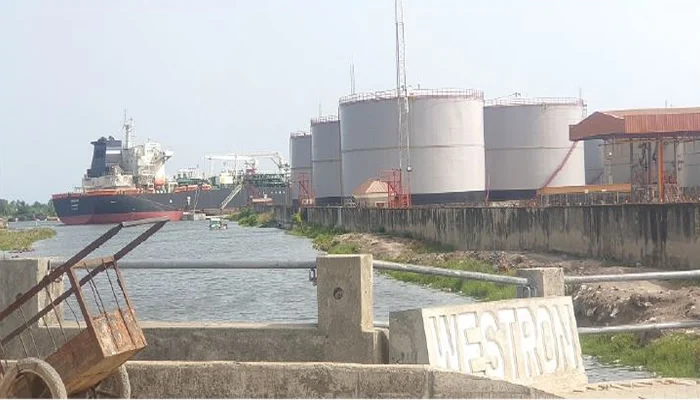
Crude oilNigerian crude oil sellers are struggling to find buyers on the global market, even as the Dangote Petroleum Refinery recently cried out over the low supply of the feedstock locally.

According to a Reuters report on Thursday, West African crude oil sellers are struggling to find buyers for up to December 26- and January-loading cargoes due to stiff competition from plentiful and cheaper alternative supplies.

About 20 million barrels of Nigerian oil for December and January loading remained unsold by Thursday, according to two traders who spoke with Reuters.

This comes as the Dangote refinery recently said it was importing heavily from the United States, Ghana, and other African countries due to a lack of sufficient supply from local oil producers.

According to the Reuters report, the amount of unsold Nigerian and Angolan crude, analysts said, is a symptom of a wider oil market surplus. This drove selling on the international futures market, pushing Brent crude below $60 per barrel to its lowest level since May this week.

“The overhang of West African cargoes partly reflects the broader global crude supply surplus emerging in Q1,” said Victoria Grabenwoger of analytics firm Kpler.

It was reported that “approximately 20 million barrels of Nigerian oil for December and January loading remained unsold by Thursday, according to two traders, while Angola’s December-January programmes still had as many as five to six cargoes available.”

These cargoes have reportedly slowed the start of the trading cycle for February cargoes, even though Angola’s loading schedule and term nominations have already been released.

The report added that such a large amount of unsold oil is unusual, especially for the current month, given that the West African trade cycle is typically closer to two months ahead.

Estimates for both countries’ overhang were as high as 40 million barrels earlier this week. “Current market softness appears to be partly seasonal and partly due to shifting buying patterns in response to freight costs and alternative supply options,” said OilX analyst Francisco Gutierrez, adding that Angolan January trade is 20 per cent behind its long-term average pace because the world’s biggest commodities buyer, China, has switched to cheaper or nearer alternative grades.

Supplies from the Middle East are said to be displacing medium and heavy West African grades in Asia, as lowered official selling prices in January, and shorter voyages give those grades a competitive edge, the analysts were quoted as saying.

India’s oil imports from Russia have remained resilient despite tightening Western sanctions, displacing medium-heavy density West African crudes, while light- to medium-density West African grades are struggling to compete with supplies from Argentina and Brazil, two traders stated.

“Nigeria has also been left to market more oil because of reduced imports by Africa’s largest oil refinery, the 650,000-barrel-per-day Dangote plant, which will in January undergo maintenance,” Kpler’s Grabenwoger said.

However, during a media briefing on Sunday, the President of the Dangote Group, Alhaji Aliko Dangote, complained about low crude supply despite the domestic crude supply obligation under the Petroleum Industry Act. Dangote said the refinery had been importing crude oil from various countries in order not to run out of feedstock.

Asked if the naira-for-crude deal had solved his challenge of low crude supply, he retorted, “We are not getting enough crude still; that’s why we buy from Ghana, we buy from a few African countries, and we buy from the United States. The US has been one of our major suppliers. On average, we don’t buy less than 100 million barrels from the US. The US is also a major beneficiary of our refinery,” the billionaire businessman said.

There was friction between the Dangote refinery and the Nigerian Upstream Petroleum Regulatory Commission over the domestic crude supply obligation.

In June 2024, Dangote’s deputy, Devakumar Edwin, accused international oil companies of deliberately frustrating the refinery’s access to local crude by selling above the market prices, forcing it to import crude from the United States and other countries.

The refinery also accused the NUPRC of failing to enforce the domestic supply obligations. Although the NUPRC defended its actions, the dispute lingered until the Federal Government ordered the Nigerian National Petroleum Company Limited to sell crude to Dangote in naira.

The naira-for-crude deal, which began in October 2024, boosted local fuel supply, reduced queues and contributed to price cuts. Dangote subsequently slashed petrol prices from about N1,100 per litre to N875, and later to N739. However, he has said repeatedly that the refinery still depends on imported crude to keep its operations running.

FirstBank partners UNIBEN to expand digital banking

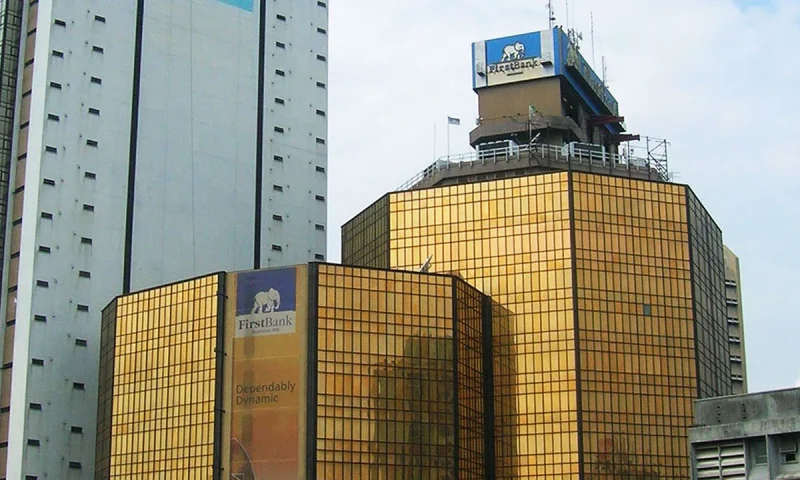
FirstBankThe Chief Executive Officer of First Bank of Nigeria, Olusegun Alebiosu, has said the bank’s Digital Xperience Centre is a step towards redefining how banking connects with education, technology, and the wider community.
He stated this at the launch of a Digital Xperience Centre, the ninth in the country, at the University of Benin recently. Alebiosu also allayed fears that the DXC, which he said is meant to improve customers’ experience, would lead to job losses.

He said the DXCs are gateways to a smarter, faster, and more personalised financial journey. The FirstBank boss said the centres are equipped with cutting-edge technology, as well as state-of-the-art self-service terminals designed to simplify transactions while ensuring top-tier security and efficiency.

He said the partnership with UNIBEN led to the creation of a hub where students, faculty, and community members can access FirstBank’s digital world. Alebiosu said the centre provides an elevated banking experience with speed and ease, designed to put the customer in control.

He said, “This digital experience centre set up by FirstBank is to take banking to the next step. It is virtually everything you see in a banking hall, and the same service. You can do everything from account opening, change of phone number, change of email, make complaints, and all others, cash withdrawal, and account statement. You can deposit money into your account.

“It will not lead to any loss of jobs. More and more people are accessing banking services, but banking platforms are not expanding as fast. This digital experience is to complement a branch. Instead of having crowds in a banking hall, frustration and complaints, people can come to the centre. It is for flexibility. The banking hall can close at 4 pm, but this one is a 24-hour operation.

“Students having examinations do not have to worry. They can come here at any time. They can be here at midnight. It is convenient and flexible. Our DXCs operate around the clock, including weekends, providing the convenience you need to bank anytime in just a few minutes.

“It embodies our commitment to Environmental, Social, and Governance principles, as it promotes financial inclusion, fosters digital literacy, and uses sustainable technology to empower underserved communities.”

The Vice-Chancellor of UNIBEN, Prof Edoba Omoregie, said the institution was pleased with the centre. He said, “We are excited and grateful to the bank. It is going to expand the scope of our staff and faculty. It will make our operations better. Ours is a big university, and the university is pleased with the bank for bringing it here.”

Petroleum regulators pledge reforms to unlock investments

SHIP OFFLOADINGPresident Bola Tinubu’s nominees for the leadership of Nigeria’s petroleum regulators on Thursday pledged sweeping reforms aimed at plugging value leakages, restoring discipline across the sector and unlocking fresh investments under the Petroleum Industry Act.
The nominee for the Nigerian Upstream Petroleum Regulatory Commission, Oritsemeyiwa Eyesan, and her counterpart at the Nigerian Midstream and Downstream Petroleum Regulatory Authority, Saidu Mohammed, made the commitments during their screening by the Senate at Room 117 shortly after plenary.

Both nominees told lawmakers that digitisation, strict contract enforcement, credible data management and accelerated gas development would be central to their leadership, as Nigeria seeks to reposition its oil and gas industry amid declining revenues and global energy transition pressures.

Eyesan, who is slated to head the upstream regulator, said weak data integration and heavy reliance on manual processes were costing the country enormous value in an industry that is rapidly becoming digital worldwide.

“We are still largely manual, while the world is moving at jet speed. Without digitisation and real-time data, you cannot truly understand what you are regulating, and you will continue to lose money,” she said, stressing that effective oversight depends on accurate numbers, asset integrity monitoring and transparent systems.

She told the committee that collaboration between regulators, operators and policymakers would be key to addressing long-standing bottlenecks in the upstream sector. “We must collaborate with stakeholders, identify our pain points, and address them collectively. That is how we move the needle forward,” Eyesan added.

The NUPRC nominee assured senators that she would fully deploy the Petroleum Industry Act as a regulatory tool to attract fresh investments and ensure Nigeria remains competitive in the global energy market, describing the law as a “valuable document” whose gains depend on proper implementation.

A graduate of Economics from the University of Benin, Eyesan spent nearly 33 years at the Nigerian National Petroleum Company Limited and its subsidiaries, retiring as Executive Vice President, Upstream.

She highlighted her role in resolving disputes with international partners, restoring investor confidence during divestment threats, and facilitating multi-billion-dollar deep offshore investments.

She also recalled signing Nigeria’s first non-associated gas development contract and contributing to an increase in crude oil production from about 1.3 million barrels per day to 1.8 million barrels per day during her tenure.

“Having worked as an operator and participated in resource development, I believe I have the competence to regulate the industry and ensure we maximise the enormous opportunities before us,” she told the committee.

On his part, Mohammed, the nominee for the midstream and downstream regulator, placed emphasis on restoring discipline to Nigeria’s gas and petroleum supply systems through strict enforcement of contracts and quality standards.

“Gas is not a favour; it is a commodity. It must be sold based on enforceable contracts from the producer to the transporter and the end-user,” he said, arguing that weak contractual frameworks had contributed to persistent gas shortages, particularly in the power sector.

He noted that uninterrupted gas supply to some power plants was only possible where contracts existed, and obligations were clearly defined, adding that enforcing the Gas Network Code would help stabilise the system and rebuild investor confidence.

Mohammed also warned against neglecting domestic refining and processing capacity, cautioning that failure to protect local value could see the sector suffer the same fate as Nigeria’s once-thriving textile industry.

While backing exports, he said domestic needs must come first to guarantee energy security. The NMDPRA nominee pledged to revive pipeline transportation of petroleum products, attract billions of dollars in investments for gas processing infrastructure, and strengthen quality assurance through in-house laboratory facilities.

“You cannot enforce quality if you do not have the capacity to test and certify products yourself,” he said. Born in Gombe in 1957, Mohammed is a chemical engineering graduate of Ahmadu Bello University, Zaria, with decades of experience across the oil and gas value chain.

He has served as Managing Director of the Nigerian Gas Company and Kaduna Refining and Petrochemical Company, as well as Group Executive Director and Chief Operating Officer, Gas and Power, at NNPC.

Reacting, the Chairman of the Senate Committee on Petroleum Resources (Downstream), Senator Sumaila Kawu, said the screening was taking place at a critical moment for the country, noting that boosting energy production and efficiency was central to Nigeria’s economic recovery.

He disclosed that further engagements with the nominees would continue into January to deepen legislative–regulatory collaboration. The Senate is expected to consider the committee’s report in the coming days and move towards confirming the nominees, a step that would mark a new phase in the regulation of Nigeria’s oil and gas industry under the Tinubu administration.

The nominations followed the resignation of the pioneer chief executives of both agencies, Gbenga Komolafe of the NUPRC and Farouk Ahmed of the NMDPRA, who were appointed in 2021 after the Petroleum Industry Act came into force.

W’Bank to approve $500m loan for Nigeria today

World-Bank

The World Bank is set to approve a $500m loan to Nigeria on Friday (today) as part of efforts to expand access to finance for micro, small and medium enterprises across the country.

The proposed facility, titled the Fostering Inclusive Finance for MSMEs in Nigeria (FINCLUDE) Project, aims to mobilise private capital and promote innovative financial products for small businesses, according to information obtained from the World Bank.

Negotiations on the loan are ongoing, and approval by the World Bank Group’s board is expected on Friday. The approval, expected on December 19, 2025, will see the World Bank commit $500m to the project out of an estimated total cost of $2.39bn.

Of the World Bank financing, $400m will be provided by the International Bank for Reconstruction and Development, while $100m will come from the International Development Association.

The Federal Government will be the borrower under the arrangement, with the Development Bank of Nigeria serving as the implementing agency with overall responsibility for managing the funds. The remaining $1.89bn required for the project is expected to be provided by commercial lenders as unguaranteed financing.

According to the World Bank, the FINCLUDE project will leverage the platforms of the Development Bank of Nigeria and its subsidiary, Impact Credit Guarantee Limited, to deepen credit access for MSMEs.

“The proposed FINCLUDE Project leverages the platforms of the Development Bank of Nigeria and its subsidiary, the Impact Credit Guarantee Limited, to drive inclusive MSME finance,” a document from the World Bank read. “Through these catalytic institutions, the project will deploy a package of complementary, inclusive, and innovative instruments tailored to the diverse needs of MSMEs in Nigeria.”

The World Bank described DBN as “a partner well known to the World Bank with high implementation capacity and a proven track record in designing and executing complex, innovative projects,” noting that its role would be central to the success of the intervention.

The project is structured around three main components. These include the provision of inclusive and innovative MSME finance products, the de-risking and mobilisation of private capital through partial credit guarantees, and technical assistance aimed at modernising and digitising Nigeria’s MSME finance ecosystem.

Under the first component, the World Bank said the project would provide Tier 2 subordinated capital to eligible financial institutions and support the establishment of an MSME investment fund to deliver equity and long-term debt financing to small businesses. The bank said this approach would help “crowd-in private capital, test market innovations and promote financial sustainability” within the MSME segment.

Also, the project will offer targeted technical assistance to strengthen the capacity of financial institutions, improve regulatory oversight and modernise the MSME finance value chain linking DBN, lenders and entrepreneurs.

In its appraisal report, the World Bank highlighted Nigeria’s ongoing economic reforms, describing the country as being “in a critical transition.” It noted that the removal of fuel and foreign exchange subsidies, alongside the unification of exchange rates, had begun to stabilise the economy and restore investor confidence.

“These reforms have improved fiscal space, enhanced FX liquidity, and eased inflation to 18 per cent as of September 2025,” the report stated, adding that growth prospects were strengthening, with the International Monetary Fund projecting 3.9 per cent real GDP growth in 2025.

Despite these improvements, the World Bank warned that access to finance remained uneven, particularly for MSMEs, women and the agriculture sector. It noted that agriculture accounted for just over five per cent of total bank credit in 2024, while high interest rates and shallow credit penetration continued to constrain lending to smaller enterprises.

If approved on Friday, the FINCLUDE project will add to Nigeria’s growing portfolio of World Bank-supported programmes. As of June 30, 2025, Nigeria’s external debt stood at $46.98bn, according to the Debt Management Office.

The World Bank Group remains Nigeria’s largest single creditor, accounting for $19.39bn of the total, comprising $18.04bn from the IDA and $1.35bn from the IBRD. This represents 41.3 per cent of the country’s external debt, underscoring the bank’s dominant role in financing Nigeria’s development initiatives.

The PUNCH earlier reported that the World Bank loans to Nigeria between 2023 and 2025 are projected to reach $9.65bn by the end of this year as fresh approvals, ongoing negotiations, and disbursements gather pace across key sectors.

The amount covers International Bank for Reconstruction and Development and International Development Association loans only, according to an analysis of data on the bank’s website by The PUNCH. When grants are added, total World Bank support rises to about $9.77bn within the three-year window.

The International Bank for Reconstruction and Development provides loans on commercial or near-commercial terms to middle-income and creditworthy low-income countries, while the International Development Association offers highly concessional loans and grants to the world’s poorest nations.

The PUNCH also reported that Nigeria’s stock of World Bank International Development Association loans rose to $18.5bn, making it the largest IDA borrower in Africa and the third-biggest in the world.

Fresh data from the IDA’s unaudited financial statements for the third quarter of 2025 confirmed that the country has maintained the ranking it first attained in 2024, when it climbed to third place after overtaking India. The country was the fourth-largest borrower in 2023.

According to the report, Nigeria’s exposure increased from $17.1bn in September 2024 to $18.5bn in September 2025, representing a rise of $1.4bn or 8.2 per cent. The increase reflects the country’s heavier reliance on concessional financing to plug infrastructure gaps, stabilise its reform programme, and support social spending amid volatile oil earnings.

Economists warn that the rising loan pipeline, while potentially beneficial for long-term development, could deepen fiscal pressures if not matched with stronger domestic revenue mobilisation and prudent expenditure management.

Lagos-based economist, Adewale Abimbola, reacting to the rising World Bank commitments to Nigeria, said loans from multilateral institutions such as the World Bank are largely concessionary, with interest rates typically below market levels and longer repayment tenors.

He noted that the critical question is not whether Nigeria should be borrowing, but whether the loans are structured and deployed effectively. “If it’s concessionary and tied to viable projects with medium-term revenue prospects, I don’t think it’s a bad idea,” Abimbola explained. “Borrowing isn’t bad; what matters is utilisation.”

He stressed that the economic impact of such loans depends on how well they are channelled into projects that can generate sustainable growth, strengthen revenue, and improve public services over time.

Polaris Bank promotes girls’ hygiene in Lagos

Polaris BankPolaris Bank has continued its commitment to empowering the Nigerian girl-child through health education and essential support, as it distributed hygiene essentials to female students of Kuramo and Victoria Island Junior and Senior Secondary Schools, Lagos.
According to the bank, the initiative stems from Polaris Bank’s 2025 International Women’s Day celebration and forms part of its ongoing Adolescent Health and Hygiene Support Programme.

Through the bank’s Girl-Child Support and Hygiene Education Initiative, the outreach aims to improve menstrual hygiene education, build confidence and dignity among young girls, and reduce school absenteeism resulting from lack of access to sanitary products.

Speaking at the event, Group Head, Customer Experience & Value Management, Polaris Bank, Mrs Bukola Oluyadi, delivered a practical health talk to the girls, emphasising the importance of maintaining proper hygiene during their menstrual cycle and in their daily lives.

She advised the students on essential personal care practices, including the appropriate use of sanitary pads, the importance of daily use of clean underwear, and maintaining good body hygiene with deodorants and regular washing, especially during puberty when their bodies are developing.

“Your body is precious, and how you take care of it determines your confidence and wellbeing,” Mrs Oluyadi told the students. “Good hygiene is not just about looking clean; it is about staying healthy, feeling comfortable, and showing up confidently in school and everywhere you go.”

She also encouraged the girls to cultivate lifelong healthy habits, be informed about their bodies, and speak confidently about their health needs.

Also present at the distribution was the Non-Executive Director of Polaris Bank, Mrs Subulade Giwa-Amu, who delivered a motivational session on self-care, confidence, and self-presentation.

In her address, she reminded the girls that taking care of their appearance and hygiene contributes significantly to building a successful future. “A clean girl equals a successful woman,” Giwa-Amu affirmed. “Success is not only about your academic performance; it is also about how you present yourself. People see you before they know you, and first impressions always last. Loving yourself and caring for yourself should be a daily habit.”

She further encouraged the students to build confidence from within, stay self-assured, and always be conscious of their personal hygiene as young girls stepping into womanhood.

“Confidence starts with knowing who you are and being proud of yourself,” she added. “When you take care of your body, you build respect for yourself, and others see that confidence reflected in how you speak, walk, and show up in the world.”

Polaris Bank asserted that its support for the girl-child aligns with its broader sustainability and CSR strategy, which includes empowering young girls through education, access to essential learning materials, and social support systems that improve their health and academic performance.

TotalEnergies rolls out TEMC+ for secure payments

Total EnergiesTotalEnergies Marketing Nigeria Plc has launched the TotalEnergies Mobility Card Plus, positioning it as a technology-driven upgrade designed to deliver stronger security, real-time control and greater convenience for individual users and businesses across the country.
Unveiling the card on Tuesday in Lagos, the company said TEMC+ sets a new standard for mobility and secure payments by combining enhanced digital features with tools that allow customers, particularly fleet operators, to manage transactions and accounts directly and instantly.

The launch marks the start of a nationwide migration from existing cards to TEMC+, which is already underway and scheduled to be completed by 31 December 2025.

The Managing Director of TotalEnergies Marketing Nigeria Plc, Dr Samba Seye, said the new platform reflects the company’s long-standing focus on innovation and customer satisfaction.

Represented by the General Manager, Retail and Cards, Abdullahi Umar, he noted that TEMC+ was developed to meet the demands of the digital era and evolving customer needs.

“At TotalEnergies, our vision has always been to make mobility smarter, safer and more convenient for everyone. Today, with TEMC+, we are taking a bold step forward in delivering greater convenience, control and security for both individual customers and businesses of all sizes,” Seye said.

He described TEMC+ as more than a mobility card, explaining that it is a technology-driven platform built to simplify operations and enhance customer experience. The solution offers online secure transactions, mobile app integration for real-time account visibility, pre-authorisation for accurate fuel dispensing, instant SMS alerts, virtual card capabilities and on-the-spot fund reallocation.

“This launch is not just about a product. It reflects our commitment to innovation and customer satisfaction,” he said, adding that customers would experience live demonstrations, guided sessions on digital account management and support through the migration process.

Giving details, the Project Manager, TEMC+, Osarobo Aigbogun, said the upgrade was shaped directly by customer feedback and represents growth rather than replacement of the existing Total Card.

“We listened to you and went back to the drawing board. Today, we are proud to introduce TEMC+, the next evolution of Total Cards. This represents growth, not replacement. We are improving what we had before,” Aigbogun said.

He explained that TEMC+ introduces three payment options: card payment, mobile app payment and one-time password payment, giving customers flexibility even without internet access. Fleet managers now have real-time access to an extranet that allows them to blacklist or whitelist cards, manage card limits, transfer funds between cards, fund wallets instantly, generate PINs and unblock cards without contacting TotalEnergies.

“Now, when you credit your funds, you get them immediately, and you can use them straight away,” he stressed, adding that the platform improves agility and simplifies reconciliation for businesses.

Banks strengthen capital base as CBN tightens controls

Yemi-CardosoDeposit Money Banks are shoring up their capital base as the Central Bank of Nigeria intensifies oversight, reinforcing governance, transparency, and risk management to ensure a resilient, stable financial system, OLUWAKEMI ABIMBOLA writes
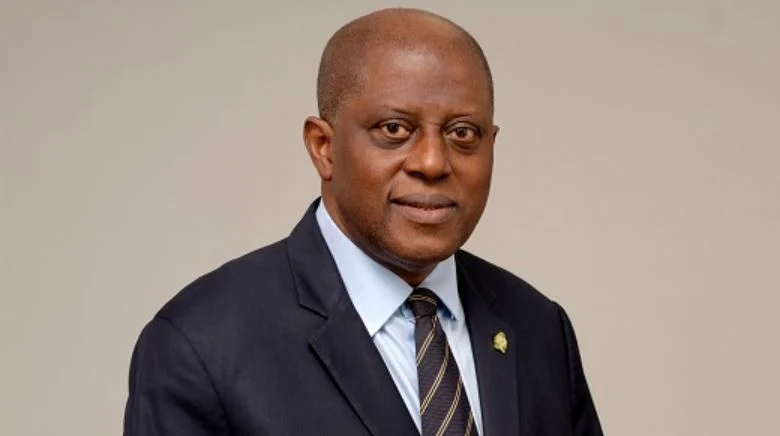
Nigeria’s banking system remains stable and resilient, a key pillar of the country’s financial stability. Yet the Central Bank Governor, Olayemi Cardoso, says the apex bank continues to stay alert to emerging risks such as cyber threats, credit-concentration pressures, and operational vulnerabilities. These challenges, he explained, are being managed through strengthened risk-based supervision and the ongoing transition to Basel III, which is expected to enhance capital quality, reinforce resilience, and improve liquidity monitoring as the banking recapitalisation drive progresses.

Nigerian banks are navigating one of the most defining periods in their history. Importantly, members of the Monetary Policy Committee have acknowledged that the system remains safe and sound. At the 303rd MPC meeting in Abuja, the committee expressed satisfaction with the sustained strength of the banking sector, noting that most financial soundness indicators continue to fall within regulatory benchmarks.

Committee members also recognised the significant progress recorded in the recapitalisation programme, with 16 banks already fully meeting the revised capital requirements. They encouraged the CBN to ensure the programme is completed successfully.

With just under four months remaining before the conclusion of the recapitalisation exercise, Cardoso confirmed that the process remains firmly on course. Speaking at the recent Bankers’ Dinner in Lagos, he noted that several banks have already met the new capital thresholds, while others are steadily advancing and are well positioned to meet the 31 March 2026 deadline.

“To date, 27 banks have raised capital through public offers and rights issues, and sixteen have already met or exceeded the new requirements, a clear testament to the depth, resilience, and capacity of Nigeria’s banking sector,” he said.

“As we strengthen the capacity of our banks, stress-testing this year confirms that Nigeria’s banking sector remains fundamentally robust. Key financial soundness indicators overwhelmingly satisfied prudential benchmarks during the year,” he added.

Credit-risk framework

The CBN is also redesigning the banking sector’s credit-risk framework to safeguard the estimated N4.14tn in new capital being raised. Cardoso said the bank is enforcing stronger governance, transparency, and accountability to protect these funds. This effort is supported by a newly established Compliance Department, now fully operational, with mandates covering financial crime supervision, market conduct, enterprise security, corporate governance, and environmental, social, and governance issues.

According to him, the strengthened controls will ensure that the new capital is properly managed. “As recapitalisation progresses, we are redesigning the credit-risk framework to enforce stronger governance, greater transparency, and firmer accountability across the sector. We are determined to break the boom-and-bust cycle that has accompanied past recapitalisation efforts,” he stated.

The CBN’s Credit Risk Management System is now web-enabled, allowing banks to access its database for statutory returns and borrower checks. The apex bank is also integrating the system with banks’ internal platforms to improve efficiency.

A Deloitte report titled “Nigeria’s macro headwinds trigger bank recapitalisation” estimates that banks will raise about N4.14tn before the exercise ends in March 2026. The report noted that the sharp increase in minimum capital requirements, ranging from N50bn to N500bn depending on licence type, is essential to meet the industry’s capital adequacy needs amid inflation, high interest rates, currency volatility, and forex constraints.

The report added, “The upward revision will ensure that Nigerian banks have the capacity to take on bigger risks and stay afloat amid both domestic and external shocks. It also means an increased liquidity position of banks, which will help broaden their loss-bearing capabilities.”

Cardoso maintained that Nigeria’s banking system remains sound and resilient. “At the same time, we remain vigilant to emerging risks, including cyber threats, credit-concentration pressures, and operational vulnerabilities,” he said. He reiterated that the Basel III transition will further strengthen the system’s resilience.

The CBN is also reinforcing operational discipline to ensure that the financial system works efficiently for all Nigerians. Cardoso explained that the bank undertook an end-to-end review of the entire cash lifecycle—production, transportation, distribution, and consumer access. This review, he noted, informed steps such as recalibrating cash-printing models, issuing ATM-to-card ratio guidelines, strengthening approvals for ATM or branch closures, sanctioning banks whose ATMs fail to dispense cash, and enhancing supervision of POS operators nationwide.

These regulatory interventions reflect the CBN’s commitment to supporting the government’s ambition of achieving a $1tn GDP by 2030, as proposed in the Policy Advisory Council’s national economic plan. A well-capitalised banking sector is considered critical to realising this vision. Cardoso said banks must be sufficiently capitalised to support future economic expansion.

“Will Nigerian banks have sufficient capital relative to the financial system’s needs in servicing a $1tn economy in the near future? In my opinion, the answer is ‘No!’ unless we take action,” he said, noting that the ongoing recapitalisation will enable banks to attract significant transactions and support growth.

The CBN has assured the public and depositors that the sector remains secure. “The CBN affirms that it continues to monitor all financial institutions under its regulatory purview and maintains robust frameworks for early warning signals and risk-based supervision,” the bank stated.

Road to recapitalisation

On 28 March 2024, the CBN announced a two-year recapitalisation programme that began on 1 April 2024. Minimum capital was increased to N500bn, N200bn, and N50bn for commercial banks with international, national, and regional licences, respectively. Merchant banks must hold N50 bn, while non-interest banks require N20bn (national) and N10bn (regional). The compliance deadline is 31 March 2026.

Cardoso said the policy is expected to drive inclusive growth by enabling banks to extend more credit to MSMEs and invest in technology and innovation, which are vital for expanding digital financial services and improving access in remote areas.

Under the recapitalisation exercise, the CBN adopted a distinct definition of minimum capital base, comprising paid-up capital and share premium only, excluding reserves and retained earnings. This means most banks must raise fresh capital even if their shareholders’ funds exceed earlier requirements.

Cardoso emphasised that the sector remains strong. “The non-performing loan ratio remains within the prudential benchmark of five per cent,” he said, adding that the liquidity ratio also surpasses the 30 per cent regulatory minimum. He noted that recent stress tests reaffirm the system’s overall robustness.

CBN Deputy Governor (Corporate Services), Ms Emem Usoro, said achieving a $1tn economy requires structured planning, clear policies, and committed implementation. She emphasised that recapitalisation is a key pillar of this goal, noting that banks must be equipped to finance a larger economy. “As we work towards building a $1tn economy, we must consider the recapitalisation of our banks to be able to fund, finance and power the economy,” she said in Abuja.

United Bank for Africa Group Managing Director, Oliver Alawuba, described the recapitalisation exercise as timely and necessary to strengthen the financial system. According to him, it will help the sector withstand inflation, currency instability, and global geopolitical shocks while positioning banks to finance large-scale infrastructure and industrial projects.

What the law says

The Central Bank of Nigeria Act of 2007 mandates the CBN to promote financial system stability. The bank fulfils this responsibility through reforms, greater access to finance, institutional capacity building, and enforcement of strong corporate governance practices.

Analysts note that financial system stability is essential because bank failures can erode public confidence, reduce savings and investment, disrupt the money supply, and trigger payment system breakdowns with harmful effects on the real economy. A stable financial system also strengthens the transmission of monetary policy, ensuring that authorities can achieve their primary objective of price stability.

Over the years, the CBN has introduced several reforms aimed at strengthening the banking industry and ensuring the effective functioning of the financial system.

NDIC, NIBSS to strengthen failed banks’ depositor payouts

ndic-Logo-1024×433-1The Nigeria Deposit Insurance Corporation and the Nigeria Inter-Bank Settlement System Plc are set to sign a Memorandum of Understanding aimed at ensuring a more efficient process of reimbursement for depositors in the event of bank failure
According to a statement from the NDIC on Wednesday, the Managing Director/Chief Executive of the NDIC, Mr Thompson Sunday, disclosed this during a courtesy visit to the Corporation’s Head Office in Abuja by the NIBSS Executive Management team led by its Managing Director/Chief Executive, Mr Premier Oiwoh.

This proposed MoU comes a day after the NDIC commenced the liquidation process for two mortgage banks, Aso Savings and Loans and Union Homes Savings and Loans, whose licences were revoked by the Central Bank of Nigeria. NDIC said that depositors of the defunct banks will be paid their insured deposits of up to N2m per depositor, and those with deposits above N2m will be settled once the assets of the banks have been disposed of.

Speaking during the visit, the NDIC boss commended NIBSS for its longstanding partnership and invaluable contributions to strengthening the Corporation’s mandate of protecting depositors and enhancing public confidence in the banking system. He highlighted the pivotal role played by the NIBSS in driving digital verification processes, particularly through the deployment of the Bank Verification Number platform, which enabled seamless payment to the alternate bank accounts of depositors of the failed Heritage Bank Limited.

“You have been a reliable partner, and NDIC remains committed to that partnership. Without NIBSS’s support, it would have been difficult to achieve the milestone we attained with the closure of failed Heritage Bank despite the impromptu nature of the arrangement. That is why it is important for us to concretise our partnership through this MoU,” the NDIC MD/CE stressed.

Sunday highlighted key areas to be covered by the MoU, such as real-time synchronisation of NDIC’s deposit registers and electronic records to allow for swift verification of eligible accounts during bank resolution; expansion of disbursement channels for depositor claims to include Mobile Money Operators and a possible NDIC-branded mobile interface; and investment in Single Customer View and interoperability infrastructure for instant validation in the event of bank failure.

The NDIC boss also hailed NIBSS for reforming the payments system in Nigeria and putting it ahead of its peers in most parts of the world, adding that the efforts of the NIBBS platform in mitigating fraud in the financial system are laudable.

In his response, NIBSS’ Oiwoh expressed appreciation to the NDIC leadership for the sustained partnership that is geared towards a safer and smoother payment system in Nigeria over the years. He reaffirmed NIBSS’s full commitment to supporting the Corporation in the delivery of its mandate of depositor protection, emphasising that NIBSS exists to serve Nigerians and stands ready to provide the technological backbone required to enhance financial system stability.

Oiwoh emphasised the critical importance of prompt and efficient reimbursement during bank failures, noting that the NDIC’s efforts in this regard directly contribute to public trust and financial inclusion. He assured that his organisation is working closely with law enforcement agencies to proactively reinforce the safety of the nation’s payment system, as well as strengthen its infrastructure to lower the cost of transactions on its platforms.

The MoU between both institutions is expected to usher in a new era of digitised, responsive, and technology-driven depositor reimbursement processes, ultimately reinforcing confidence in Nigeria’s financial safety-net framework.

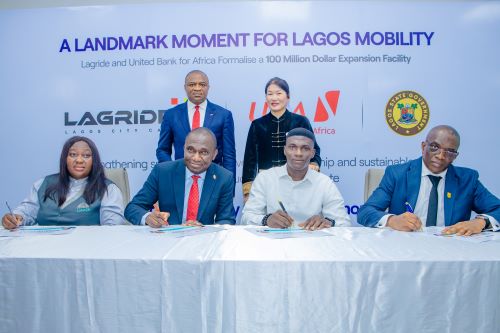
UBA, Lagride agree on $100m Drive-to-Own programme for drivers

Lagride Secures $100m UBA Facility, Expands EV Charging Infrastructure to  Transform Lagos Drivers into Asset Owners | Business Journal

Lagride said it has secured a $100 million financing facility from United Bank for Africa to expand its Drive To Own programme and enable 3,500 Lagos drivers to transition from daily earners into long-term asset owners, business operators and mobility investors.

The partnership strengthens Lagos State’s transportation ecosystem and accelerates the shift toward a structured, technology-enabled and financially bankable mobility sector. Over the past 10 months, Lagride has rebuilt its entire onboarding and operational system for drivers, known as Lagride Captains. The platform introduced a performance-led Drive To Earn structure supported by weekly and monthly rental models.

This system has generated consistent 90-day usage and repayment data across the fleet, allowing United Bank for Africa and other financial institutions to assess driver performance with accuracy, confidence and transparency.
Eligibility for the Drive To Own programme is based on clearly defined performance thresholds, repayment discipline, safety compliance and service consistency. Through this approach, Lagride has emerged as the most structured, data-driven and credit-ready mobility platform in Nigeria, setting a new benchmark for bankable driver financing and asset ownership.
“Transportation is the backbone of Africa’s economic future, and platforms like Lagride are creating the blueprint for how African cities can build modern, technology-driven and people-centred mobility systems.”
As part of the milestone, Lagride also unveiled an expanded electric vehicle charging facility in Alausa, Lagos, reinforcing its long-term commitment to clean, future-ready mobility. The expanded infrastructure is designed to support the growing electric vehicle segment within Lagride’s fleet, reduce operational downtime and enable more efficient, sustainable transportation at scale.

By pairing driver financing with practical EV infrastructure, Lagride is positioning itself as a mobility platform built not just for today’s Lagos, but for the next generation of urban transport.

Speaking on the landmark partnership, Chief Diana Chen, Chairman, Lagride, said that the ultimate goal of the Drive To Own programme is not to keep drivers behind the wheel indefinitely, but to move them up the economic value chain.
She explained that Lagride is intentionally designed to help drivers evolve from operators into owners, and ultimately into investors and partners managing multiple vehicles and teams of people.

“Lagride was created to give Lagos a modern, disciplined and technology-driven mobility system while ensuring that drivers are not left behind. The goal is for drivers who we call Captains to become business owners, fleet partners and mobility investors, not just drivers.
This 100 million dollar partnership with United Bank for Africa moves thousands of captains closer to owning productive assets, managing multiple cars and building stronger financial futures. It is a major step forward in our commitment to driver prosperity and the future of smart mobility in Lagos.”

She noted that the Drive To Own programme is a starting point, not an endpoint, laying the foundation for long-term enterprise building, governance and scalable wealth creation within the mobility sector. Delivering remarks at the event, Oliver Alawuba, Group Managing Director and CEO, United Bank for Africa, shared a personal reflection on his father, who had been a professional driver. He spoke about transportation as a source of dignity, livelihood and social mobility, and why UBA considers the sector critical to inclusive economic growth.

He also recounted his reaction when Chief Diana Chen first shared the Lagride vision, describing it as clear, ambitious and strongly aligned with UBA’s commitment to financing real-sector projects that create jobs, build assets and deliver long-term economic impact. According to him, Lagride represents the kind of transformational, well-governed and data-backed initiative that UBA exists to support across Africa.

The event featured contributions from key stakeholders across Lagride, UBA and CIG Motors Group, including: Chief Diana Chen, Chairman, Lagride; Ademola Adeyemi, Lagride Academy and Driver Management Team Lead; Dorathy Akpan Etim,  Lagride Captain on the Drive To Own Scheme with UBA; Brigadier General Chukwuemeka Udaya, Special Adviser to the Chairman on Government Relations, who signed on behalf of CIG Motors; Ifeanyi Abraham, PR Director, Lagride, who hosted the event among other dignitaries in attendance.

Nigerian stock exchange gains N13bn on industrial rally

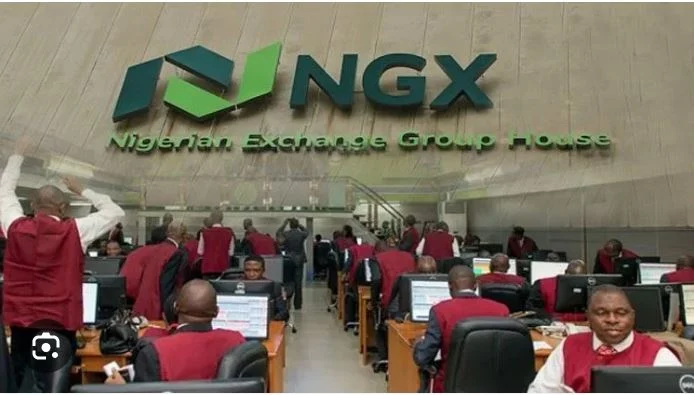
NGXThe Nigerian Stock Exchange gained N13bn at the close of trading on Tuesday, driven by performances in consumer and industrial stocks. The market capitalisation of the exchange now stands at N95.3tn.

The All-Share Index inched up by 21.23 points to close at 149,459.11, representing a one-week gain of 1.71 per cent, a four-week gain of 3.08 per cent, and a year-to-date gain of 45.21 per cent. Other indices that recorded gains included the Insurance Index, which rose 0.36 per cent; the Consumer Goods Index, up 0.21 per cent; and the Pension Index, up 0.07 per cent.

A total of 912,582,020 shares were traded in 23,678 deals, representing a market value of N20.2bn. Compared with Monday’s trading session, volume rose by 65 per cent, turnover increased by 52 per cent, while the number of deals declined by 18 per cent.

In all, 129 listed equities participated in trading, with 31 stocks recording gains and 26 stocks posting losses. Aluminium Extrusion Industries led the gainers with a ten per cent share price appreciation, closing at N9.35 per share. This was followed by Guinness Nigeria, which rose by 9.98 per cent to N263.40; MeCure Industries, which gained 9.95 per cent to N45.85; and Multiverse Mining and Exploration, also up 9.95 per cent to N12.15. Other notable gainers included Sovren Insurance, which increased by 9.89 per cent to N4.11, and Sunu Assur, up 7.96 per cent to N4.34.

On the losing side, Haldane McCall recorded the largest decline, falling by 9.93 per cent to N3.72 per share. This was followed by LivingTrust Mortgage Bank, down 9.09 per cent to N3.50; Veritas Kapital Assurance, also down 9.09 per cent to N1.60; Linkage Assurance, which shed 5.71 per cent to N1.65; and Champion Breweries, down 5.63 per cent to N13.40.

Access Holdings recorded the highest volume of 385,834,219 shares traded, followed by Sterling Bank with 85,488,191 shares, FCMB Group with 75,689,568 shares, First HoldCo with 51,923,443 shares, and AIICO with 36,690,774 shares. Access Holdings also led in value with N7.72bn, followed by First HoldCo with N1.83bn, GTCO with N1.50bn, Zenith Bank with N0.92bn, and MTN with N0.80bn.

On Monday, the Nigerian Exchange Limited closed the first weekday of trading on a modest positive note, gaining about N3bn as investors adopted a cautious stance amid mixed sentiment across sectors.