
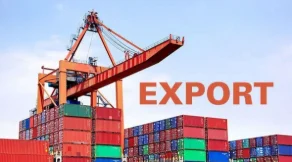
Nigeria’s exports to African countries hit N4.9tn
 Nigeria’s exports to Africa in the third quarter of 2025 surged 97.16 per cent year-on-year to N4.9tn, signalling what stakeholders describe as a realignment toward emerging markets, particularly intra-African trade and the BRICS bloc.
Foreign trade data from the National Bureau of Statistics revealed that Nigeria exported goods worth N4.9tn to African countries in Q3 2025, up from N2.49tn in the same quarter of 2024. The report also showed that exports to China and Brazil grew sharply, while exports to the United States and India declined significantly.
BRICS represent a grouping of countries that presents an alternative economic line to the Western-dominated system led by the United States of America. The founding member countries of BRICS are Brazil, Russia, India, and China.
The export data shows that Nigeria’s trade with BRICS is booming. The NBS data revealed that exports to China soared by 230.49 per cent, rising to N2.26tn in Q3 2025 from N683.74bn a year earlier. Exports to Brazil also grew by 19.58 per cent, reaching N446.76bn, compared to N373.61bn recorded in Q3 2024.
In contrast, exports to India fell by 52.83 per cent, dropping from N1.19tn to N560.76bn year-on-year. Nigeria’s exports to the United States suffered an even deeper slump, declining by 55.97 per cent to N743.63bn, down from N1.69tn in Q3 2024.
Analysis of data from the United States Census Bureau further confirmed the downward trend. It showed that between January and September 2025, US imports of Nigerian goods fell by $552.7m, declining from $4.68bn in the corresponding period of 2024 to $4.12bn.
The PUNCH previously reported that US imports from Nigeria between January and May 2025 dropped from $2.65bn to $2.12bn. US President Donald Trump had at the time issued a 14 per cent tariff on all Nigerian exports, worsening bilateral trade ties, and putting the hopes of a renewal of trade deals such as the African Growth and Opportunity Act at risk.
Stakeholders, including the Director-General of the Manufacturers Association of Nigeria, Segun Ajayi-Kadir, told The PUNCH that the trade data “provides clear evidence that Nigerian manufacturers and exporters appear to be increasingly pivoting toward BRICS countries as alternative markets.”
He explained that the move became necessary after the United States imposed a 14 per cent tariff on most imports. MAN’s DG noted that the tariff regime and rising trade tensions have made the US “less attractive” for Nigerian exporters.
Ajayi-Kadir stated, “For some manufacturers, this diversification is no longer optional; it has become a necessity. BRICS markets offer fewer trade barriers and, in some cases, bilateral agreements that ease market entry.”
He added that exporters now face “longer shipping times, increased compliance costs, and currency volatility” in US-bound trade, noting that BRICS countries have become more receptive to Nigerian-manufactured goods, agricultural produce and semi-processed commodities.
On whether the Trump-led tariffs contributed to the plummeting trade figures, MAN’s DG said the tariffs “undeniably played a central role,” adding that “No nation or business willingly absorbs higher tariffs. Policy shifts like these naturally redirect trade flows.”
He warned that uncertainty around the renewal of the African Growth and Opportunity Act could worsen the situation, stressing the need for Nigeria to deepen trade within Africa through the African Continental Free Trade Area.
Similarly, the Director-General of the Lagos Chamber of Commerce and Industry, Dr Chinyere Almona, attributed the decline in Nigeria’s exports to the US from January to September 2025 to the tariff war, saying the measures “disrupted trade, making Nigerian exports, including oil and agricultural goods, less competitive.”
Almona said exporters were “increasingly shifting to new trade partners,” including BRICS, Turkey, and the UAE, describing the shift as “strategic diversification” driven by tariff impacts, emerging market demand, and alternatives to dollar-dependent systems.
She cautioned that the tariffs, which she referred to as “Trump Tariffs,” were “implemented without bilateral dialogue” and warned that such protectionist approaches “erode trust and stability in trade relations.”
The LCCI DG urged the Federal Government to reactivate the Nigeria–US Bi-National Commission to address trade barriers, while calling for exporters to diversify into digital services, creative industries, and green technologies.
Almona added, “A strategic response to the tariff wars and low crude oil price is to ramp up crude oil production to cover the likely gap in budget revenue projections by the end of the year.”
Whereas Nigeria, a BRICS partner country, still trades robustly with America and Europe, the latest trade data shows that it is gradually reorienting its global trade footprint toward emerging markets, particularly within Africa and the BRICS bloc.

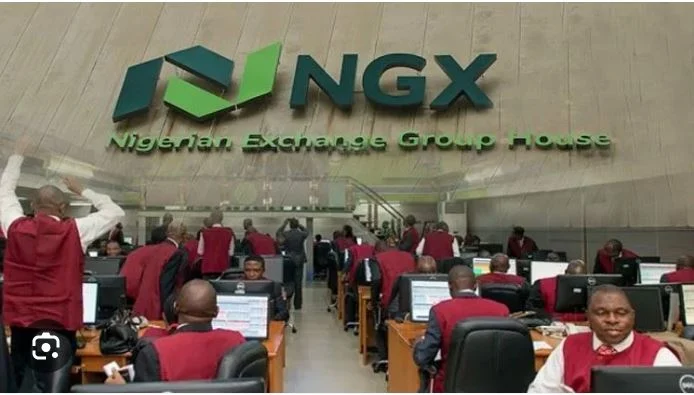
 The Nigerian Exchange closed last week on a positive note, gaining N1.54tn as the All-Share Index rose by 1.63 per cent despite a decline in trading volume. Financial services stocks dominated activity, followed by ICT and oil and gas, reflecting selective investor interest across key sectors. Analysts said the market’s resilience, supported by strong sector participation and new listings, signalled sustained investor confidence amid mixed performances across indices and equities. TEMITOPE AINA writes.
 United Bank for Africa has announced strategic appointments to its executive board, effective 1 January 2026.
 Barring any last-minute change, MRS and other partners of the Dangote Petroleum Refinery are set to begin selling petrol at N739 per litre.
 Haelsoft Digital Limited has been named one of Nigeria’s Top 100 Fastest Growing SMEs for 2025 by BusinessDay, spotlighting the company’s rapid expansion in digital services and technology training.
 The Federal Executive Council has approved three major Public-Private Partnership projects valued at over N6.43tn, signaling another significant wave of private-sector investment into Nigeria’s infrastructure landscape.
 The recent pump price slash of petrol by Dangote refinery is in line with the company’s commitment to maintaining competitive domestic fuel prices despite global volatility and ongoing smuggling along Nigeria’s borders.
 The National Agency for Food and Drug Administration and Control, on Thursday, destroyed unwholesome and substandard products worth over N5bn in Nasarawa State.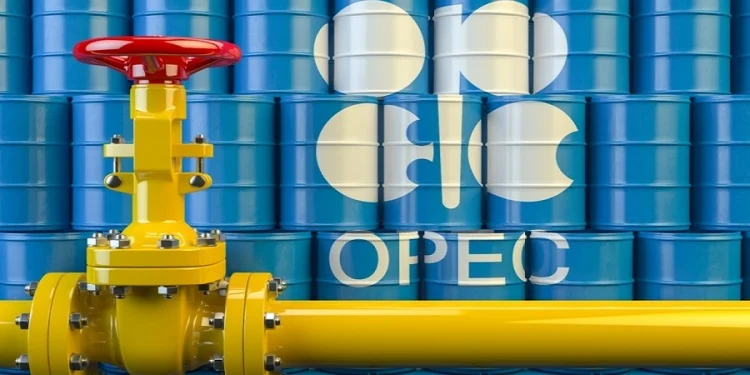
 Nigeria recorded one of the strongest month-on-month production gains among Organisation of the Petroleum Exporting Countries members in November 2025, pumping 1.436 million barrels per day, up from 1.401 mbpd in October, according to the December 2025 OPEC Monthly Oil Market Report.
 The House of Representatives on Thursday took initial legislative steps to strengthen transparency and accountability in the operations of the Central Bank of Nigeria, following the second reading of a bill seeking comprehensive amendments to the Central Bank of Nigeria Act, 1991.