SanlamAllianz Nigeria Pays Over ₦77 Billion Claims In 2025 Reinforces Financial Strength, Customer Trust

Ahead of the 2027 general elections, Regional Colligate Coordinator of the Obidient Movement, South-South, Onochie Osheokwu, has urged the African Democratic Congress, ADC, to zone its presidential ticket to the South.

Osheokwu made this call on Monday while fielding questions in an interview on Arise Television monitored by DAILY POST.
His remark is coming as political parties gather momentum for next year’s general elections.
According to him, Nigerians are well aware of who would be the strongest candidate, adding that the former Labour Party presidential candidate, Peter Obi, from the Southeast, also represents the South
He said, “We in the South-South want the ADC to zone it presidential ticket to the South.
“Among all the contenders, we in the Obidient movement believe the best candidate is clear. The one who embodies the conscience of the movement and the leadership that Nigerians are seeking.
“What happened at Chief John Odigie-Oyegun was a consultation. Like every other person is saying. But it’s so bad that the politics of Nigeria has been reduced to propaganda and not the basic issue confronting the country.”
The Action Peoples Party, APP, has dissolved its Imo State Executive Committee and set up an Interim Caretaker to manage the affairs of the party till further notice.
The party reached the resolution during an emergency meeting held by its National Working Committee, NWC, which was approved by the National Executive Committee, NEC.
Eight-member Interim Caretaker Committee was appointed to oversee the affairs of the party pending its congresses.
The Interim Caretaker Committee members include, Ernest Njesi as Chairman, Emeka Onwukwe as Secretary, Henry Alaribe, Deputy Chairman Owerri zone.
Others are: Ogemdi Ezemonye as Deputy Chairman, Orlu zone, Ernest Ezirim, Deputy Chairman, Okigwe zone, Cajethan Duke as Publicity Secretary and Peter Etoh as Treasurer.
Addressing the Interim Caretaker Committee members, the National Chairman of the party, Uchenna Nnadi, said that the decision taken was to restore internal harmony within party members and urged the newly appointed Caretaker Committee Executive to ensure every member is carried along in their schedule.
In a similar development, the party has officially, written to the Independent National Electoral Commission, INEC, notifying the Commission of its preparedness to conduct congresses at Ward, Local Government and State levels.
In a letter dated March 2, 2026, and addressed to the INEC Chairman, the APP National Chairman, Nnadi, and the National Secretary, Abu Ibrahim Bossan, conveyed the party’s notification in line with statutory requirements for a 21-day notice.
The congresses, according to the National Chairman, will hold on March, 24, 2026, at ward levels, March 26 at Local Government levels and
March 28 at the State levels.
The Federal Capital Territory Administration has stated it will start enforcing compliance on residents who contravene land use and those defaulting with regard to ground rent as well.


This was part of the decisions taken at the FCT Executive Committee meeting on Monday, chaired by the FCT Minister, Nyesom Wike, at his official residence in Life Camp.
Speaking with journalists after the event, Director, Department of Lands Administration, Mr Chijioke Nwankwoeze pointed out that the administration had given defaulters ample time to comply with the Administration’s directive, hence the need to take action on non-compliance.
Mr. Nwankwoeze, further gave an update on the issuance of Certificates of Occupancy in the Federal Capital Territory. He announced that the process of issuing C of O had greatly improved.
“Unlike before when it took years or even decades, in the current dispensation, C of O issuance is possible in as short as one week. The Minister does not waste time in signing C of Os. Once we send the C of Os to him, within two days, they are back”, he revealed.
He went on to unravel the underlying causes of delay in C of O processing to include non-submission of passport photos and refusal to accept or decline the offer of Rights of Occupancy within the stipulated time of 21 days.
The Director Lands also identified other causes of C of O delay to include non-confirmation of Remita payments and the use of unverifiable addresses such as P. O. Box which are not actual physical locations.
Meanwhile a total of three memoranda were presented and ratified by the committee. TheY are, approval for the purchase of diesel for waste disposal and management plants at four districts in the FCT, ratification and procurement of food and non-food items for victims of flood-affected areas in the FCT and the approval and ratification of the contract for the supply of communication gadgets and other equipment for the support of FCT security agencies.
Elaborating on the memoranda, the Coordinator, AMMC, Chief Felix Obuah, said the purchase of diesel for waste disposal and management plants in Mabushi, Jabi, Durumi and Wuye districts was at the cost of N7,300,000,000.
On his part, Director, FCT Department of Procurement, Alhaji Musa Idris, revealed that the supply of communication gadgets and other equipment for FCT security agencies cost the administration N1,133,802,500.
He stated that the essence of the procurement was to support the agencies in their assignments of securing the FCT.
Also addressing journalists, Chief of Staff to the Minister, Chidi Amadi expressed appreciation to the media for its consistency in the reportage of the policies and programmes of the FCT Administration.
The National Industrial Court of Nigeria sitting in Kano has rejected separate ex parte applications seeking to restrain the Kano State Government from retrieving official vehicles from former commissioners who recently resigned from the State Executive Council.
The ex-commissioners had asked the court to grant an interim injunction preventing the government from taking back the vehicles pending the hearing and determination of their motion on notice.
In their suits, the claimants joined the Attorney General of Kano State, the governor, and the Kano State Public Complaints and Anti-Corruption Commission as defendants.
Represented by Suraj Sa’ed (SAN) and five other lawyers, the former commissioners argued that their applications were filed pursuant to Order 17 Rule 1 of the National Industrial Court of Nigeria (Civil Procedure) Rules, 2017.
The applicants include former Commissioner for Science, Technology and Innovation, Dr Yusuf Ibrahim K/Mata; former Commissioner for Internal Security, AVM Ibrahim Umar (rtd); former Commissioner for Special Duties, Nasir Sule Garo; former Commissioner for Humanitarian Affairs and Poverty Alleviation, Adamu Aliyu Kibiya; and former Commissioner for Youth, Mustapha Rabi’u Musa Kwankwaso.
They contended that the vehicles were allocated to them as part of their conditions of service upon appointment and argued that, by convention and in line with the determination of the Revenue Mobilisation Allocation and Fiscal Commission, commissioners are entitled to retain such vehicles at the end of their tenure.
According to affidavits filed in support of their applications, the former commissioners resigned in January this year and urged the court to grant the interim reliefs in the interest of justice, maintaining that the balance of convenience favoured them.
In his ruling, Justice Mahmood Abba Namtari declined to grant the interim orders sought and instead directed that the defendants be put on notice.
The cases were adjourned to March 10 for hearing of the substantive applications.
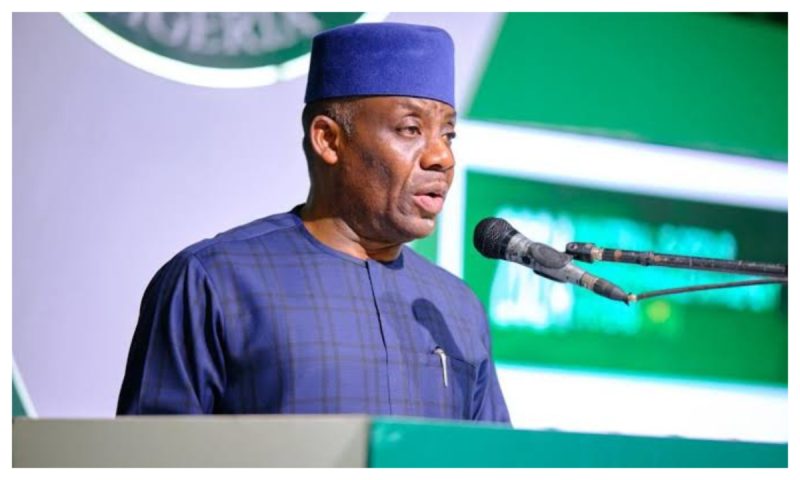
The Federal Government has approved N48b to 12 selected universities for engineering upgrades.

Minister of Education, Dr. Tunji Alausa, made this disclosure on Monday at the inauguration of the Implementation Committee on Tertiary Education Trust Fund Special High-Impact Intervention Projects in Abuja.
Alausa said the funds would either upgrade existing facilities or support the construction of new engineering workshops where necessary while adding that an additional N20 billion has been provided in the 2026 TETFund guidelines to upgrade engineering facilities in other selected universities.
According to him, beneficiary institutions to receive N4 billion each include:
Federal University of Technology, Minna, Niger State
Federal University of Technology, Akure, Ondo State
Federal University of Technology, Babura, Jigawa State
Federal University of Technology, Ikot-Abasi, Akwa-Ibom State
Federal University of Technology, Owerri, Imo State
Nigerian Army University, Biu, Borno State
African Aviation and Aerospace University, Abuja
Shehu Shagari University of Education, Sokoto State
Enugu State University of Medical and Applied Sciences
University of Ilesha, Osun
Delta State University
Abubakar Tafawa Balewa University
The Department of State Services has arrested a 26-year-old man, Udeme Stephen, for allegedly claiming responsibility for the recent attack on the 2023 presidential candidate of the Labour Party, Peter Obi.
Stephen was apprehended following a threat he posted on his X account, @stevetom788, shortly after armed men fired gunshots at the African Democratic Congress secretariat and Chief John Odigie-Oyegun’s residence in Benin, Edo State.
Present at the event were Obi, Odigie-Oyegun, former President of the Nigeria Bar Association, Olumide Akpata and some ADC leaders.
In his post, Stephen claimed responsibility for the incident and issued further threats against Obi.
He wrote that Obi was fortunate to have survived the Benin attack and warned that he would not be “that lucky next time,” alleging that his associates would target the former presidential candidate during a planned visit to Rivers State.
“We warned Obi against his entrance into Edo State, but he mistook our resolve for his Obidiots online noise.
“Thank his stars he (Obi) survived this one… I learnt he’s going to my Rivers State… Na my men go handle that one and dem no dey miss target…
“Speak no peace to a bastard and wish him no long life, for he’s destined to die,” Udeme posted.
Speaking on Monday, a top security source disclosed that the DSS immediately launched a covert investigation after the threat was issued.
The source added that operatives deployed forensic analysis to track the suspect.
He identified Stephen as a teacher at Jessica High School in Eliozu, located in the Umuehere Community of Obio-Akpor Local Government Area of Rivers State.
“No sooner had Stephen issued the threat than DSS operatives began a covert investigation, deploying forensic analysis to track and arrest him.
“The suspect is 26 years old, called Udeme Monday Stephen, and teaches at Jessica High School in Eliozu, Rivers State, at Umuehere Community, in Obio-Akpor LGA of the state.
“I strongly believe that the outcome of the agency’s forensic investigations implicated the suspect.
Nigerian deposit money banks disbursed a total of N36.39tn in credit to the Trade and General Commerce sector in the first nine months of 2025, amid calls for more credit to the private sector for productive activities and investment in critical infrastructure.

The PUNCH found that the amount extended by the deposit money banks to the business ecosystem represented a 0.96 per cent increase from the N36.05tn recorded in the corresponding period of 2024.
An analysis of the Central Bank of Nigeria’s quarterly statistical bulletin for Q3 2025 showed that total credit rose from N36.05tn in January to September 2024 to N36.39tn in the same period of 2025, reflecting a modest year-on-year growth driven largely by stronger lending in the third quarter of 2025.
The data indicated that August 2025 recorded the highest credit distribution at N5.06tn, followed by September at N4.85tn, while July witnessed a sharp rise to N4.51tn. The surge marked a strong rebound after a relatively slow start to the year.
In contrast, January and February 2025 recorded the lowest credit disbursements at N3.48tn and N3.54tn, respectively, before lending accelerated from March onward.
For 2024, banks recorded their highest credit disbursements in February at N4.91tn and January at N4.62tn, reflecting a strong first-quarter performance.
However, lending moderated significantly mid-year, with July and August posting the lowest figures at N3.41tn and N3.48tn before a mild recovery in September.
On average, banks distributed N4.04tn monthly to Trade and General Commerce between January and September 2025, slightly higher than the N4.01tn monthly average in the same period of 2024.
Credit extended to businesses has remained on a stable line, with interest rates as high as 30 per cent from commercial banks. The Monetary Policy Rate was pegged at a historic high of 27.5 per cent, a move that the real sector repeatedly decried. The recent decision of the Monetary Policy Committee to shave off 50 basis points in February eased the benchmark interest rate to 26.5 per cent and brought some relief to the trade and commerce ecosystem.
Analysts and members of the organised private sector have called for more credit to flow to productive private sector activities, alongside increased investment in critical infrastructure to strengthen the real sector.
A former Chairman of the Chartered Institute of Bankers of Nigeria, Prof Segun Ajibola, said credit growth in trade depends largely on demand dynamics and signals from monetary authorities.
“Many factors influence the push of credit to different sectors of the economy. One has to be need-oriented and demand-oriented. In other words, those who need credit must come forward to request from their bankers,” Ajibola said.
He added, “Dropping rates is an invitation to do more. And more importantly, it also signals the direction of the economy. When the rate drops, the monetary authorities and the fiscal authorities are beckoning operators in the sectors to do more, so that the multiplier effects will help push the economy to higher growth.”
Members of the Organised Private Sector, including the Director-General of the Lagos Chamber of Commerce and Industry, Dr Chinyere Almona, said the rate cut should translate into stronger private sector lending and infrastructure investment.
“We see the rate cut as a bridge from reform to results. We want to see more credit to the private sector for productive activities, more investment in critical infrastructure, government commitment to continued transparency in the FOREX market, and strong support to building our local refining capacity,” Almona said.
She added that with firm coordination between monetary and fiscal authorities, “the Nigerian economy will make good progress towards achieving a Gross Domestic Product growth rate above five per cent in the short term.”
Also, the Director of the Manufacturers Association of Nigeria, Segun Ajayi-Kadir, said the rate cut, though modest, could ease borrowing costs for businesses if banks pass on the benefits.
“Lower borrowing costs for businesses will allow them to access cheaper loans, invest more in machinery, expand operations, and increase working capital. This will increase production capacity, encourage the hiring of more workers, and expand the performance of Small and Medium Enterprises,” Ajayi-Kadir remarked.
He stressed that the impact would depend on effective transmission, controlled inflation, exchange rate stability, and resolution of structural challenges such as power, logistics, and insecurity.
The President of the Association of Small Business Owners of Nigeria, Dr Femi Egbesola, said the reduction in the MPR could lower banks’ funding costs and support lending to SMEs and traders. “If these factors align, we can expect a modest but meaningful rise in credit flowing to productive sectors,” Egbesola said.
Similarly, the Director of the Centre for the Promotion of Private Enterprise, Dr Muda Yusuf, warned that weak transmission between policy rates and lending rates remains a concern.
“We have historically had a very weak transmission mechanism between the monetary policy rate and the lending rate. Several times in the past, when we see a reduction in the monetary policy rate, it hardly reflects in lower lending rates,” Yusuf said.
He added that high operating costs, risk premiums, and structural bottlenecks continue to constrain lending, urging greater intervention by development finance institutions to provide longer-term, lower-cost funding to the real sector.
United Capital Plc recorded a 35 per cent year-on-year increase in revenue, rising from N43.43bn at the end of 2024 to N58.55bn in 2025.
This was indicated in the Audited Financial Results for the year ended 31 December 2025, filed with the Nigerian Exchange Limited on Monday.
The Group said the performance reflects its execution capability, diversified revenue base and resilience across its business lines. Growth was largely driven by a 176 per cent year-on-year surge in net trading income and a 59 per cent increase in fee and commission income.
Profitability also improved during the period. Profit before tax rose 37 per cent year-on-year to N41.18bn, while profit after tax increased 17 per cent to N28.15bn. Total comprehensive income for the year stood at N30.97bn.
The company stated that the result affirms its ability to sustain its historic growth trajectory and enhance shareholders’ wealth despite a volatile operating environment.
In line with its commitment to shareholders, the Board approved a final cash dividend of N0.70 per ordinary share, amounting to N12.6bn. This brings the total dividend for the 2025 financial year to N1.00 per share, valued at N18bn, representing a 25 per cent increase from the N14.4bn payout in 2024.
United Capital said the improved distribution reflects its strong cash flow position and continued focus on delivering solid earnings performance while enhancing shareholder value.
Commenting on United Capital Group’s FY-2025 audited financials, the Board Chairman, Mr Uche Ike, said, “I am immensely proud of the leadership and the entire United Capital team for the stellar performance delivered in the 2025 financial year. I applaud our people for approaching every challenge with diligence, discipline, and an unwavering commitment to excellence.
“This level of excellence continues to set United Capital apart as a leader in the investment banking and financial services industry. I extend my sincere appreciation to our clients, partners, and shareholders for their enduring trust and to our teams across the Group whose passion and professionalism make performances like this possible.”
On the performance, the Group Chief Executive Officer, Mr Peter Ashade, added, “I am delighted to inform all our stakeholders that United Capital Group ended the year on an impressive note as Profit before Tax rose 37 per cent year-on-year despite the challenging operating environment. This remarkable business performance was driven by growth in core business operations, a resilient business model and strong execution of our strategic initiatives.
“As we proceed into the 2026 financial year, I remain excited about the opportunities ahead. Our robust risk management framework, technical expertise, operational scale, focused team and strategic clarity provide us a strong platform to effectively harness the opportunities inherent in our operating environment.”
The Nigerian Communications Commission has proposed that telecom operators must give subscribers a minimum of 14 days’ notice before deactivating their SIM cards over inactivity or post-paid churn.
The proposal is contained in a consultation paper titled Stakeholders Consultation Process for the Telecoms Identity Risks Management Platform, dated February 2026 and published on the Commission’s website.
Under the proposed amendments to the Quality-of-Service Business Rules, the NCC stated that “prior to churning of a post-paid line, the Operator shall send a notification to the affected subscriber through an alternative line or an email on the pending churning of his line.”
It added, “This notification shall be sent at least 14 days before the final date for the churn of the number.
A similar provision was proposed for prepaid subscribers. The commission said, “prior to churning of a pre-paid line, the Operator shall send a notification to the affected subscriber through an alternative line or an email on the pending churning of his line,” stressing again that the notice “shall be sent at least 14 days before the final date for the churn of the number.”
Currently, under Section 2.3.1 of the QoS Business Rules, a subscriber line may be deactivated if it has not been used within six months for a Revenue Generating Event, and if inactivity persists for another six months, the subscriber may lose the number, except in cases of network-related faults.
The commission also proposed that operators must submit churn data to the new Telecoms Identity Risk Management System. According to the document, “An Operator shall submit details of all churn numbers to the Telecoms Identity Risks Management System (TIRMS) within seven days of completion of the churn process.
The proposed changes form part of a broader regulatory review tied to the rollout of the Telecoms Identity Risk Management System, a cross-sector platform designed to curb fraud linked to recycled, swapped, and barred mobile numbers.
In the background section of the paper, the NCC explained that the TIRMS “is a secure, regulatory-backed Platform that helps prevent fraud stemming from churned, swapped, barred Mobile Station International Subscriber Directory Number in Nigeria.”
It added that the platform “will provide a uniform approach for all sectors in relation to the integrity and utilisation of registered MSISDNs on the Nigerian Communications network.”
The consultation process, which the commission said is in line with Section 58 of the Nigerian Communications Act 2003, is open for 21 days from the date of publication. Stakeholders are expected to submit comments on or before March 20, 2026.
The document was dated February 26, 2026, and signed by the Executive Vice Chairman and Chief Executive Officer of the Commission, Dr Aminu Maida.