
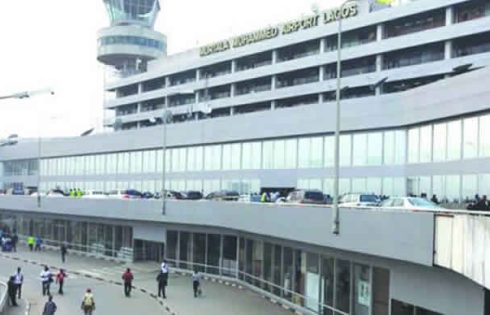
 Aviation professionals and stakeholders under the umbrella of the Aviation Safety Round Table Initiative have convened a high-level policy dialogue in Lagos to deliberate on the ongoing N712bn refurbishment of the Murtala Muhammed International Airport.
The N712bn refurbishment is financed under the presidential Renewed Hope Infrastructural Development Funds, an intervention aimed at uplifting the airport’s status and addressing long-standing infrastructural deficits.
When the amount for the refurbishment was announced, Nigerians criticised the sum, describing it as outrageous. The structural refurbishment has, however, commenced, with the entire aerodrome now a construction site.
Meanwhile, stakeholders have called for strategic planning, innovation, and private sector participation to ensure the project delivers long-term value. The gathering, which brought together industry leaders, regulators, and experts, focused on shaping the future of Nigeria’s aviation sector and maximizing its contribution to economic growth.
The participants made this known during their Q1 breakfast meeting on Thursday. They emphasised that the airport upgrade must go beyond cosmetic improvements, urging the government to prioritize efficiency, sustainability, and global competitiveness.
They stressed that the project presents an opportunity to reposition Murtala Muhammed Airport, Lagos, as a major regional hub capable of driving connectivity, tourism, and investment, while also addressing long-standing infrastructure and capacity challenges.
Speaking at the event, the President of ART, Rtd Air Commodore Ademola Onitiju, said the initiative was inspired by recent developments in the aviation sector and the need to support ongoing reforms with constructive engagement.
“We are excited by the efforts of the present crop of leaders and policymakers in the aviation sector. When it became public that the Murtala Muhammed International Airport, Ikeja, was to be refurbished, we felt we should hold a discussion session in a timely manner to complement this bold step so that the end result would meet the expectations of a substantial segment of Nigerians,” he said.
Onitiju added that the forum was designed not just as a discussion platform but as a catalyst for actionable ideas that would transform the sector. He further outlined ART’s expectations for the MMIA project, stressing the need for a modern, globally competitive facility.
Onitiju said, “Today’s session was conceived as a platform for policy advocacy, critique, and appreciation. We have assembled a formidable collection of industry leaders whose experience and sagacity are respected to offer diverse perspectives. The anticipated outcome is a robust coalition of ideas for governance and implementable strategies to boost the sector’s contribution to Nigeria’s GDP.
“We expect a new MMIA intentionally designed to function as a regional and global hub with the capacity to handle 30 million passengers annually and connect more than 50 airlines to over 100 cities worldwide. We are hopeful for an airport that seamlessly blends efficiency, technology, and a superior passenger experience, with a strong commitment to continuous maintenance, innovation, and expansion.”
The ART president also called for policies that would attract investment and deepen sectoral growth, including the adoption of public-private partnerships, open skies agreements, and sustainable aviation practices.
“We urge industry leaders to consider green aviation, sustainable fuels, and eco-friendly, futuristic airports. Funding aviation infrastructure through private sector investment, supported by the government, remains the way to go if we must achieve world-class standards,” he added.
While delivering her paper, the Managing Director of the Federal Airports Authority of Nigeria, Olubunmi Kuku, said Nigeria is at a defining point in its aviation development, noting that the country’s population size, location, and rising travel demand position it to become a continental hub.
She explained that FAAN’s approach is anchored on a deliberate and structured strategy, with Lagos and Abuja airports serving as the core of a dual-hub system designed to drive passenger and cargo traffic across the region.
Kuku further emphasized that infrastructure modernization remains central to achieving this vision, highlighting ongoing upgrades at the Murtala Muhammed International Airport and other facilities.
According to her, improvements ranging from terminal expansion and enhanced runway lighting to advanced air traffic systems and cargo facility upgrades are aimed at boosting efficiency, safety, and passenger capacity while positioning Nigeria to meet global aviation standards.
She said, “Nigeria stands at a pivotal moment in its aviation journey. With one of the largest populations in Africa, a strategic geographic location between West and Central Africa, and a growing demand for air travel, our nation is uniquely positioned to emerge as a leading aviation hub on the continent.
“We are developing dual hub airports anchored on Murtala Muhammed International Airport in Lagos and Nnamdi Azikiwe International Airport in Abuja. Together, these airports form the backbone of Nigeria’s hub strategy.”