Ramadan: UN scribe laments humanitarian crisis in Gaza, Sudan, others

As Muslims around the world commence Ramadan fast today, United Nations Secretary General, Antonio Guterres, has expressed worry over persistent conflict, hunger, displacement in Gaza, Sudan, Yemen and Afghanistan.

Guterres made his feelings known in a Ramadan message while advocating that the global community heed Ramadan’s enduring massage of unity, deliver help and hope to those who are suffering and safeguard the rights and dignity of every person.

“Ramadan also represents a noble vision of hope and peace. But for too many members of the human family, this vision remains distant. From Afghanistan to Yemen, from Gaza to Sudan and beyond, people are suffering the horror of conflict, hunger, displacement and more.

“In this difficult and divided times, let us heed Ramadan’s enduring massage to bridge divides, deliver help and hope to those who are suffering and safeguard the rights and dignity of every person”, he said.

The UN Scribe believes that the holy month would inspire the world to work as one to build a peaceful, generous and just world for all people.

“Every year, I pay a special solidarity visit to a Muslim community and join in the fast. And every year I come away heartened by Ramadan’s spirit of peace a compassion.

“Ramadan Kareem!”, he said.

Private school teachers open up on daily struggles amid N10,000 monthly salary

In the past, the teaching profession was seen as one of the most noble professions anyone could find themselves in. Teachers were seen as the moulders of society because every professional went through the tutelage of a teacher.

However, teachers have become the dregs of society, especially those in private schools.

Private school teachers, especially those in Jos, the capital of Plateau State, have been reduced to mere tools by school proprietors to be used and dumped at will.

They face severe low-income and poor working conditions, highlighting their silent struggles but with a resilience that goes to show that if given the right conditions to work, they will excel.

Though private schools have become the largest employer of labour in Jos with many of them springing up in almost every street, the teachers they employ have been the ones at the receiving end as their salaries and remuneration are nothing to write home about.

Findings by DAILY POST show that some private schools pay NCE, HND, BSc, and Master’s degree holders between N10,000 and N25,000 monthly and the teacher may not have a salary increase for the next five to ten years of teaching.

Even when the salary is increased, it may not be more than 10% of the basic salary.

Teaching in a private school, therefore, has become a means to an end with the teachers just hanging in there waiting for an opportunity to come up, and off they go.

Some teachers who spoke to DAILY POST on their silent struggles while trying to build the lives of their pupils, say they get ‘imprisoned’ almost all day between 7am and 3pm and at the end of the month, they are paid paltry sums that do not last up to a week.

Most of them are made to take classes from JSS1 to SS3 and as to be expected, these overworked and underpaid teachers cannot give their best, thereby contributing to the falling standard of education in the state.

The school proprietors too do not help matters in any form or shade.

As soon as a teacher starts to grumble and ask questions, they are relieved and replaced almost immediately.

It has become a regular sight to see teachers engaging in manual labour at construction sites, farms, and even illegal mining sites to augment their poor income.

Some private school teachers revealed that they had no option but to endure the hardship while looking forward to better days ahead.

First to speak was Ezekiel Atangs who has been a private school teacher for over 15 years.

He said, “I have been teaching in private schools for the past 15 years and I can say that my experiences have never been palatable. Where I am currently working is my third but the story has been the same.

“I have been here for the past four years on a N15,000 salary. There has never been an increment and anytime we approach the proprietor for an increase, she will tell us that anyone who is not happy with the salary can leave.

“I have a wife and three children, so I have to engage in menial labour to augment the stipend I get from my teaching job. When I close and during weekends, I go to construction sites to work. If not, my family will starve.”

Another private school teacher, Ishaya Bitson, also shared his bitter experience.

“I can tell you in all honesty that private school teachers in Plateau State are really suffering.

“I have a degree in education but all efforts to get a job with either the state or federal governments have proved abortive, I had to pick a job with a popular private school in Jos.

“On the surface, the school is one of the most prestigious in Jos with the school fees running into hundreds of thousands of naira. But it will interest you to know that the teachers are poorly paid.

“When I was employed five years ago, my salary was N20,000 with the promise of a review after one year but since then, I have been stuck on the same salary.

“Whenever I approach the principal to talk about the increase, he will tell me to be patient or if I can’t cope any longer, I should put in my resignation letter. We are really suffering in silence,” he lamented.

For Leonard Bagudu, the story is the same.

“I have an NCE and I’ve been teaching in a private school for the past eight years on a salary of N12,000 with no hope of a change in the near future.

“I teach JSS3 to SS3, yet I am not happy. Imagine resuming work at 7am and teaching all round till 3pm, yet you are paid a paltry sum. I can tell you that no private school teacher in Jos is happy due to the poor salaries we get,” he disclosed.

A school proprietor, who spoke on the poor salary package for teachers however, claimed there was nothing they could do than pay whatever they can afford.

“Yes, there is no doubt the salary of private school teachers is poor but there is nothing much we can do about it. Everyone knows the current economic situation in the country and we barely survive or break even after paying levies to the state ministry of education and other relevant authorities.

“Some parents also do not help matters as they don’t pay their children’s fees on time and this too affects what we manage to pay our teachers.

“Many people think we proprietors are the ones enjoying it, but I can tell you that we barely break even,” he narrated.

However, an assistant director in the Plateau State Ministry of Education, who spoke on the condition of anonymity, stated that there is little or nothing the ministry can do as the salaries of the private schools are not regulated by the government.

According to him, “We have had complaints of poor salaries paid by private schools but there is nothing the ministry can do because they are regulated by the government.

“Private schools, just like other private organizations, are at liberty to negotiate their salary structure with their staff but all we have been telling them is to be fair to their employees.

“We have heard of private school teachers being paid as low as N10,000 or N15,000 and we have been talking with them to find a balance and raise these salaries.”

Aiyedatiwa holds parallel stakeholders’ meeting, blames ‘vested interests’ over crisis

Following the violent chaos that rocked the stakeholders’ meeting of the All Progressives Congress (APC), Ondo State chapter, on Tuesday, Governor Lucky Aiyedatiwa has denied his involvement in the crisis.

According to Aiyedatiwa, miscreants with no form of business at the state secretariat of the party were responsible for the chaos.

The Chairman of the party in the state, Ade Adetimehin, was beaten and injured along with other party chieftains after some hoodlums alleged to be members of the National Union of Road Transport Workers (NURTW) stormed the secretariat in Akure, the state capital.

The injured chieftains of the party, who are currently hospitalised, accused the governor of sponsoring the hoodlums to disrupt the stakeholders’ meeting.

Meanwhile, Aiyedatiwa, who led party leaders from across the state to a parallel stakeholders’ meeting with members of the congress committees from the national secretariat of the party, disclosed that the initial plan for a 10 a.m. meeting on Tuesday was never formalised, as he had requested it be moved to 2 p.m. to allow him and other top officials, including the Speaker and Deputy Governor, to attend.

While stressing his commitment to due process and denying any animosity towards the congresses, Aiyedatiwa attributed the violence to factional disputes over candidacy, stressing that the earlier incident was a gathering of rival supporters rather than an official party meeting.

He said, “Normally, we have stakeholders’ meetings, and as the governor, I am always in attendance, alongside the speaker and the deputy governor. All of us are always present at every stakeholder’s meeting. ‎

“In the first quarter of this year, we had one in January before the anniversary of the state. We had 60 persons per local government. But this one was an impromptu stakeholders’ meeting because of the congresses at the ward and local government levels.

“Later on, I got a call from one of them saying there were some problems around, or some miscreants around the party secretariat.

“I asked him to call the Commissioner of Police, and I also called the Commissioner of Police myself to ensure the place was protected because I was going to attend the meeting. I asked that security operatives be deployed to protect the place.”

List of senators who opposed manual backup clause in electoral bill released

The identities of the 15 senators who voted in support of mandatory real-time electronic transmission of election results during deliberations on the Electoral Act (Repeal and Re-Enactment) Bill, 2026 have been revealed.

The lawmakers opposed the retention of a controversial provision that allows manual collation of results as a backup.

DAILY POST recalls that the Senate approved the electronic transmission of election results while retaining manual collation as a fallback option in a plenary session on Tuesday.

The resolution followed a tense plenary session in the red chamber of the National Assembly.

During a dramatic division on the floor, 55 senators voted in favour of keeping the manual backup clause, while Senator Enyinnaya Abaribe and the 14 others stood against it, insisting on mandatory real-time electronic transmission.

The senators include:

Natasha Akpoti-Uduaghan (PDP, Kogi Central)

Enyinnaya Abaribe (ADC, Abia South)

Abdul Ningi (PDP, Bauchi Central)

Aminu Tambuwal (PDP, Sokoto South)

Ireti Kingibe (ADC, FCT)

Seriake Dickson (PDP, Bayelsa West)

Onawo Ogwoshi (ADC, Nasarawa South)

Tony Nwoye (ADC, Anambra North)

Victor Umeh (ADC, Anambra Central)

Ibrahim Dankwambo (PDP, Gombe Central)

Austin Akobundu (PDP, Abia Central)

Khalid Mustapha (PDP, Kaduna North)

Sikayo Yaro (PDP, Gombe South)

Emmanuel Nwachukwu (APGA, Anambra South)

Peter Jiya (PDP, Niger South)

Data privacy issues threaten Nigeria’s financial inclusion

2Growing concerns over data privacy and security are emerging as a significant barrier to Nigeria’s financial inclusion drive, despite years of investment in connectivity and digital infrastructure.

While policymakers and industry stakeholders have long focused on expanding broadband access, mobile penetration, and fintech innovation, experts now argue that trust — particularly around how personal data is collected, stored, and used — may determine whether millions of Nigerians join the formal financial system.

In 2012, the Central Bank of Nigeria set a target to reduce the country’s adult financial exclusion rate to 20 per cent by 2020 under its National Financial Inclusion Strategy. However, the exclusion rate stood at 36 per cent in 2020, according to the regulator’s 2022 report, underscoring persistent gaps in access and adoption.

Industry leaders say the challenge is no longer primarily about infrastructure.

“Increasing connectivity is essential, but it is only a prerequisite,” the Chief Commercial Officer at Optasia, Uchenna Agbo, said. “True inclusion requires meaningful participation, and that depends on trust.”

Across major commercial hubs such as Balogun Market, traders who rely heavily on cash transactions often remain hesitant to adopt digital financial services. Although many own mobile phones and are aware of mobile money platforms, concerns about fraud, account hacking, and misuse of personal information continue to discourage uptake.

Stories of compromised accounts and data leaks have circulated widely, reinforcing fears among small business owners that using digital systems could expose sensitive personal and financial information

For many low-income earners, privacy risks are seen not as abstract regulatory issues but as threats to livelihoods.

The issue has gained renewed prominence following the enactment of the Nigeria Data Protection Act and the establishment of the Nigeria Data Protection Commission, which is tasked with enforcing data protection standards and promoting responsible data practices across sectors.

Analysts say regulatory frameworks are necessary but insufficient on their own. They argue that financial service providers must move beyond compliance and embed privacy protections into the design of products and services, a model often referred to as “privacy-by-design”.

“Data privacy should not be treated as a compliance obligation or a technical feature added at the end of development,” Agbo said. “It must be seen as core infrastructure, as fundamental as the networks and platforms that deliver the services.”

Optasia, which operates in 38 countries and serves more than 120 million monthly active users globally, says lessons from other markets show that trust directly influences digital adoption rates, particularly among underbanked populations.

Consumer advocates note that for low-income users, the consequences of privacy breaches can be severe. Misuse of biometric data, unauthorised sharing of financial histories, or predatory lending practices enabled by data analytics can undermine confidence and deter participation in formal systems.

Aviation experts again raise concerns over charges

FAANFresh concerns have emerged in Nigeria’s aviation sector as industry experts warn that rising airport and ticket charges could further strain already struggling operators.

A former Commandant of the Murtala Muhammed International Airport, Grp. Capt. John Ojikutu (retd), cautioned that the introduction of new levies by the Federal Airports Authority of Nigeria could shorten the lifespan of many aviation companies.

It will be recalled that both operators and stakeholders have been lamenting multiple taxation in the industry, expressing fears that if such continues, the industry may be brought to its knees.

Speaking in Lagos, Ojikutu argued that before imposing additional charges, FAAN must critically evaluate its existing revenue streams from passenger traffic, flight operations and cargo movements across its 22 airports.

“Unless all these are factored rationally into FAAN earnings before new charges are introduced, unnecessary and irrational charges will be shortening the lifespans of many aviation operators,” he said.

He estimated that based on 2024 traffic figures alone, revenue from Passenger Service Charges, aircraft landing and parking fees should not be less than N400bn annually, excluding earnings from cargo terminals, car parks, toll gates, land rentals and airport concessions.

Ojikutu also faulted FAAN’s spending priorities, saying, “Most of the earnings are not used on the critical services in airports, especially the perimeter and security fences.” The FAAN management since 2004 has not been able to separate the security fence from the perimeter fences, as the International Civil Aviation Organization indicated in its 2004 audit report.

“There are no regular checks or reviews on background checks on airport staff, particularly those working in security control areas.”

He described as excessive the recent capital expenditure figures, including N712bn for the reconstruction of MMIA Terminal One and N535bn for the Abuja second runway.

“These capital expenditures are not just a complete waste but fraudulent spending,” he said, questioning the sharp rise from earlier runway estimates.

Ojikutu advocated structural reforms, including concessioning non-aeronautical services, transferring runways and landing aids to the Nigerian Airspace Management Agency and restructuring FAAN into a holding company model to avoid regulatory overlaps with the Nigeria Civil Aviation Authority.

Similarly, the President of the Aircraft Owners and Pilots Association of Nigeria, Dr Alex Nwuba, criticised what he described as non-transparent passenger and cargo charges.

He pointed to the five per cent Ticket Sales Charge, Value Added Tax on domestic tickets and multiple security and passenger service charges embedded in airfares.

“Although consultations were eventually held on the new cargo charges and the fee was reduced to N15 per kg, the charge still remains arbitrary because no cost study or operational breakdown has been presented to show what specific service the N15 actually pays for,” Nwuba said.

“The argument that the fee has not been increased from the old N7 per kg collected decades ago does not satisfy ICAO’s requirement for cost-relatedness. Historical pricing is not a valid basis for aviation charges. Even with stakeholder engagement, a fee without a transparent cost foundation is treated by ICAO as a tax, not a legitimate service charge,” he added.

Nwuba noted that under ICAO principles, aviation charges must be directly linked to the cost of providing defined services, with transparency and stakeholder consultation.

He referenced a recent resolution by the Economic Community of West African States aimed at reducing non-cost-based aviation charges across the sub-region from January 2026 but expressed doubts about its implementation.

According to him, publishing detailed cost studies and clear service allocations would help restore confidence and ensure that aviation fees reflect service delivery rather than revenue generation.

SAHCO secures ISO certificate

sifax-sahco-logo-brand-1Skyway Aviation Handling Company has secured the ISO/IEC Information Security Management System certification.

According to the company, the achievement puts the company as the first aviation ground handling company in Nigeria and one of the few in Africa to attain the globally recognised standard.

ISO/IEC 27001:2022, as it is called, is regarded as the international benchmark for information security management. It provides a comprehensive framework for protecting sensitive data, managing cybersecurity risks and ensuring the confidentiality, integrity and availability of information.

In the technology-driven aviation industry, the certification is seen as critical to safeguarding operational systems and customer data. It followed a rigorous audit and compliance assessment conducted by a globally accredited certification body, during which the company met all requirements.

The milestone, SAHCO said, reflects its commitment to cyber resilience, operational excellence and world-class service delivery.

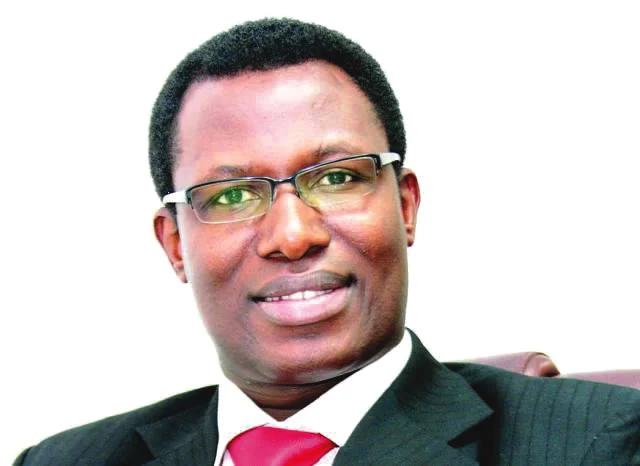
Speaking on the achievement, Executive Director Dr Babatunde Afolabi said information security must be embedded across the organisation.

He said, “Information security is not just an IT function; it is an organisational responsibility.” Every employee plays a role in protecting our systems and customer data.

“Through structured training, strict policies and continuous monitoring, we have built a proactive security culture that supports safe, secure and reliable aviation operations.”

He noted that in aviation ground handling, robust information security is fundamental to business continuity and safety.

“By attaining ISO/IEC 27001:2022, SAHCO has demonstrated industry-leading capability in identifying security risks, implementing preventive controls and maintaining business continuity in the face of evolving cyber threats,” he added.

The certification covers SAHCO’s core operational areas, including cargo handling, customer information management, operational systems and key corporate support services.

Implementation involved extensive risk assessments, deployment of security controls, staff awareness programmes, incident response planning and continuous monitoring aligned with international best practices.

The company said the latest feat adds to its existing certifications, including ISAGO and other regulatory and quality standards, further positioning it as a trailblazer in Africa’s aviation ground handling sector.

“With this milestone, SAHCO becomes part of an elite group of global aviation ground handling service providers operating under internationally certified information security management standards.

“We are setting a new benchmark for excellence in Nigeria and across the African continent,” Afolabi stated.

No power, no growth, Dangote warns govt

Aliko DangoteThe President and Chairman of Dangote Industries Limited, Aliko Dangote, on Tuesday called on the Federal Government to urgently convene a national retreat to resolve Nigeria’s persistent electricity crisis, warning that widespread power outages could undermine the country’s industrialisation drive and economic growth.

Dangote made the appeal at the official national launch of the National Industrial Policy 2025 in Abuja, themed “From Policy to Productivity: Implementing Nigeria’s Industrial Future.”

The policy emerged against the backdrop of a weak manufacturing sector, which, due to poor electricity supply, high production costs, limited access to finance, infrastructure deficits, and heavy reliance on imports, has been constrained.

The event was attended by top government officials, captains of industry, and development partners, with President Bola Tinubu represented by Vice President Kashim Shettima

In his goodwill message, Dangote stressed that without stable electricity, Nigeria would struggle to create jobs, drive industrial productivity, or achieve sustainable economic growth.

“One of the things that I want to advise Your Excellency, Mr Vice President, is to call a national forum where we will have a one- or two-day retreat and resolve the issues of power. Because without power, Mr Vice President, there is no way in any country you can create growth or create jobs. So, power means growth. No power, no growth. So we must make sure that we tackle this issue,” he said.

His comments were greeted with applause from participants, including the Vice President. Dangote noted that while government policies to support industrialisation were commendable, the electricity challenge remained the single most critical constraint to manufacturing and job creation.

“We know what you call industrial policy; it is actually very, very important because the government cannot create jobs. They can only facilitate. And I think they have already given us whatever we need to create jobs. The policies that they have put in place are very good. Nigeria is a very big market. Not only that, this is a market where we are supposed to be serving other African nations,” he added.

However, he stressed that policy incentives alone were insufficient without strong infrastructure and protection of domestic industries.

“But one thing that we need is not only the policy. The policy is there. If you look at the incentives that we have for people to invest in Nigeria, actually, they are even more than what we need. The only thing that is remaining is the protection of industries.”

According to him, excessive importation remained a major threat to local manufacturing. “Even if you give us zero-interest loans, free land and power, if there is no protection, there is no way any industry will thrive here. Importation of anything is importation of poverty and exportation of jobs,” Dangote stated.

The billionaire industrialist lamented that many manufacturers now spend more on power generation than on production due to erratic electricity supply.

“So, people who are buying diesel, I would have loved to sell more diesel, but that is not the right way. The right way is to make sure there is power. Some factories spend more money generating electricity than producing goods. You have to set up your own power plant and also a standby. That does not make sense. There is nowhere you can get prosperity that way,” he added.

Dangote’s remarks came amid a recent five-day power supply disruption linked to gas maintenance activities, which triggered widespread blackouts across several parts of the country and heightened concerns among manufacturers and businesses.

Seven power plants across Nigeria experienced gas supply constraints between February 12 and 15, 2026, as Seplat Energy shut down a major facility for scheduled maintenance, lading to nationwide generation shortfalls.

His comments reflected ongoing concerns in the organised private sector following the recent gas supply maintenance shutdown that affected power generation and led to load shedding across the country.

Stakeholders have repeatedly warned that frequent outages are forcing companies to rely on diesel and alternative energy sources, significantly raising production costs and contributing to inflation.

Dangote also highlighted the dominance of the private sector in Nigeria’s economy, urging stronger collaboration between government and businesses. “Nigeria is the only country in Africa where the private sector is bigger than the government. When you look at GDP, the private sector contributes almost 90 per cent, compared to the government’s 10 per cent,” he said. “We have what it takes to create massive consumption, massive industry, and disposable income.”

He added that entrepreneurs must also support national development by paying taxes and complying with regulations. “When we do our business, we must pay our taxes. It is a joint venture. The government is the major shareholder in every business. Today, the government makes more money in our cement business than anybody. But that is okay, so far they allow us to expand and prosper.”

Dangote further said recent economic reforms had improved investor confidence and currency stability. “With the policies that this government has implemented, people are beginning to see the results. Manufacturers are happy. The stability of the currency is encouraging investors to come into Nigeria,” he said.

He projected that the naira could strengthen further if import dependence is reduced. “We should manufacture what we consume. That is the only way to create jobs. If we block unnecessary imports and support local production, the naira will get stronger,” he said.

Ebonyi ADC inaugurates transition committee, warns against sabotage ahead of 2027

The African Democratic Congress, ADC, in Ebonyi State has inaugurated its State Transition Committee ahead of its ward, local government, and state congresses, warning members against sabotaging the party’s efforts to position itself for victory in the 2027 general elections.

The state leader of the party, Sunday Opoke, said the ADC is determined to “rescue Nigeria from the ditch and depth of poverty, insecurity, impunity, bad governance, and corruption,” which he claimed have eroded the country’s social and economic systems.

Opoke, who was the 2023 governorship candidate of the Young Progressives Party (YPP) in Ebonyi State, cautioned party members against betrayal, sabotage, and internal wrangling.

He alleged that some individuals currently parading themselves as ADC leaders in the state are government loyalists bent on frustrating efforts to reposition the party.

According to him, Nigeria is on the brink of collapse, with once-functional institutions deteriorating steadily.

“Everything we used to know as functional in this country has been eroded. Today, if you are in a government school, it is as if you are not in school. In our time, it was the reverse. Today, there is no functional health system. Poverty is widespread. We are under what can best be described as kleptocratic governance,” he said.

He added that Nigerians cannot afford to remain passive while the nation declines, stressing that the ADC emerged to provide credible leadership and restore hope.

“Let me make it clear: anyone here pretending to be in ADC while working for APC, PDP, or any other party is in the wrong place,” Opoke warned.

He further alleged that the Ebonyi State Government had strategically planted loyalists within the ADC to hijack its structures.

According to him, in several local government areas, individuals parading as ADC executives are political appointees serving as personal assistants to commissioners, special assistants to council chairmen, or coordinators of development centres under the current administration.

He said the situation has created confusion and discouraged prospective members who are willing to join what he described as a genuine movement for change.

“If you are here to compromise or act as a stooge of the government, the system will eject you. We are building a transparent structure anchored on good governance, inclusiveness, responsiveness, respect for the rule of law, and prioritising the welfare and security of Nigerians,” he stated.

Opoke lamented the prevailing insecurity in the country, saying governance must be anchored on the security and welfare of the people.

“People are massacred unchecked and unabated. Nigerians can no longer afford three square meals. They are bleeding and asking when relief will come. But there is hope,” he added.

Inaugurating the Transition Committee, Chief Ogbonnia Oko Enyim described the move as a bold step to reclaim the party from alleged hijackers.

He said the committee was a product of courage, conviction, and commitment to due process.

“The mandate is clear: to restore order and strengthen the structures of the party across the 13 local government areas of Ebonyi State. The committee is expected to prepare the party for credible congresses and electoral victory in 2027,” he said.

He stressed that the ADC would not be hijacked, weakened, or reduced to a platform for personal ambition.

“We stand for internal democracy, unity, discipline, and responsible leadership. To the members of this committee, history has placed a responsibility on your shoulders. Build a structure that reflects the true will of our members and the aspirations of the people,” he charged.

Also speaking, the Chairman of the ADC Movement in Ebonyi State, Barrister Solomon Adum, urged members not to be intimidated by alleged harassment or pressure from the ruling party.

He assured that the ADC would deploy every legal means available to resist intimidation and protect its members.

Adum called for unity, cooperation, and commitment, noting that Nigerians are looking to the ADC for solutions to hunger, insecurity, economic hardship, and what he described as persistent governance failures.

The inauguration concluded with a renewed pledge by party leaders to strengthen internal structures and mobilise support ahead of the 2027 polls.


ZLP’s Onukwue elected Abia IPAC Chairman

Abia State chapter of the Inter-Party Advisory Council (IPAC) has elected Prince Onukwue of the Zenith Labour Party, ZLP as its new State Chairman for the 2026–2028 tenure, following a keenly contested electoral process held in Umuahia.

The election, which took place at the Independent National Electoral Commission, INEC, office, marked a leadership transition from the former State Chairman, Nelson Uluocha of the Young Progressives Party, YPP.

Seventeen out of the 19 chairmen of registered political parties participated in the exercise supervised by IPAC National representatives, in collaboration with INEC officials.

Other elected officers include: Mrs. Victoria Akabuike (Boot Party), Deputy Chairman, Larry Charles (Action Peoples Party) State Secretary, among others.

The newly elected executives were sworn in immediately after the conclusion of the voting process.

In his acceptance speech, the new IPAC Chairman, Onukwue, expressed gratitude to fellow party chairmen for the confidence reposed in him.

He said that the IPAC would support progressive policies in the State and also objectively criticise the Abia State government.