Six soldiers, four CJTF members reportedly killed in Borno ISWAP attack

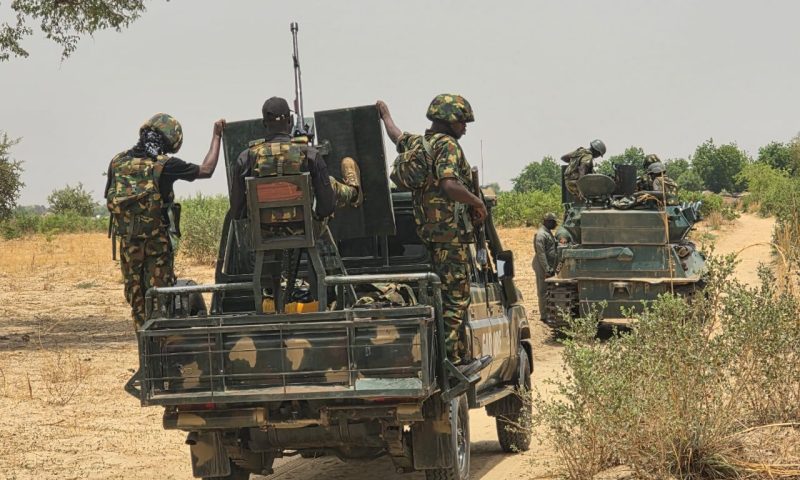
At least, six soldiers of the Nigerian Army and four members of the Civilian Joint Task Force (CJTF) were reportedly killed in an attack by suspected Islamic State West Africa Province (ISWAP) fighters in Borno State.
The claim was made by Somto Okonkwo in a post shared on his verified X account on Monday.

According to Okonkwo, the attack occurred in the early hours of Sunday, February 15, 2026, between 12 a.m. and 1 a.m., in Mandara community under Biu Local Government Area of the state.

“The attack happened this morning around 12 a.m. to 1 a.m. in Mandara under Biu LGA of Borno State,” he wrote.

Okonkwo alleged that six soldiers were killed in the assault, including a Commanding Officer (CO) and an Adjutant. He further claimed that four members of the CJTF also lost their lives during the attack.

“Six soldiers went down, including the Adjutant and the Commanding Officer. Four CJTF members were also killed,” he stated.

He accused the authorities of not being transparent about the incident.

“They will not tell you, but this happened.”

He insisted that his claim was factual.

“Go and verify. If it is a lie, I won’t drop it on this page. I swear on my life.”

As of the time of filing this report, the Nigerian Army has not issued an official statement confirming or denying the alleged attack.

In the same post, Okonkwo also raised the alarm over a separate security situation in Kwara State.

He claimed that a community identified as Sharee in Ifelodun Local Government Area was under attack.

“Kwara State is under attack right now. Share in Ifelodun LGA is currently under attack. Security operatives should do the needful,” he wrote.

There has been no official confirmation from security agencies in Kwara State regarding the alleged incident as of press time.

Rotary Applauds EFCC On Impact & Effectiveness

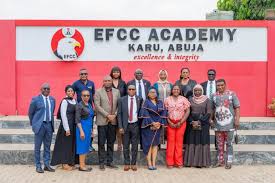
The Rotary Club of Karu, RC Karu Federal Capital Territory, FCT, District 9127, has commended the Economic and Financial Crimes Commission, EFCC, on its impact in tackling economic and financial crimes and other acts of corruption across the country.


This commendation was given by the Secretary, Rotary District 9127, Rotarian Ife James Utodio, while on a Courtesy Visit to the EFCC Academy. According to him, the EFCC has become a national agency of redemption to the extent that its “logo is a national symbol and we need to display this symbol and educate our youths and children on the need to identify and respect this and other national symbols”


He explained that “Rotary shares the same ideology with the EFCC in fighting crimes, “even in the 4-way Test was created, so many years ago, in 1932, to guide us in our dealings to work against corruption in the workplace, personal life and business”


Utodio elaborated that Rotary has been in the advocacy of trying to mould its members and the community about being straightforward, honest and truthful and the visit to the EFCC Academy, he said, was to intimate the Academy that Rotary was desirous of impacting its immediate community in collaboration with the EFCC.


Utodio outlined the club’s plans for the year which includes community health, education, ethics and civil responsibility and every area of community development. He expressed hope that the EFCC Academy will be able to educate the community at its gatherings on cybercrime and cyber protection targeting the youths and adults. He added that Rotary had plans to organize essays within secondary schools in Karu on financial crimes.


He specifically stressed that Rotary will continue to create awareness on the need for the celebration of Nigerian symbols usually done on September 30 every year. “May people don’t know this is done because the awareness is not there, we want to create that awareness, celebrate our symbols, national flag, national anthem, military logo. The EFCC logo is a national symbol, we need to display this symbol and educate our youth and school children in order to identify and respect these symbols because they represent the country”, he said.

He assured that with the mileage Rotary has globally, it will put the EFCC message across over 1.4m people.


The Ag. Commandant, Assistant Commander of the EFCC, ACE 1 Joseph Ogwiji welcomed the delegation and commended the desire of the Club to domesticate its impact and collaborate with the EFCC. He explained that the EFCC’s major essence is looking at the whole while the Rotary approaches via the community.

“The EFCC thrives on the approaches of integrity, truthfulness, accountability, transparency same as ideas mentioned by the Rotary. He added that the cardinal element in the EFCC mandate is prevention, which is a key area the international community is looking at. He stated that countries are focused on growth of their people, rather than self mobilization and aggrandizement of wealth which is the bane of the country.

Christian Association Of Nigeria Rejects Niger State Hisbah Law

The Christian Association of Nigeria (CAN), Niger State chapter has rejected the Hisbah law passed recently by the Niger State House of Assembly.
It warned that the proposed Hisbah law by the State House of Assembly indicates the segregation and discrimination of Christians in the state.
The State Chairman, Most Reverend Bulus Yohanna, while protesting the new development called on Governor Umar Bago not to assent to the Niger State Hisbah Directorates Bill, describing it as controversial.
In a statement,  he expressed concern over the bill, which was sponsored by the member representing Chanchaga Constituency, Mohammed Abubakar.
The statement read in part: “Governor Mohammed Umar Bago, we, the entire Christendom in the state wish to draw your attention to what could easily create division amongst the people you govern, and you should not sign the bill into law.
The chairman who is also the Catholic Bishop of Kontagora Diocese, asked: Why Hisbah law in Niger? What is the aim? Of what benefit is it to our people economically and socially? Do they (lawmakers) realize that Christians will not be subjected to Hisbah law?”.
Most Reverend Bulus Yohanna advised that, there is the Nigeria Police Force, Nigeria Security and Civil Defence Corps, Vigilante Groups and other recognised groups with constitutional powers to operate and called on residents irrespective of their religion, tribe or political affiliation to add their voices so that the bill does not become a law.
Federal Government Demands Investigation Into Kano Market Inferno

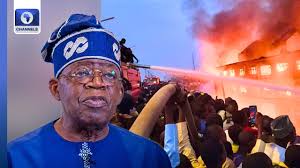
President Bola Tinubu has commiserated with traders and people of Kano State over the devastating fire outbreak at Kano’s Singer Market over the weekend.


The fire, which started on Saturday evening, raged into Sunday morning, causing significant damage to the food market.


President Tinubu, who had earlier reached out to Kano State Governor Abba Kabir Yusuf to obtain a situation report on the fire, described the incident as tragic.


The President was particularly alarmed that the latest incident came less than two weeks after another fire destroyed dozens of shops and property at the same market.


President Tinubu directed a comprehensive investigation into the causes of the market fires, which often leave traders in despair.

Afriland partners UBA on diaspora real estate investment

uba-logoAfriland Properties Plc has been named the official Real Estate Partner on the newly launched Diaspora Services Platform of United Bank for Africa Plc.

In a statement on Sunday, the firm noted that as UBA’s real estate partner, Afriland Properties Plc will provide verified property investment opportunities and institutional-grade project delivery tailored to address the common risks faced by diaspora investors in Nigeria.

The PUNCH reports that UBA launched its Diaspora Services Platform in Lagos under the theme ‘Beyond Banking: Powering the Diaspora Lifestyle’. The platform is a structured digital marketplace connecting Africans abroad to trusted service providers across banking, real estate, and lifestyle solutions.

Speaking at the launch, the Executive Director of Afriland Properties Plc, Kayode Odebiyi, noted that diaspora investors often face risks such as construction delays, cost escalations, developer credibility concerns, and challenges in oversight and management.

“Afriland is well-positioned to address these concerns through rigorous due diligence, a competence-based development framework, first-class project management, and full information transparency,” he said.

He emphasised that in Nigeria’s largely fragmented real estate market, Afriland stands out as one of the few publicly listed development companies, operating under strong corporate governance and regulatory oversight.

Also speaking at the event, the Head of Diaspora Banking at UBA Plc, Anant Rao, highlighted the strategic importance of the African diaspora to the continent’s growth.

“Africa has not fully utilised the power of its diaspora. Engaging and enabling Africans abroad will define the next phase of Africa’s growth,” he said.

With UBA’s global footprint across Africa and major international financial centres, the partnership is expected to make it easier for diaspora investors to participate in Nigeria’s real estate sector by combining trusted banking infrastructure with structured, transparent property development.

This collaboration marks a major step toward institutionalising diaspora real estate investment and strengthening confidence in Nigeria’s property market.

Capital importation jumps 380% to $6.01bn – FG

NBSNigeria’s capital importation surged to $6.01bn in the third quarter of 2025, representing a 380.16 per cent increase compared to $1.25bn recorded in the corresponding period of 2024, the National Bureau of Statistics has said.

The NBS disclosed this in its latest Nigeria Capital Importation (Q3 2025) report published on its website on Saturday. The report showed that capital inflows also rose on a quarter-on-quarter basis, climbing by 17.46 per cent from $5.12bn recorded in the second quarter of 2025 to $6.01bn in Q3.

“In Q3 2025, total capital importation into Nigeria stood at $6.01bn, higher than $1.25bn recorded in Q3 2024, indicating an increase of 380.16 per cent. In comparison to the preceding quarter, capital importation increased by 17.46 per cent from $5.12bn in Q2 2025,” the report read.

A breakdown of the data indicated that Portfolio Investment dominated inflows during the period, accounting for $4.85bn or 80.70 per cent of the total capital imported.

Other Investment followed with $864.57m, representing 14.37 per cent, while Foreign Direct Investment recorded the least with $296.25m, accounting for 4.93 per cent of total inflows.

Further details from the report showed that within Portfolio Investment, money market instruments attracted $2.95bn, while bonds accounted for $1.58bn. Equity investment under the portfolio category stood at $328.10m.

Under Foreign Direct Investment, equity inflows amounted to $281.61m, while other capital recorded $14.64m. Sectoral analysis revealed that the Banking sector attracted the highest inflow at $3.14bn, representing 52.25 per cent of total capital imported in the quarter.

The Financing sector followed with $1.86bn or 30.85 per cent, while the Production/Manufacturing sector recorded $261.35m, accounting for 4.35 per cent. Other sectors that received notable inflows included Electrical ($244.86m), Telecommunications ($208.51m), and Shares ($94.89m). Trading attracted $80.94m, while Real Estate recorded $61.07m.

Lower inflows were recorded in Agriculture ($24.67m), Information Technology Services ($11.55m), and Transport ($5.23m). Oil and Gas received $4.60m, while Construction attracted $2.88m.

Public Administration and Defence accounted for $0.35m, Brewing $0.10m, Marketing $0.06m, Arts, Entertainment and Recreation $0.04m, and Health and Social Work $0.02m.

An analysis by banks showed that Standard Chartered Bank Nigeria Limited received the highest capital inflow at $2.12bn, representing 35.17 per cent of the total. Stanbic IBTC Bank Plc followed with $1.79bn or 29.75 per cent, while Citibank Nigeria Limited recorded $561.40m, accounting for 9.33 per cent.

Access Bank Plc received $385.03m, while Rand Merchant Bank recorded $306.92m. Ecobank Nigeria Plc attracted $299.91m, and First Bank of Nigeria Plc recorded $254.29m.

Zenith Bank Plc received $94.89m, Guaranty Trust Bank Plc $80.12m, and Fidelity Bank Plc $56.25m. First City Monument Bank Plc accounted for $49.27m, while United Bank for Africa Plc received $8.39m. Sterling Bank Plc recorded $3.10m, FSDH Merchant Bank Limited $2.87m, Union Bank of Nigeria Plc $2.30m, and Titan Trust Bank Ltd $1.94m.

Polaris Bank recorded $1.73m, Wema Bank Plc $1.16m, Keystone Bank Ltd $0.22m, and Providus Bank Plc $0.16m.

By country of origin, the United Kingdom emerged as the largest source of capital inflows into Nigeria during the quarter, accounting for $2.94bn or 48.80 per cent of total capital imported. The United States followed with $950.47m, representing 15.80 per cent, while the Republic of South Africa accounted for $773.95m or 12.87 per cent.

Other notable sources included Mauritius with $451.46m and the Netherlands with $282.90m. The NBS noted in its methodology that the data were provided by the Central Bank of Nigeria and capture fresh capital entering the economy as reported by commercial banks, excluding other components of foreign direct investment, such as reinvested earnings.

The strong rebound in capital importation in Q3 suggests renewed foreign investor appetite, driven largely by short-term portfolio flows into money market instruments and bonds. However, the relatively low share of Foreign Direct Investment indicates that long-term productive capital remains modest compared to more liquid investments.

The PUNCH earlier reported that the Federal Ministry of Industry, Trade, and Investment unveiled plans to deepen trade facilitation and tighten policy execution in 2026, following a sharp rebound in capital inflows and export performance in 2025.

According to the FMITI Outlook 2026, the ministry will focus on sustaining reform momentum while strengthening implementation frameworks to translate consolidation into sustained growth, exports, and jobs.

NNPCL Expands Gas Expansion Drive With Chinese Firms

The Nigerian National Petroleum Company Limited (NNPCL) has launched a broader initiative that will increase the country’s gas development programme.

To achieve this new lofty target the Company has engaged the services of Chinese firms which will help in driving its liquefied natural gas development, spanning flare-gas-to-liquefied natural gas (LNG), floating LNG, and onshore LNG initiatives, alongside gas-fired power generation and industrial facilities utilising domestic gas feedstock.

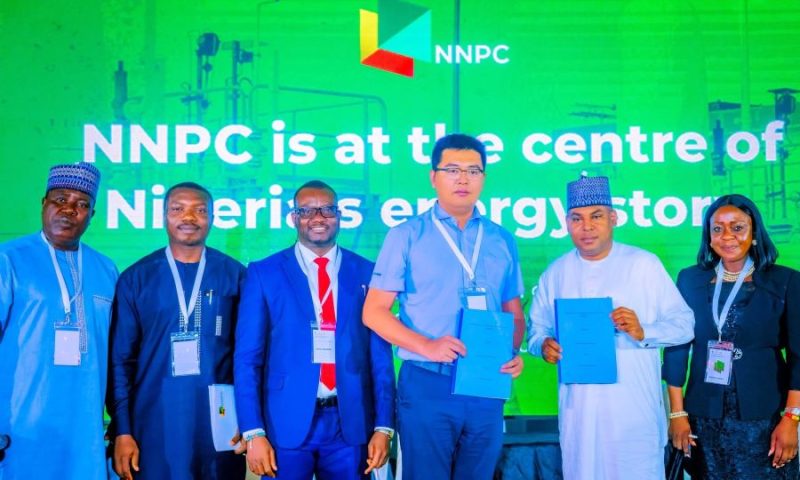
In Abuja, the NNPCL signed a tripartite Memorandum of Understanding (MoU) with China Gas Holdings Limited and Peiyang Chemical Singapore PTE Ltd. (PCCS), to establish a framework for structured collaboration across key segments of Nigeria’s natural gas value chain.

Managing Director of PCCS, Tim Tian, said the MoU was signed in the presence of its Group Chief Executive Officer, Bayo Ojulari; the Executive Vice President for Gas, Power & New Energy, Mr. Olalekan Ogunleye; and the General Manager of NNPC Gas & Power Investment Services, Mr. Ibrahim Hamza.

The MoU serves as the primary vehicle to align international technical expertise with Nigeria’s domestic energy priorities, providing a formalised governance structure to transition identified opportunities from technical feasibility through to commercial operations.

“Our role is to combine proven modular engineering with locally grounded commercial structures that make projects investible and deliverable”, the PCCS MD said, adding that fast-tracking scalable gas infrastructure will be critical to converting resources into jobs, reliable power and industrial growth.

Tiam said the signing was followed by an extensive programme of engagement by the China Gas and PCCS delegation across Nigeria’s energy sector.

He said discussions with Heirs Energies Limited examined downstream compressed natural gas (CNG) and LNG opportunities, including a 15 million standard cubic feet per day (15MMSCFD) supply discussion and project delivery considerations, while separate meetings with refinery leadership focused on the integration of gas supply into refining and industrial operations.

The Chinese delegation also held discussions with the Ministry of Finance Incorporated (MOFI) regarding financing structures relevant to large-scale gas infrastructure development.

Alongside these meetings, PCCS said the delegation conducted site inspections at operational facilities, including CNG mother stations, the NGML-NIPCO refuelling station at the Port of Lagos, and logistics bases in Shagamu operating CNG and LNG-powered heavy-duty fleets.

The visits provided direct operational insight into compression systems, daily throughput levels, fleet utilisation, and transport-linked gas demand.

“With the framework now in place, the parties will proceed with technical evaluations and structured commercial discussions in line with the agreed scope”, PCCS said.

The Company said it had a proven track record in developing and operating refineries, LNG/CNG plants, and gas-to-power projects across Africa and Southeast Asia, facilitating the bridge between international technical standards and localised project delivery.

Stanbic IBTC Bank Collaborates With Housing Finance Experts At 2026 Wemaboard Summit 

Stanbic IBTC Backs Inclusive Housing with Policy Alignment

Stanbic IBTC Bank, a subsidiary of Stanbic IBTC Holdings, has successfully concluded its strategic participation at the 2026 Wemabod Real Estate Outlook Confeence, which attracted over 1,800 participants to explore the theme ‘Unlocking land and infrastructure for inclusive housing’. The conference served as a vital platform for policy dialogue, partnership development and generation of actionable insights aimed at reshaping Nigeria’s real estate landscape.

Industry leaders and key stakeholders engaged in robust discussions pertaining to innovative strategies for affordable housing delivery; advancing infrastructure development; and promotion of sustainable economic growth. Noteworthy sessions included in-depth discussions on land acquisition processes, regulatory challenges, and financing frameworks essential to housing initiatives.

Speaking during a fireside chat, Wole Adeniyi, Chief Executive, Stanbic IBTC Bank, reaffirmed the bank’s commitment to advancing inclusive housing solutions. He stated, “Sustainable growth is impossible without inclusive assets, and inclusive housing cannot be achieved without purposefully unlocking land and aligning infrastructure from the outset. At Stanbic IBTC, we are committed to supporting frameworks that bring policy, capital, and execution together to deliver housing solutions that create dignity, opportunity, and long-term value for Nigerians.”

Tola Akinhanmi, Head of Real Estate Finance, Stanbic IBTC Capital, emphasised the importance of collaboration among institutions to deliver scalable housing solutions. “Inclusive housing cannot be achieved by any single stakeholder. It requires intentional cooperation among the government, regional development institutions, the private sector, financiers, professionals, and communities. Effectively unlocking land and strategically deploying infrastructure are essential for creating viable and scalable housing projects that align with regional economic priorities.”

Bashir Oladunni, Managing Director/Chief Executive Officer, Wemabod Limited, in his opening remarks, highlighted a significant shift needed in housing development strategies. For inclusive housing to flourish, he noted that there must be a migration from overcrowded urban centers to meticulously planned regional corridors. These corridors, facilitated by robust transportation links and coordinated land-use planning, should act as catalysts for economic activity.

The Wemabod conference undoubtedly set the stage for transformative change in Nigeria’s real estate sector; encouraging a shift towards a more equitable and sustainable approach to housing and urban development.

Stanbic IBTC is determined to be on the forefront of advancing Nigeria’s housing agenda and inclusive economic development through impactful partnerships. As Nigeria’s cities evolve, the Group focuses on empowering stakeholders, enhancing collaboration, and supporting solutions that provide accessible housing for a broader population.

2027: El-Rufai’s son gives condition to dump APC

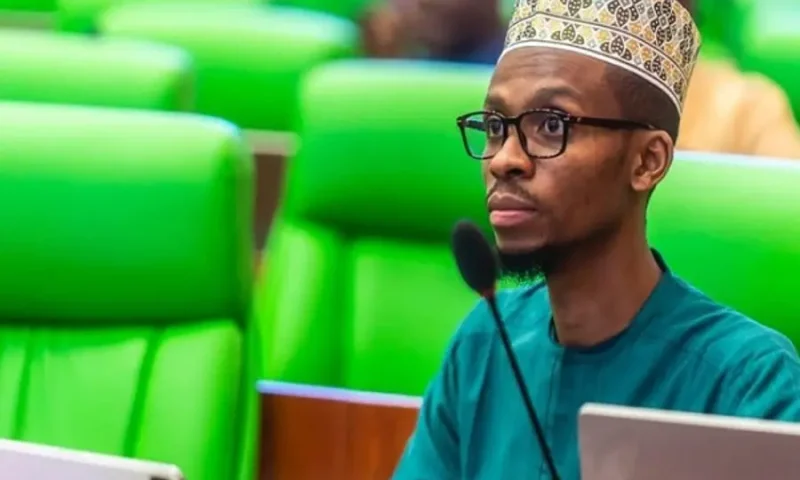
Bello El-Rufai, a federal lawmaker and son of former Kaduna State governor Nasir El-Rufai, has addressed speculation surrounding a possible defection from the All Progressives Congress (APC) ahead of the 2027 general elections.
The lawmaker reacted after a social media user urged him to leave the APC for the ADC.

In his response, Bello firmly dismissed the suggestion, emphasizing that his political decisions are not shaped by online pressure.

He referenced his electoral victory in Kaduna North as the basis of his stance, reminding critics of the mandate entrusted to him by voters and stressing that his primary loyalty is to the people he represents.

Referring to his win, he wrote: “Bello El-Rufai wins Kaduna North Rep seat with 51,052 to defeat the PDP candidate, Samaila who polled 34,808 votes. El-Rufai’s son sets a record by being the first candidate to win all 12 wards in Kaduna North.”

He maintained that the mandate belongs to the 51,052 constituents who elected him, not to voices on social media.

Bello added that only one circumstance could prompt him to leave the APC a directive from his father, whom he repeatedly referred to as “Mallam.”

“If Mallam asks me to leave the APC, I’ll resign the seat tonight. I can be non-Partisan. My people adore me,” he said.

He further challenged the social media user, saying: “I’ll send 10 million to you tonight if you can convince the 51,052 people that have me this mandate. Do you have an app to confirm?”

While reaffirming his deep respect for his father, Bello also underscored his loyalty to the Kaduna State administration led by Governor Uba Sani, whom he described as his “boss,” ruling out any act of disloyalty.

He revealed that after recently attending a public event with his father, he proceeded directly to a Kaduna APC caucus meeting alongside the Speaker and the governor, a move he described as both intentional and symbolic.

Bello also pointed to the opportunities he has gained within the APC, noting that the party has allowed him to collaborate with senior public officials, including Central Bank of Nigeria Governor Olayemi Cardoso.

Addressing political ethics, he declared: “I will never publicly go against governor and I will not plan his demise. It is called honour.”

Why I chose weakness in my battle against Wike – Gov Fubara

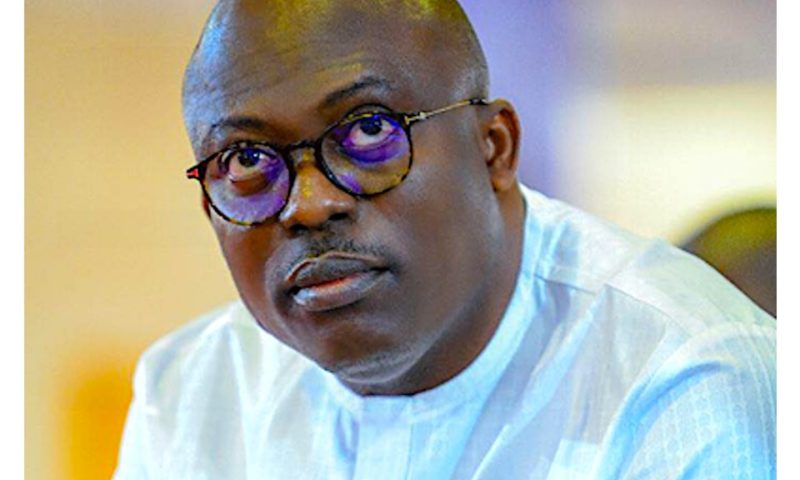
Rivers State Governor, Siminalayi Fubara, has explained his decision to adopt what some critics described as “weakness” in his political confrontation with the Minister of the Federal Capital Territory, Nyesom Wike.

According to him, it was a deliberate move aimed at preserving peace, ensuring political survival, and safeguarding broader national interests.

Fubara made the remarks on Friday in Lagos while receiving a Man of the Year award at the New Telegraph Award/Dinner Night.

During his acceptance speech, he offered an emotional reflection on the pressures of leadership, ongoing political tensions, and efforts toward reconciliation in Rivers State.

“Today for me is a very special day, and also special for everyone who has believed in me, and I know for believing in me, you have a share of special pain,” the governor said.

Speaking on the prolonged political strain that has influenced governance in the state, Fubara noted that his strategy has often been misinterpreted by observers.

He emphasized that his choices were intentional and guided by a desire to maintain stability.

“Some of these pains, some persons described them as weakness, while others say it as being strong, but I choose for a lot of reasons to be weak. Weak, because I want peace.

“Weak, because we need to survive. Weak, because I need to also protect those things that are dear, not just to me, but to our dear nation,” he said.

In a remark likely to further influence political conversations, the governor added, “weakness is a virtue. It pays at the right time.”