Dollar liquidity drives naira performance in H1’26
Nigeria’s naira held relatively firm in the first half of the year as stronger dollar liquidity, rising external reserves and improved crude oil production helped stabilize the foreign exchange market, even as inflation risks and geopolitical uncertainty continue to cloud the outlook.

Data from Nigeria’s official foreign exchange market showed the naira trading at around ₦1,380 per U.S. dollar, while the International Monetary Fund has said the currency remains undervalued by 25.6% despite its recent recovery. Speaking in a television interview, Bankole Oduanya, treasury chief dealer at Polaris Bank, said recent market dynamics suggest the local currency is benefiting from a more liquid and tightly managed FX environment.

According to Oduanya, the naira’s recent stability is broadly in line with earlier market expectations, although the outlook remains highly sensitive to developments in global oil markets, especially tensions in the Middle East. He said persistent hostilities involving Iran could keep crude prices elevated, potentially pushing Brent back toward $80 a barrel in the near term and even creating the possibility of a move toward $100 within weeks.

For Nigeria, a higher oil price environment presents a mixed picture. On one hand, it strengthens dollar inflows, boosts government revenues and supports reserve accumulation. On the other, it raises domestic energy costs and could reignite inflationary pressures in an economy still adjusting to market-based fuel pricing.

Oduanya said Nigeria’s external reserves remain robust and could continue to rise through the third quarter. He noted that reserves have already moved beyond $51.7 billion and said another $2 billion increase by the end of September is possible if current trends persist. That view is also supported by signs of stronger crude production, with Nigeria increasingly meeting its OPEC quota after a prolonged period of underperformance.

He pointed to recent OPEC data showing June crude output of 1.56 million barrels per day, describing it as a positive signal for the country’s balance of payments and investor confidence. He also cited renewed investment in Nigeria’s oil sector, including offshore activity and fresh capital commitments from major players such as ExxonMobil, as evidence that confidence is gradually returning.

Still, Oduanya cautioned that improvements in oil output and pricing do not come without domestic costs. While the Ministry of Finance stands to benefit from stronger revenue and liquidity, consumers are likely to face higher prices for unsubsidized petroleum products. That in turn could feed into transport and food prices, pushing inflation higher after a recent moderation.

He warned that inflation, which he cited at 16.9%, could climb back toward 20% as energy costs ripple through the broader economy. Food remains the largest component of Nigeria’s inflation basket, and higher fuel prices could quickly worsen supply chain and distribution costs. Markets, he said, are already beginning to price in those risks.

That inflation concern is also showing up in fixed-income markets. Oduanya noted that recent Nigerian Treasury Bill auctions cleared at 17.3% and 17.7%, and said rates could rise to 18% in the coming weeks. Bond yields, he added, may move toward 18.5% to 19% as investors demand stronger returns to compensate for elevated inflation and higher operating costs.

On the currency market, however, he painted a more constructive picture. Oduanya described the FX market as “very liquid” and said daily turnover remains substantial. He characterized the current regime as a managed float, with the naira largely trading within a ₦1,350 to ₦1,390 range. According to him, the Central Bank of Nigeria has remained active on both sides of the market, buying dollars when the naira strengthens too much and selling when pressure builds.

That approach, he said, has helped reduce volatility and eliminate the extreme market dislocations seen previously, when the spread between official and parallel market rates widened sharply. He said the gap has narrowed significantly, with the alternative market now trading only around ₦15 away from the interbank rate, suggesting improved price discovery and better access to foreign exchange.

Oduanya also argued that speculative pressure against the naira has eased materially. He said many customers now buy foreign exchange only when needed, rather than front-loading demand on expectations of further devaluation. In his view, the market has become more functional, with FX generally available in the ₦1,350 to ₦1,380 range.

Looking ahead, he said the naira could strengthen further once political and geopolitical risk premiums begin to fade, potentially by early next year. He suggested the currency could appreciate by another ₦200 from current levels, broadly aligning with the IMF’s assessment that the naira is still undervalued.

Foreign direct investment could also become a more important support over the medium term. Oduanya cited expected inflows tied to multinational oil companies and corporate expansion plans, including investment activity linked to major industrial transactions. Over the next 24 to 36 months, he said, those flows could help the naira find a more appropriate valuation.

Even so, he acknowledged that Nigeria still has significant work to do in diversifying FX inflows away from crude. Non-oil exports remain underdeveloped, while sectors such as gas, fertilizer and agriculture have yet to reach their full export potential. Domestic demand for food remains strong, limiting the extent to which agricultural output can meaningfully contribute to foreign exchange earnings in the near term.

On policy, Oduanya said the Central Bank and the broader reform agenda deserve credit for helping stabilize both exchange rates and interest rates. He described the current administration and monetary authorities as reform-minded and pointed to steps aimed at improving market infrastructure and investor participation, including efforts to accommodate foreign institutional investors in Nigeria’s capital markets.

He also noted that FX inflows tend to be cyclical, with notable jumps and dips across different quarters. While monthly and annual inflow data have shown declines, he said such movements are not unusual and could reverse later in the year, especially if Nigeria returns to international debt markets or benefits from seasonal funding flows.

For now, the naira’s H1 performance appears to rest on a combination of stronger dollar liquidity, active central bank management and improving oil-sector fundamentals. The bigger question for investors is whether those gains can be sustained if inflation accelerates and global oil markets become more volatile.

As Nigeria navigates that balance, the naira may remain supported in the near term — but the path ahead will likely depend on whether reserve growth, investor inflows and reforms can outweigh the inflationary pressure building beneath the surface.

Oando Delivers Strong Annual Report, Posting N204.8 Billion In Profit

Indigenous oil Company Oando Plc, has announced one of its strongest annual results to date, disclosing ₦204.8 billion in profit after tax and delivering a major uplift across production and trading volumes in its audited Full Year 2025 financial results.
Oando, said the year marked a decisive shift from acquisition-led expansion to full operational execution following the integration of the Nigerian Agip Oil Company Joint Venture assets.

The firm’s average daily production rose 32% to 32,482 barrels of oil equivalent per day (boepd), driven by stronger crude oil, gas and Natural Gas Liquids (NGL) output. The company credited improved facility uptime, the restoration of shut-in wells, enhanced flow assurance, and targeted infrastructure upgrades across its operated assets.


A standout milestone was the 715 per cent surge in NGL production, following the revamp of its processing plant. The company also completed and brought onstream the Obiafu-44 gas-condensate well, its first operated development well following the assumption of operatorship, while maintaining zero fatalities, zero Lost-Time Injuries (LTIs) and a Total Recordable Incident Rate (TRIR) of 0.05.

Oando generated ₦258.3 billion in cash from operations and closed the year with ₦422.9 billion in cash and cash equivalents, up 172 per cent from 2024. The company also increased financial flexibility by upsizing its $375 million Reserve-Based Lending (RBL2) facility.

Trading volumes rose sharply: crude oil trading volumes up 24% to 25.7 million barrels. Crude oil production rose by 36 per cent, gas production increased by 24 per cent, and NGL production grew by 715 per cent.

The trading division reduced exposure to PMS imports and shifted toward higher-margin crude and gas opportunities, improving commercial resilience and integration with upstream operations.

Oando’s Group CEO, Wale Tinubu, said the performance represents a milestone in the company’s evolution. He stated that FY2025 marked Oando’s first full year of operational execution following its acquisition of the NAOC JV assets.

“Our focus shifted to operatorship, operational excellence, and value realisation across the enlarged portfolio. Improved uptime and stronger output across crude oil, gas and NGLs resulted in a 32 per cent increase in production,” he said.

Tinubu added that Oando strengthened asset integrity, enhanced security across operating areas and stabilised its expanded asset base.

Oando’s results come amid a broader transformation in Nigeria’s upstream sector, where indigenous companies are increasingly acquiring and optimising assets divested by international oil majors.

Its statement on the 2025 results highlights peers: Seplat Energy ₦4.135 trillion ($2.726 billion) in revenue and 131,506 boepd, reflecting the first full-year contribution from its Mobil Producing Nigeria Unlimited (MPNU) acquisition. Aradel Holdings posted ₦699.4 billion in revenue, up 20 per cent.

Together with Oando’s performance, these results signal a new era in which Nigerian operators are not only acquiring world-class assets but also unlocking long-term value from them.

Oando expects production to climb to 40,000–50,000 boepd in 2026, supported by a focused development programme across OMLs 60–63, continued production optimisation, planned $90–100 million capital expenditure, and trading volumes rising to 30–35 million barrels.

The Company also plans to expand its clean energy initiatives, including electric buses, recycling projects, and gas-to-power developments.

It said these ambitions align with the International Energy Agency’s projections for resilient global investment in natural gas and upstream infrastructure as countries prioritise energy security and diversify supply.

With an expanded upstream portfolio, improved financial flexibility, and a disciplined execution strategy, Oando says it is positioned to accelerate growth and advance its ambition of becoming Africa’s leading integrated energy company.

Lagos Task Force impounds 309 motorcycles, dismantles illegal structures on Lagos-Badagry Highway

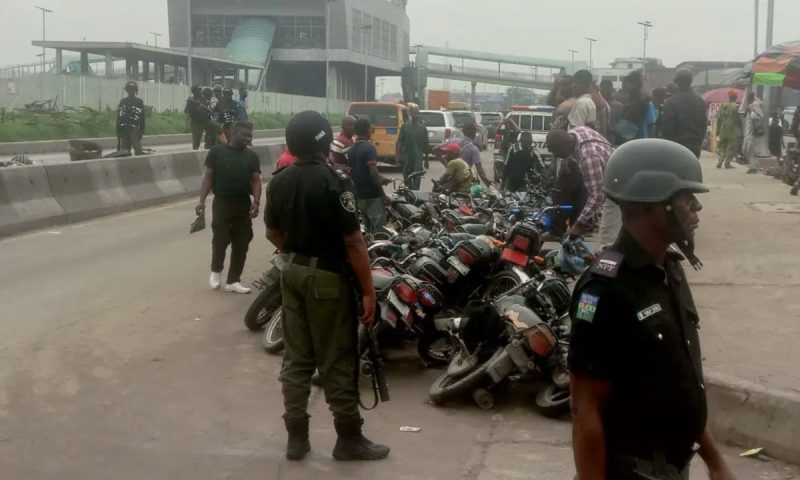
Lagos State Task Force has impounded 309 commercial motorcycles during a coordinated enforcement operation along the Lagos-Badagry Expressway as part of efforts to improve traffic flow, restore order and enhance security along the busy transport corridor.
The exercise forms part of the Lagos State Government’s ongoing crackdown on commercial motorcycle operators plying restricted routes, as authorities intensify the enforcement of traffic, environmental and public safety regulations across the state.

Carried out in collaboration with the Lagos State Ministry of the Environment and Water Resources and with support from the Lagos State Police Command, the operation also targeted illegal structures, street trading and other environmental violations around the Alaba Rago International Market and adjoining communities.

According to the agency’s spokesperson, Abdulraheem Gbadeyan, the exercise was designed to strengthen public safety and deny criminal elements the opportunity to operate under the guise of commercial activities.

He said the operation aligns with the state government’s THEMES Plus Agenda and complements ongoing security initiatives by the Lagos State Police Command aimed at combating kidnapping, banditry and other criminal activities.

Gbadeyan disclosed that enforcement teams covered several locations along the ECOWAS Road and Lagos-Badagry Expressway, including Orile-Iganmu Bus Stop, Suuru-Alaba Bus Stop, Mile 2 Underbridge, Mazamaza Bus Stop, Festac First Gate, Iyana-Ira, Abule-Ado, Alakija Bus Stop, Iyana-Iba, Alaba Rago, Old Ojo Road and Okoko Bus Stop.

He confirmed that a total of 309 commercial motorcycles were seized during the operation for violating the state’s transport regulations.

The enforcement drive also reinforces the government’s implementation of restrictions on commercial motorcycles operating on designated highways and other prohibited routes under the Lagos State Transport Sector Reform Law, 2018. State authorities have consistently maintained that the policy is intended to improve road safety, reduce traffic congestion and curb crimes linked to motorcycle operations on restricted roads.

Beyond the motorcycle crackdown, officials dismantled illegal kiosks, makeshift stalls, shanties and unauthorised wooden structures, while clearing abandoned household items, stray domestic animals, indiscriminately displayed building materials and other obstructions encroaching on public spaces.

The agency said the operation significantly improved traffic movement, reclaimed public spaces and enhanced environmental sanitation along the affected corridor.

Gbadeyan added that all impounded motorcycles would undergo the legal forfeiture process in line with the provisions of the Lagos State Transport Sector Reform Law, 2018, stressing that similar enforcement exercises would continue across the state until full compliance with existing regulations is achieved.

Speaking after the operation, Chairman of the Lagos State Task Force, Adetayo Akerele, described the level of disorder and indiscriminate development along the corridor as deeply concerning.

He noted that illegal ticketing, street trading and the activities of commercial motorcycle operators on restricted routes had contributed to traffic congestion, environmental degradation and an atmosphere that encouraged criminal activities.

“No stone will be left unturned in our determination to restore sanity. It is high time criminal elements operating in Lagos State desist from these unlawful activities or relocate.

“We will continue to enforce the law without fear or favour in order to guarantee a safer, cleaner and more orderly Lagos for everyone,” Akerele said.

Nigeria’s oil output hits 74-month high, beats OPEC quota

Crude oilNigeria’s crude oil production has climbed to its highest level in more than six years, with the country exceeding its Organisation of the Petroleum Exporting Countries production quota for the fourth consecutive month, buoyed by improved operational stability and fewer disruptions to oil infrastructure.
Latest figures released on Sunday in Abuja by the Nigerian Upstream Petroleum Regulatory Commission showed that the country’s average crude oil production rose to 1.56 million barrels per day in June 2026, while condensate output stood at 0.18 million barrels per day, bringing total crude oil and condensate production to 1,735,398 barrels per day.

The production level represents 104 per cent of Nigeria’s 1.5 million barrels per day crude oil production quota approved by OPEC and marks the country’s highest crude oil output since April 2020, making it a 74-month high.

The figures, contained in the commission’s latest production report and conveyed in a statement issued by its Head of Media and Corporate Communications, Eniola Akinkuotu, showed that June also marked the fourth consecutive month of production growth, reinforcing the recovery of Nigeria’s upstream oil sector after years of production losses caused by crude theft, pipeline vandalism and operational disruptions.

The statement read, “Nigeria’s crude oil and condensate production soared to an average of 1,735,398 barrels per day in the month of June 2026, representing positive growth for a 4th consecutive month. In the month under review, crude oil production hit 1.56mbpd while 0.18mbpd of condensates was produced. This means Nigeria met 104 per cent of the 1.5mbpd crude oil production quota set by the Organisation of Petroleum Exporting Countries.”

According to the commission, total crude oil and condensate production increased from 1.700 million barrels per day recorded in May to 1.735 million barrels per day in June, representing a 2.2 per cent month-on-month increase.

The report showed that combined production had earlier stood at 1.483 million barrels per day in February before rising steadily to 1.564 million barrels per day in March, 1.663 million barrels per day in April, 1.701 million barrels per day in May, and 1.735 million barrels per day in June.

The NUPRC attributed the improved performance to stable production activities across major oil-producing assets and the absence of significant pipeline outages during the review period.

“The improved performance was primarily driven by stable production operations across most producing assets and the absence of any major pipeline outages during the period under review.

“This enhanced operational stability supported improved production uptime and crude evacuation efficiency. Although a limited number of assets experienced short-duration operational shutdowns, the overall impact on national production was minimal.

“In addition, scheduled turnaround maintenance activities were effectively managed and completed without significant disruption to production operations.

“The sustained growth recorded in June reflects the continued commitment of operators and industry stakeholders towards improving operational efficiency, maintaining asset integrity, and enhancing production reliability across the Nigerian upstream petroleum sector,” the statement added.

The commission also disclosed that Nigeria’s highest daily combined crude oil and condensate production during the month reached 1.89 million barrels per day, while the lowest daily production stood at 1.57 million barrels per day.

The peak production level underscores Nigeria’s growing potential to achieve the Federal Government’s medium-term ambition of producing two million barrels of oil per day, a target that has remained elusive for years due to insecurity in oil-producing communities, crude theft and ageing infrastructure.

An analysis of production by export terminals showed that Bonny Terminal retained its position as Nigeria’s highest-producing terminal, recording an average daily production of 318,280 barrels, compared with 293,880 barrels in May.

Forcados Terminal ranked second with 306,360 barrels per day, up from 289,900 barrels recorded in the previous month.

However, production at Qua Iboe Terminal declined to 164,730 barrels per day from 173,360 barrels per day in May.

Similarly, Escravos Terminal recorded a slight increase to 138,030 barrels per day, compared with 135,470 barrels per day in the previous month, while Bonga Terminal maintained steady output, producing 103,660 barrels per day, slightly above the 102,540 barrels per day recorded in May.

The sustained production growth is expected to strengthen Nigeria’s oil export earnings, improve foreign exchange inflows and provide additional fiscal revenues for the Federal Government at a time authorities are seeking to increase crude output and attract fresh investment into the upstream sector.

Nigeria has struggled in recent years to meet its OPEC production allocation because of widespread crude oil theft, pipeline vandalism, underinvestment, and prolonged operational challenges. However, reforms introduced under the Petroleum Industry Act, enhanced security around critical oil infrastructure, and closer collaboration between government agencies and oil producers have contributed to the gradual recovery in production.

Maintaining production above the OPEC quota and sustaining operational stability will be critical if Nigeria is to realise its target of producing two million barrels per day and maximise the benefits of favourable global oil market conditions.

Naira weakens 0.85% to close at N1,381.70/$

Naira weakens 0.85% to close at N1,381.70/$The Nigerian naira experienced a demanding week at the official foreign exchange window, extending its losses to close at its weakest weekly level against the United States dollar despite recent regulatory interventions by the Central Bank of Nigeria.
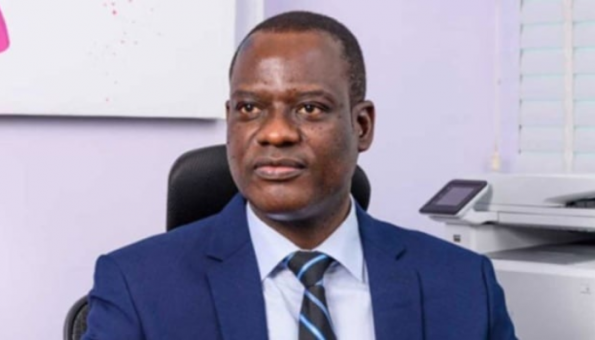
According to official data released by the CBN, the local currency closed the trading week on Friday, 10 July, at N1,381.70/$1. This marks a 0.85 per cent week-on-week depreciation, representing an N11.70 drop compared to the N1,370.00/$1 closing rate recorded the previous Friday, 3 July.

The local currency faced persistent pressure from market forces, closing lower on four of the five available trading days. The week started with a marginal slip on Monday, 6 July, as the naira fell by N1 to close at N1,371.00/$1.

Selling pressure accelerated on Tuesday, 7 July, dragging the currency down by another N8 to end the day at N1,379.00/$1.

The slide temporarily paused on Wednesday, 8 July, when the naira held steady at N1,379.00/$1 despite highly volatile intraday trading that saw rates swing between N1,376/$1 and N1,387/$1.

However, a slight fractional drop of N0.25 on Thursday brought the closing rate to N1,379.25/$1, and the downward trend culminated in a final N2.45 loss on Friday, 10 July, leaving the naira at its lowest point of the week.

Data from the Nigerian Foreign Exchange Market highlighted highly fluid trading volumes throughout the week. Market activity initially surged, with total market turnover rising from $220.18m on Monday to a mid-week peak of $504.67m on Wednesday. Liquidity began to cool off by Thursday, dropping to $298.92m, while Friday’s final turnover figures were not reflected in the central bank’s data.

A similar trend played out in the interbank market, where interbank turnover expanded drastically from $54.18m on Monday to $208.09m on Wednesday, before steadily easing back down to close at $71.04m by Friday afternoon.

This latest volatility comes amid ongoing efforts by the Yemi Cardoso-led CBN to stabilise the foreign exchange market through interest rate hikes and the clearance of verified FX backlogs. While the apex bank’s unification of the foreign exchange windows aimed to eliminate arbitrage and attract foreign portfolio investments, seasonal demand for import clearances and foreign tuition payments continues to exert immense pressure on the local currency.

Financial analysts note that while mid-week liquidity injections provided a brief cushion, the consistent daily slide indicates that aggregate demand for international payments continues to outpace available dollar supplies in the official window, requiring bigger structural changes to boost non-oil export revenues.

FG borrows N5tn from bond market in six months

The Federal Government raised N5.08tn from the domestic bond market in the first six months of 2026, marking a 77.8 per cent increase from the N2.86tn raised during the corresponding period of 2025, an analysis of Debt Management Office auction results by The PUNCH has shown.
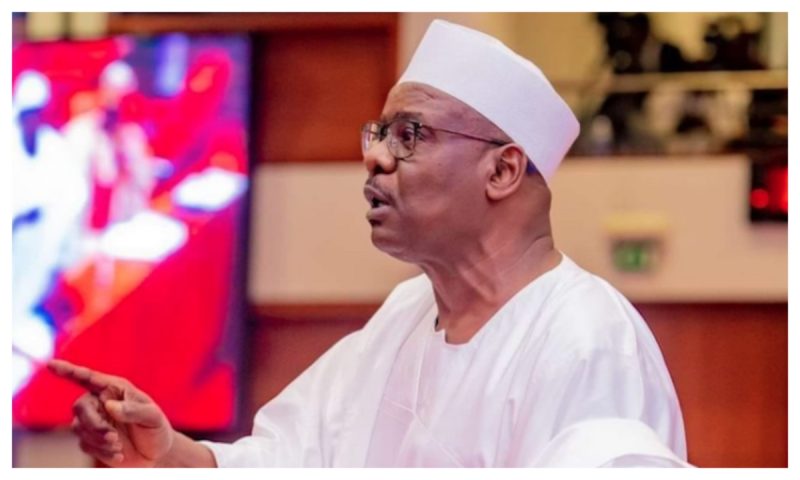
The increase came despite a decline in borrowing costs, with average marginal rates easing compared with last year, even as investor appetite remained strong, with subscriptions exceeding N9tn over the six-month period.

The DMO auction results showed that the Federal Government allotted N5.08tn worth of bonds between January and June 2026, compared with N2.86tn allotted during the same period in 2025, representing an increase of N2.22tn. The figures include both competitive and non-competitive allotments disclosed in the auction results.

The government also significantly increased the amount of bonds offered to investors during the review period. Between January and June 2026, it offered N4.95tn worth of bonds, compared with N1.85tn in the corresponding period of 2025. This represents an increase of N3.10tn, or 167.6 per cent, reflecting a more aggressive domestic borrowing programme.

Investor demand also strengthened in nominal terms. Total subscriptions rose to N9.04tn in the first half of 2026 from N4.37tn a year earlier, an increase of N4.67tn or about 107 per cent.

However, demand moderated when measured against the size of the government’s offer. While subscriptions were equivalent to 236.1 per cent of the amount offered in the first half of 2025, the ratio declined to 182.6 per cent in the corresponding period of 2026. This suggests that although investors committed substantially more money, the increase did not keep pace with the sharp expansion in borrowing requirements.

A further analysis of the auction data showed that investors submitted 2,823 bids across all bond auctions in the first six months of 2026, up from 1,621 bids in the corresponding period of 2025.

Successful bids also increased from 926 to 1,449 over the period. However, the proportion of successful bids declined to 51.3 per cent in 2026 from 57.1 per cent in 2025, indicating that the DMO became more selective in accepting bids despite stronger participation.

The government’s monthly borrowing profile showed significant differences across the six months. January recorded the highest borrowing during the review period, with N1.54tn allotted to competitive investors and total allotments of about N1.68tn after including non-competitive allocations, compared with N601.04bn in January 2025.

June followed with total allotments of N1.22tn, compared with just N100bn during the corresponding month of 2025, making it one of the strongest months for domestic debt issuance.

May also witnessed a sharp increase, with N614.51bn allotted through competitive bids and total allotments rising to N894.51bn after the inclusion of a N280bn non-competitive allocation for the 16.2499 per cent FGN April 2037 bond. This compares with N300.69bn raised in May 2025.

Borrowing was relatively lower in February and April. The DMO allotted N524.28bn in February 2026, down from N910.39bn in February 2025, while April allotments fell to N276.79bn from N520.90bn recorded during the corresponding period last year.

March was the only other month to record an increase, with allotments rising to N485.50bn from N423.68bn.

The data also point to a decline in the government’s domestic borrowing costs. Marginal rates across the various bond instruments ranged between 15.50 per cent and 18.35 per cent during the first half of 2026. In comparison, marginal rates ranged from 17.75 per cent to 22.60 per cent during the corresponding period of 2025.

The simple average marginal rate across all instruments declined to about 16.78 per cent in the first six months of 2026 from about 19.84 per cent in the same period of 2025. Similarly, the allotment-weighted average marginal rate fell to about 17.29 per cent from about 20.14 per cent.

The 22.60 per cent FGN January 2035 bond remained the government’s largest funding instrument during the review period. Across four reopening auctions held between January and June 2026, the bond attracted subscriptions of about N2.30tn and accounted for approximately N1.52tn in allotments.

The 16.2499 per cent FGN April 2037 bond also recorded strong investor interest. Offered only in May and June, the 20-year instrument attracted subscriptions exceeding N1.24tn and total allotments of about N1.38tn, boosted by the N280bn non-competitive allocation recorded in May.

Among shorter-tenor instruments, the 19.89 per cent FGN May 2033 bond attracted N1.34tn in subscriptions and N541.34bn in allotments during its three reopening auctions in February and March 2026.

In contrast, the 2025 auction data showed that the 19.89 per cent FGN May 2033 bond accounted for the largest share of government borrowing during the first half of the year, raising N1.07tn, while the 18.50 per cent FGN February 2031 bond followed with N758.90bn.

The figures indicate that while the Federal Government significantly expanded domestic borrowing during the first half of 2026, investor demand remained robust despite the larger supply of securities.

The PUNCH earlier reported that foreign investors channelled $3.23bn into Nigerian bonds in the first quarter of 2026, highlighting a strong appetite for the country’s fixed-income securities amid elevated interest rates and improving confidence in the foreign exchange market

Data from the capital importation report released by the National Bureau of Statistics showed that bond investments accounted for 32.71 per cent of the $9.86bn portfolio investments recorded during the quarter and 31.10 per cent of the total $10.37bn capital imported into the country.

The bond inflow represented a 267.67 per cent increase from the $877.41m recorded in the corresponding period of 2025 and a 63.76 per cent rise from the $1.97bn attracted in the preceding quarter.

The sharp increase reflects the attractiveness of Nigerian sovereign debt instruments, which have offered among the highest yields in emerging and frontier markets following the Central Bank of Nigeria’s aggressive monetary-tightening cycle over the past two years.

Since assuming office in September 2023, CBN Governor Olayemi Cardoso has led the Monetary Policy Committee through one of the most aggressive tightening cycles in Nigeria’s history, raising the Monetary Policy Rate from 18.75 per cent to a peak of 27.50 per cent through a series of hikes in 2024 aimed at curbing inflation, stabilising the naira and restoring investor confidence.

After holding the benchmark rate at 27.50 per cent throughout most of 2025, the MPC began a cautious easing cycle in September 2025, cutting the MPR by 50 basis points to 27.00 per cent as inflation moderated for several consecutive months, before lowering it further to 26.50 per cent in early 2026.

At its most recent 305th meeting in May 2026, the MPC opted to retain the MPR at 26.50 per cent and leave all other key policy parameters unchanged, citing renewed inflationary pressures linked to global energy market disruptions while seeking to preserve the macroeconomic gains achieved through earlier tightening measures.

A renowned economist and Chief Executive Officer of the Centre for the Promotion of Private Enterprise, Dr Muda Yusuf, recently warned that rising Federal Government borrowing from the domestic financial system is increasingly crowding out the private sector, as banks favour low-risk, high-yield government securities over lending to businesses.

“The increase in credit to the government can be attributed to a number of factors. The government has been raising money to finance the deficit. So this financing of the deficit has led to the issuance of bonds, treasury bills, and so on, which banks also buy. The rate is also very attractive, and it’s more attractive to them than lending to the real sector,” Yusuf said. He further urged the government to moderate its borrowing.

In a separate conversation, he also noted that while high yields on government securities had helped draw portfolio investors, they were also increasing the burden of public debt.

Yusuf told The PUNCH that the interest rates offered on government bonds and treasury instruments were excessively high and required coordination between fiscal and monetary authorities to moderate.

“It’s helping us to attract portfolio investment, but it’s creating a huge burden of debt service. We have to balance those two objectives. We have to improve portfolio flows, but it’s costing us a lot in terms of our domestic borrowing and debt-servicing costs,” he said.

The economist argued that Nigeria should reduce its reliance on debt-funded public projects by expanding public-private partnerships. According to him, governments should identify commercially viable infrastructure projects and offer them to private investors rather than financing them through additional borrowing.

Market analysts predict that any significant reversal in Federal Government bond yields is highly unlikely to occur before the final quarter of 2026, which means Nigerian fixed-income investors should brace for a prolonged period of high interest rates.

According to the latest macroeconomic analysis from Coronation Asset Management, a combination of sticky inflation, aggressive monetary policy, and heightened fiscal pressures will keep yields firmly elevated throughout the upcoming quarter.

Rescue 79 held captive in Borno as you did in Oyo – Ndume tells military

Senator Mohammed Ali Ndume, representing Borno South, has appealed to the Nigerian military and other security agencies to sustain ongoing rescue operations in Southern Borno, urging them to focus on securing the release of dozens of people still being held captive by kidnappers.

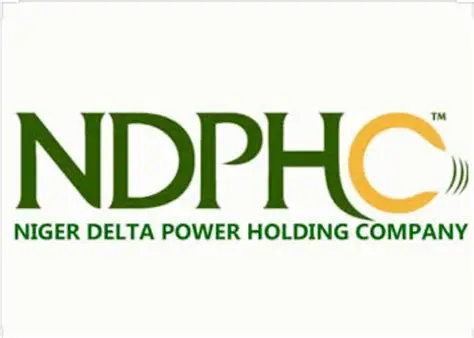
Speaking to Channels TV on Friday, after the rescue of abducted victims from Oyo State, Senator Ndume said he had expected more details from the military about the operation but understood that some information relating to military operations and equipment could not be made public.

The senator said 42 people from Mussa in Borno South Senatorial District remain in captivity, alongside about 37 people from Lassa who were recently abducted. He added that several victims from Moushi and travellers kidnapped along the Buratai route were also yet to be rescued.

“I want to use this opportunity to appeal to the military to keep their attention on my senatorial district and help us get these people back. The parents are traumatized, especially those from Mussa because there are small children among them,” Ndume said.

According to him, those still in captivity include children, students from Lassa who were preparing for their NECO examinations, and other adults abducted in separate incidents.

Despite the security challenges, the senator expressed confidence in the capabilities of the Nigerian Armed Forces and other security agencies.

“I have confidence in the Nigerian security agencies. All they need is encouragement, training, equipment, aviation and motivation,” he said.

Ndume commended the security forces for the recent rescue operation, saying about eight suspected kidnappers were neutralized, while others were arrested, leading to the safe rescue of the abducted children.

“The children are back safely. Those responsible for the abduction lost about eight of their members during the operation, while some were captured. I believe this will provide useful intelligence on their operations and help address the security challenge,” he said.

The senator called on the military to build on the success of the operation by intensifying efforts to secure the release of the remaining captives in Mussa, Lassa, Muoshi and along the Buratai axis.

FCCPC

The Federal High Court in Abuja has affirmed the powers of the Federal Competition and Consumer Protection Commission to investigate consumer complaints over airline ticket pricing, ruling that the commission’s authority to conduct investigations is distinct from its statutory power to regulate or fix prices.

The judgment is a major victory for the consumer protection agency in its legal battle with Air Peace Limited, which had challenged the commission’s authority to investigate complaints over the airline’s fare increases. The development was disclosed in a statement issued on Friday by the Director of Corporate Affairs of the FCCPC, Ondaje Ijagwu.

According to the commission, Justice B.F.M. Nyako, in a judgment delivered on June 29, dismissed Air Peace’s suit challenging the FCCPC’s authority to investigate complaints relating to alleged exploitative airfare pricing.

The ruling follows an earlier judgment delivered in April 2026 by Justice James Omotosho, who also dismissed a separate suit filed by Air Peace questioning the Commission’s powers to investigate consumer complaints and issue summons in the discharge of its statutory responsibilities.

The statement read, “The Abuja Federal High Court has affirmed the statutory authority of the Federal Competition and Consumer Protection Commission to investigate consumer complaints relating to the pricing of airline tickets. The court clarified that the commission’s investigative powers under the Federal Competition and Consumer Protection Act (FCCPA, 2018) are distinct from the exercise of the power to regulate prices.”

The latest case stemmed from a suit instituted by Air Peace in 2025 after the FCCPC requested information from the airline in January 2025 following widespread consumer complaints over sharp increases in ticket prices on some domestic routes during the 2024 Christmas travel season.

Air Peace had argued before the court that the FCCPC lacked the legal authority to inquire into airfare pricing unless the President first activated the price regulation provisions contained in the Federal Competition and Consumer Protection Act, 2018.

The airline consequently sought declarations that the Commission had no authority to investigate airfare pricing and asked the court to issue perpetual orders restraining the agency from conducting such investigations.

However, Justice Nyako rejected the airline’s arguments, holding that the FCCPC acted within the powers conferred on it under Sections 17, 32 and 33 of the Federal Competition and Consumer Protection Act when it requested information from the airline in response to consumer complaints.

The court ruled that the Commission’s request formed part of a lawful fact-finding exercise and did not amount to price regulation or the exercise of the statutory price control powers provided under Sections 88, 89 and 90 of the Act.

According to the judgment, the FCCPC neither directed Air Peace to reduce its fares nor prescribed a pricing formula, fixed ticket prices, or declared the airline’s pricing unlawful.

The court further held that accepting Air Peace’s interpretation of the law would effectively strip the commission of its ability to investigate complaints relating to pricing unless the President had first invoked the price regulation provisions of the Act.

Justice Nyako held that such an interpretation would undermine the commission’s statutory investigative mandate and could not have been the intention of the National Assembly when enacting the legislation.

Reacting to the judgment, the Executive Vice Chairman and Chief Executive Officer of the FCCPC, Tunji Bello, described the decision as another significant judicial endorsement of the Commission’s responsibility to protect consumers and promote fair competition.


“The court has again affirmed an important principle under the Federal Competition and Consumer Protection Act. Investigating consumer complaints is fundamentally different from regulating prices. The FCCPC neither sought to fix nor regulate Air Peace’s fares. It simply exercised its lawful authority to obtain information as part of an investigation into a matter of legitimate consumer concern.

“An investigation is a fact-finding process. It is neither a finding of liability nor an enforcement action. Every responsible regulator must be able to inquire into credible complaints affecting consumers and markets without those inquiries being misconstrued as findings of liability, enforcement action, or price regulation,” he said.

He reaffirmed the commission’s commitment to exercising its statutory responsibilities fairly, transparently and strictly in accordance with the rule of law.

The FCCPC has in recent years intensified enforcement of the Federal Competition and Consumer Protection Act, investigating complaints across several sectors, including aviation, telecommunications, digital services, consumer goods and financial services.

Earlier this week, President Bola Tinubu directed the commission to investigate major global technology companies and Generative Artificial Intelligence platforms over allegations of anti-competitive practices and the unlawful use of content belonging to Nigerian media organisations.

The commission has maintained that its mandate is to protect consumers against exploitative and unfair market practices, promote competition, and investigate complaints where there are reasonable grounds to believe that consumers or competition may be adversely affected.

The dispute with Air Peace arose after many air travellers complained of steep increases in domestic airfares during the peak travel period in December 2024, prompting the commission to seek information from the airline as part of its statutory investigation.

NDPHC begins rehabilitation of 225MW Gbarain power plant

The Niger Delta Power Holding Company has commenced the rehabilitation of the 225-megawatt Gbarain Power Plant in Bayelsa State, more than five years after a fire destroyed a critical component of the facility and stalled its planned commissioning.
The company formally handed over the rehabilitation project to a joint venture between TILT Energy Limited and Schneider Electric for the replacement of the plant’s burnt Power Control Module, a key component required for the operation of the gas-fired power station.

The development was disclosed in a statement issued on Friday by the Head of Corporate Communication and External Relations of NDPHC, Nazo Agim.

Speaking during the handover ceremony, the General Manager, Generation Projects, Ginsau Idris, said the replacement of the Power Control Module had become unavoidable because the original equipment was extensively damaged by fire.

He expressed optimism that the contractors would deliver the project successfully, noting that all stakeholders clearly understood their responsibilities and were committed to restoring the facility within the agreed timeline.

“The Power Control Module was extensively damaged by fire, making its replacement imperative, but we are confident in the contractors. All parties clearly understand their responsibilities and are committed to delivering the project successfully and within schedule.”

Also speaking, the Executive Director, Generation, Abdullahi Kassim, described the November 2020 fire as one of the biggest setbacks suffered by the project, recalling that the incident occurred only a few months before the plant was scheduled for commissioning.

He noted that despite the setback, the company remained committed to reviving the project because of its strategic importance to Nigeria’s electricity supply, with complementary infrastructure under construction to ensure the plant is fully ready for operation once the rehabilitation is completed.

“The PCM was destroyed by fire in November 2020, just months before the plant was due for commissioning,” he said, describing the incident as a major setback to the project. “Also, complementary infrastructure, including access roads and support buildings, is under construction,” he added, describing the Gbarain Power Plant as a strategic asset because of its proximity to the gas supply.

He further commended the Managing Director and Chief Executive Officer of NDPHC, Jennifer Adighije, for driving the revival of the project, saying her leadership had accelerated efforts to secure approvals and move the rehabilitation forward.

On behalf of the contractors, the Managing Director of TILT Energy Limited, Deji Awodeji, assured the NDPHC that the joint venture would deliver the project within the 12-month contract period and possibly ahead of schedule without compromising quality or safety standards.

In her remarks, the NDPHC Managing Director and Chief Executive Officer said the Gbarain Power Plant was identified as one of the quickest opportunities to increase electricity generation, prompting the company to prioritise its rehabilitation.

She said, “The project was prioritised after the Gbarain Power Plant was identified as a ‘low-hanging fruit’ capable of delivering a quick boost to electricity generation.”

She explained that NDPHC secured the necessary approvals and funding in record time and expressed confidence in the contractors’ capacity to execute the project successfully.

According to her, replacing the burnt PCM will pave the way for the recommissioning of the 225MW power plant, thereby strengthening electricity supply and supporting the Federal Government’s Renewed Hope Agenda.

The ceremony ended with the inspection of ongoing works at the project site by the NDPHC management team, contractors and other stakeholders.

The Gbarain Power Plant is one of the power generation projects developed under the National Integrated Power Projects programme, which was established to expand Nigeria’s electricity generation capacity and improve power supply across the country.

Located in Bayelsa State, the 225MW gas-fired plant is strategically situated close to the Gbarain-Ubie gas processing facilities, providing it with reliable access to natural gas.

Although the plant was substantially completed, its planned commissioning was delayed after a fire destroyed the Power Control Module in November 2020.

The rehabilitation is expected to restore the facility to operation and contribute additional generation capacity to the national grid at a time when Nigeria continues to grapple with inadequate electricity supply.

Dangote’s East Africa refinery attracts $100m investment interest

DangoteTanzania’s richest businessman, Mohammed Dewji, has expressed his readiness to invest $100m in Aliko Dangote’s proposed $17bn refinery in East Africa, in a move that underscores growing investor confidence in the multibillion-dollar project, according to a Bloomberg report on Friday.

Dewji disclosed his interest in an interview, saying he would prefer the refinery to be located in Tanzania but remained willing to participate even if Dangote proceeds with plans to build it in neighbouring Kenya.

Dangote, Africa’s richest man, recently unveiled plans to replicate the success of his 700,000-barrels-per-day refinery in Lagos by constructing another mega refinery on Africa’s east coast.

Although Tanzania was initially considered a potential host country, Dangote has since said Kenya’s coastal town of Lamu was selected for “commercial and technical” reasons, without providing further details.

Speaking on his investment plans, Dewji said he had not yet discussed the proposal with Dangote but intended to do so.

“I would lean more toward Tanzania than Kenya,” he said, adding that he had not ruled out investing if the refinery is eventually developed in East Africa’s largest economy. I will definitely reach out to him, and we can chat about it,” he added.

The report said the proposed refinery has continued to attract strong investor interest ahead of construction. His comments come amid increasing interest from regional and international investors seeking to participate in the multibillion-dollar project.

According to the report, a senior Dangote executive confirmed that several prospective investors had approached the company regarding participation in the project. “So many potential investors have been approaching us,” the executive said.

The proposed refinery is expected to cost about $17bn and, when completed, will rank as the second-largest refinery in Africa after the 700,000-barrels-per-day Dangote Petroleum Refinery in Lagos.

Kenyan President William Ruto has previously expressed optimism that construction of the refinery will commence this year.

The Dangote refinery in Lagos, commissioned in phases beginning in 2024, has significantly altered Nigeria’s downstream petroleum sector by reducing dependence on imported refined petroleum products and supplying petrol, diesel, aviation fuel and other products to Nigeria and several African countries.

Building on that success, Dangote Industries has unveiled plans to establish a second mega refinery in East Africa to strengthen regional energy security, reduce Africa’s reliance on imported fuels and deepen intra-African trade in refined petroleum products.

Tanzania and Kenya have both been considered potential host countries, although Dangote has indicated that Kenya’s coastal town of Lamu currently offers the most favourable commercial and technical conditions for the project.

The proposed East African refinery forms part of Dangote Industries’ broader strategy to expand refining capacity across the continent, strengthen regional energy security and reduce Africa’s reliance on imported fuels.